Diplomatic Efforts Underway in Burgenstock
Delegations from the United States and Iran have convened in Switzerland for crucial technical talks aimed at addressing escalating regional tensions, particularly concerning the ongoing conflict in Lebanon. These discussions follow a Memorandum of Understanding (MoU) electronically signed just days prior by US President Donald Trump and his Iranian counterpart. However, continued Israeli military actions in Lebanon have reportedly strained this initial agreement, with Iran asserting that the deal explicitly includes a ceasefire in the region.
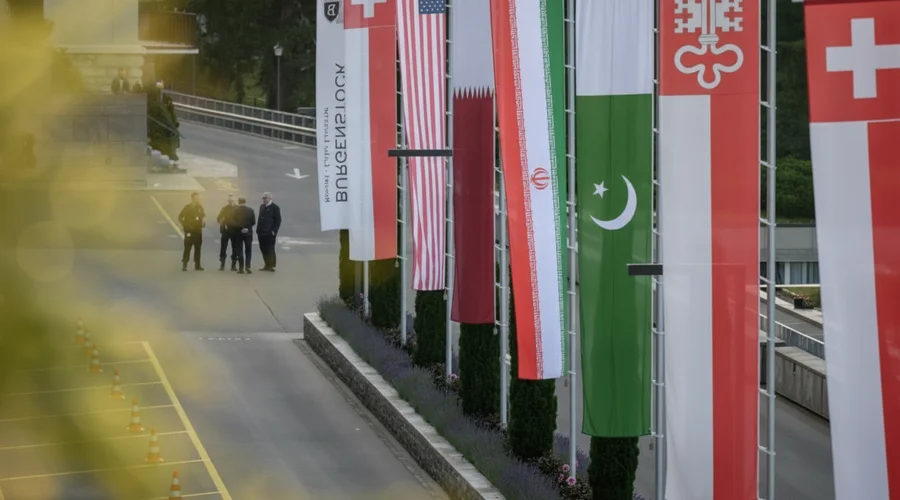
The high-stakes negotiations are being held at a luxurious hotel complex in Burgenstock, overlooking Lake Lucerne. Mediating the talks are representatives from Pakistan and Qatar, underscoring the international effort to de-escalate the situation and ensure the implementation of the recently established MoU.
Key Figures in Attendance
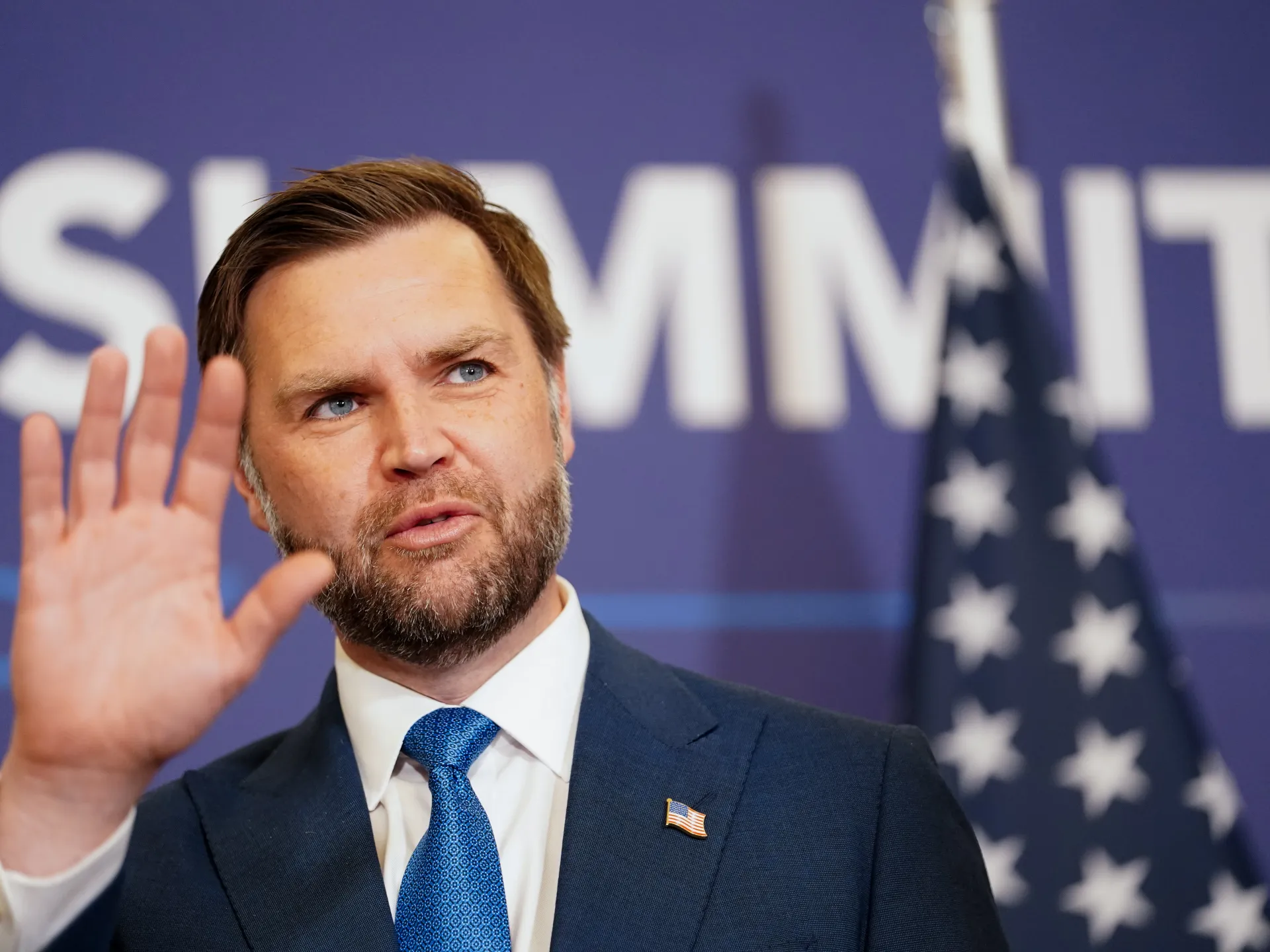
The Iranian delegation is spearheaded by Parliament Speaker Mohammad Bagher Ghalibaf and Foreign Minister Abbas Araghchi, indicating the significance Tehran places on these discussions. Representing the United States are Vice President JD Vance, Special Envoy Steve Witkoff, and Jared Kushner, President Trump's son-in-law. The presence of such senior officials from both nations highlights the critical nature of the dialogue.
Adding to the international dimension, Pakistan's Prime Minister Shehbaz Sharif and army chief Asim Munir, alongside Qatar's Prime Minister Sheikh Mohammed bin Abdulrahman bin Jassim Al Thani, are also participating. Their involvement underscores the mediating role their respective countries are playing in facilitating communication and progress between the US and Iran.
Prior to the talks, US Vice President Vance expressed his hope for progress on both the 'nuclear issue' and the 'Lebanon ceasefire issue.' Meanwhile, Esmaeil Baghaei, spokesperson for Iran’s Ministry of Foreign Affairs, conveyed Iran's intent to press for the full implementation of US commitments outlined in the MoU and to seek clarity on how these commitments will be executed.
Agenda Dominated by Lebanon and MoU Implementation
A central focus of the discussions is a quadrilateral meeting involving Iran, the US, Qatar, and Pakistan. According to Baghaei, the continued violations of commitments in Lebanon by the 'Zionist regime' will be the primary subject. The technical talks are slated to continue for 60 days, during which officials are expected to work towards the final phase of a peace process, tackling complex issues such as Iran’s nuclear program and the conflict in Lebanon.
However, reports from Tehran indicate that Iran's chief negotiator, Ghalibaf, emphasized that Iran's immediate priority is to ensure the US initiates the implementation of the MoU. He stressed that substantive technical talks would only proceed once this initial commitment is honored. Key Iranian demands include a cessation of hostilities in Lebanon, the lifting of the US maritime blockade, the reopening of the Strait of Hormuz, the release of frozen Iranian assets, and the removal of US sanctions targeting Iran's oil and petrochemical sectors.
Mohammad Mokhber, an adviser to Iran’s supreme leader, reinforced this stance, stating that Tehran would not accept a merely 'paper agreement.' He asserted that Washington must fully implement its commitments, suggesting that economic pressure is the language the US understands best. Mokhber warned that if the agreement remains unfulfilled, the flow of Middle East energy could be disrupted, and reiterated that Iran's negotiators would only be satisfied with complete implementation and the fulfillment of national rights, also remembering those who have perished in the conflict.
The Crucial Issue of Lebanon's Ceasefire
The ceasefire in Lebanon is anticipated to be a dominant theme, particularly given recent reports of Israeli forces causing numerous casualties in the region despite a supposed ceasefire with Hezbollah. Iranian officials, as reported from Tehran, have indicated that progress on the MoU's implementation is contingent upon Israel adhering to the agreement.
The first clause of the MoU explicitly states an agreement between the US and Iran for the 'immediate and permanent termination of military operations on all fronts, including in Lebanon,' and a commitment to ensuring the 'territorial integrity and sovereignty of Lebanon.' Notably, the MoU does not mention Israel, which currently occupies parts of the country and has been involved in near-daily attacks, leading to significant casualties and displacement since early March.
Iran maintains that the US bears the responsibility for ensuring Israel's compliance with the agreement. Ross Harrison, a senior fellow at the Middle East Institute, explained that both sides want to ensure the success of Phase One of the MoU, which includes adherence to every clause, before moving to Phase Two, which would address Iran's nuclear program. Harrison highlighted Iran's clear position: given past military actions by both Israel and the United States against Iran during negotiations, Tehran seeks assurance that the US can effectively restrain Israel's actions in Lebanon concerning Hezbollah. He noted that Israel, not being a signatory to the MoU, could potentially act as a spoiler, making it incumbent upon the US to ensure its adherence to the ceasefire.
Iran's Nuclear Program and the Strait of Hormuz
Once the technical talks progress, Iran's nuclear program is expected to become a central point of discussion. This issue has been a long-standing point of contention between the US and Iran, with Washington insisting that Tehran must not possess or develop nuclear weapons, while Iran maintains its program is for peaceful civilian purposes and is open to negotiating limits if sanctions are lifted.
Another significant development is Iran's declaration on Saturday that the Strait of Hormuz, a vital global energy chokepoint, is once again closed due to Israel's continued attacks in Lebanon. However, the US military's Central Command (CENTCOM) countered this, stating that the waterway remains open to all vessels and reported an increase in commercial ship traffic. CENTCOM noted that 55 merchant ships transited the strait on that day, transporting substantial cargo and over 17 million barrels of oil to global markets.
President Trump also weighed in, pledging that there would be no tolls for passage through the strait during the 60-day ceasefire period, and none thereafter 'unless they are imposed by and for the United States of America.' The potential closure of the strait and any subsequent naval blockade of Iranian ports carry significant global implications, having previously triggered an energy crisis and threatened economic depression, factors that reportedly influenced Trump's decision to pursue an end to the conflict.
Source: US-Iran talks in Switzerland: Is Lebanon top of agenda; who is attending?
Related Articles
 world
world
US Vice President Vance Arrives in Switzerland for Critical US-Iran Peace Negotiations Amid Regional Tensions
 world
world
High-Stakes Diplomatic Efforts Underway Between US and Iran in Switzerland
 world
world
Mass Demonstrations Erupt in Albania Over Proposed Coastal Development
 world
world