
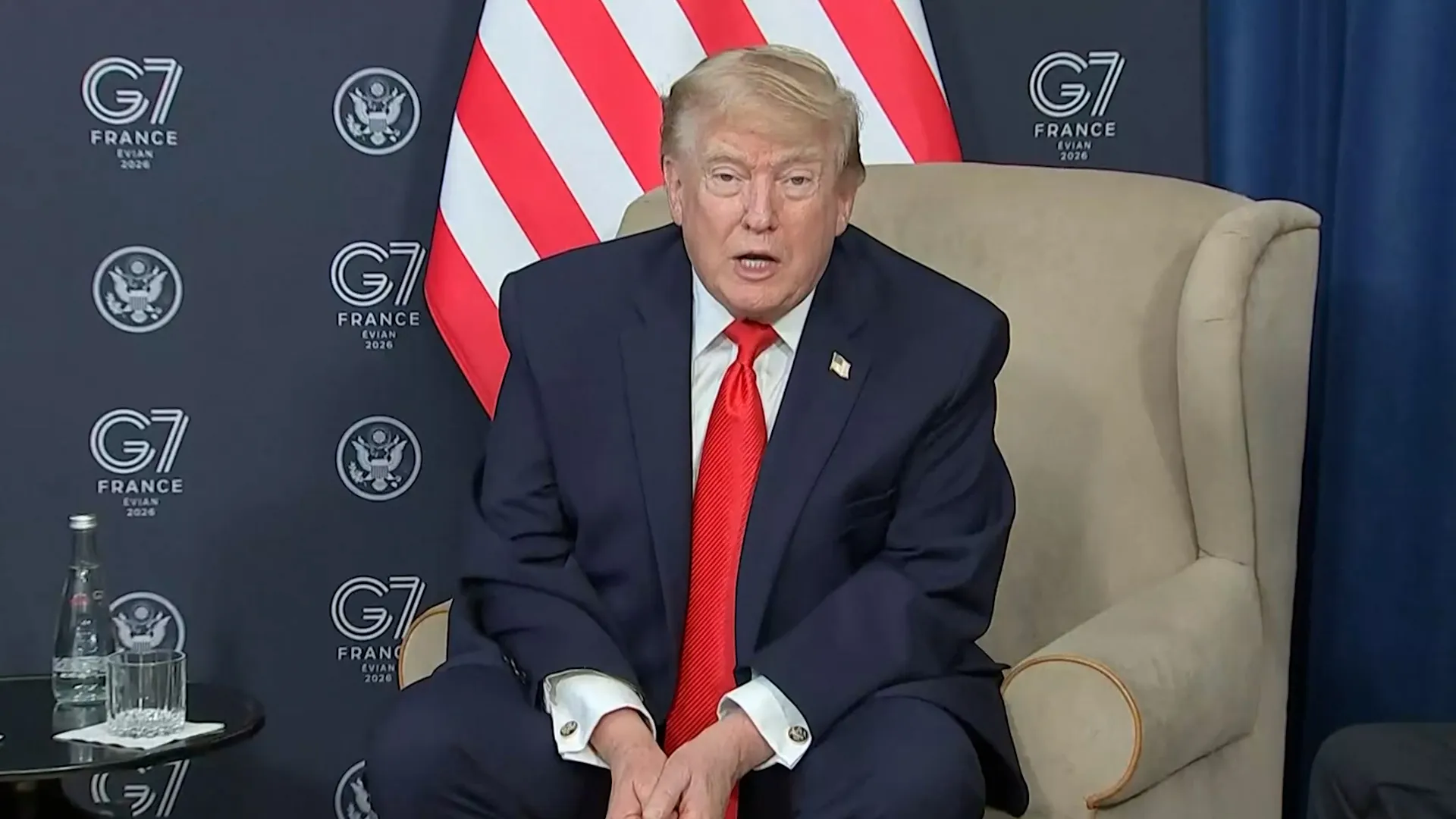
Former President Trump's Remarks on Iran
During a recent international gathering, former United States President Donald Trump addressed the sensitive issue of Iran's potential pursuit of nuclear weaponry. His statements underscored a firm stance against such a development, suggesting that Iran had previously indicated an agreement not to acquire nuclear arms. The former president's comments highlighted a perceived understanding or commitment from Iran on this matter, framing any deviation as a breach that would lead to significant international pushback.
The context of these remarks is crucial, as the proliferation of nuclear weapons remains a paramount concern for global security. International efforts, including treaties and diplomatic engagements, have long aimed to prevent additional countries from developing nuclear capabilities. Iran's nuclear program has been a subject of intense scrutiny and negotiation for many years, leading to various agreements and sanctions designed to limit its scope and ensure its peaceful nature.
Consequences of Non-Compliance
Former President Trump explicitly articulated the potential ramifications should Iran proceed with the acquisition of nuclear weapons. He warned of 'unbelievable consequences' and a scenario where 'hell will rain down,' emphasizing the gravity with which the international community, particularly the United States, would view such a development. These strong words reflect a policy of deterrence, signaling that any move by Iran to become a nuclear power would be met with an extremely forceful response.
The nature of these 'unbelievable consequences' was not detailed in his public statement, but such phrases typically allude to a range of potential actions, including heightened economic sanctions, diplomatic isolation, and potentially military considerations. The aim of such warnings is often to dissuade a nation from taking actions deemed destabilizing to regional and global security by clearly outlining the severe penalties for non-compliance.
Setting and Context of the Statement
These significant remarks were made during a meeting with Qatar's Emir Sheikh Tamim bin Hamad Al Thani. The encounter took place on the sidelines of a G7 summit in France. G7 summits are annual gatherings of leaders from the world's seven largest advanced economies, where they discuss a wide array of global issues, including economic policy, international security, and foreign affairs. The presence of non-member leaders, such as the Emir of Qatar, at these summits often facilitates bilateral discussions on pressing regional and international matters.
The choice of venue and audience for these statements adds weight to their significance. Making such pronouncements at a high-profile international event ensures broad dissemination and reinforces the message to a global audience, including the targeted nation. The discussion with the Qatari Emir also suggests a broader diplomatic effort to address regional stability and security concerns, given Qatar's role in the Middle East.
Historical Background of Iran's Nuclear Program
Iran's nuclear program has a long and complex history, dating back to the 1950s with assistance from the United States under the Atoms for Peace program. However, following the Iranian Revolution in 1979, Western assistance ceased, and Iran continued its program largely independently. Concerns about its potential military dimensions began to escalate in the early 2000s, leading to significant international diplomatic efforts.
A landmark agreement, the Joint Comprehensive Plan of Action (JCPOA), was reached in 2015 between Iran and the P5+1 group (China, France, Germany, Russia, the United Kingdom, and the United States). This agreement aimed to limit Iran's nuclear activities in exchange for the lifting of international sanctions. However, the United States, under former President Trump's administration, withdrew from the JCPOA in 2018, reinstating and imposing new sanctions on Iran. This withdrawal reignited tensions and complicated international efforts to manage Iran's nuclear ambitions.
Ongoing Diplomatic Challenges
The former president's recent comments underscore the ongoing challenges in addressing Iran's nuclear program. Despite various diplomatic initiatives and agreements, the issue remains a contentious point in international relations. The statements serve as a reminder of the consistent international pressure on Iran to adhere to non-proliferation norms and to ensure its nuclear program remains exclusively peaceful.
The international community largely advocates for a diplomatic resolution to the Iranian nuclear issue, emphasizing the importance of verifiable measures to prevent nuclear weapons proliferation. The rhetoric from key global figures, such as former President Trump, plays a role in shaping the discourse and setting expectations for future interactions regarding this critical geopolitical matter.
Source: Original Article
Related Articles
 world
world
Global Water Crisis: Satellite Imagery Reveals Ten Disappearing Freshwater Sources
 world
world
Escalating Tensions: Israeli Actions in Lebanon Jeopardize US-Iran Agreement
 world
world
G7 Leaders Pledge Enhanced Support for Ukraine and Stricter Sanctions on Russia
 world
world