
Diplomatic Overtures and Maritime Movements Precede Crucial Talks
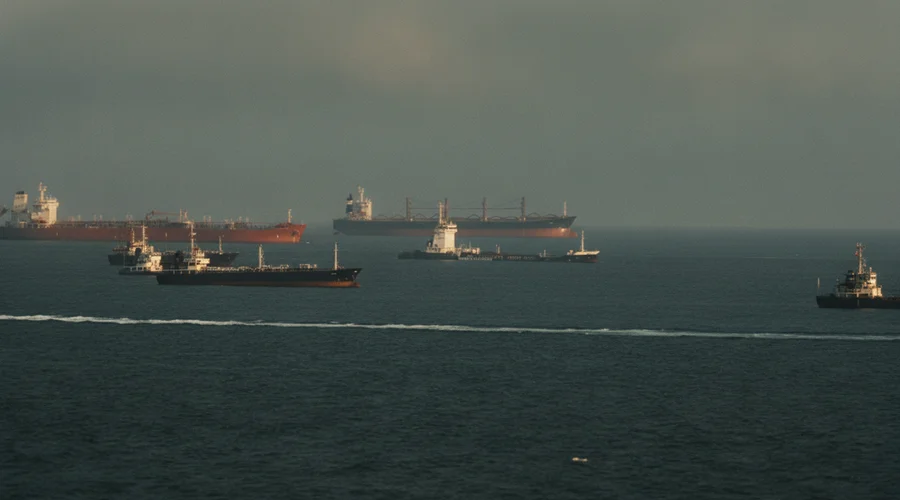
In a significant development preceding planned peace negotiations between the United States and Iran, a maritime tracking service has reported that several tankers carrying Iranian oil have successfully navigated past the US blockade line in the Strait of Hormuz. This movement comes just two days before Washington and Tehran are scheduled to initiate further discussions, following a preliminary framework agreement aimed at de-escalating their recent conflict.
TankerTrackers, a platform renowned for monitoring global oil shipments and storage, confirmed on Wednesday what it described as Iran's "first crude oil exports in two months." This assessment was based on a combination of digital tracking data and corroborating satellite imagery, providing tangible evidence of renewed Iranian oil exports.
The Road to Resolution: From Conflict to Negotiation
The upcoming talks, focused on achieving a final settlement to end the conflict that originated with US-Israeli strikes on Iran on February 28, are slated to commence on Friday. The scenic Burgenstock mountain resort in Switzerland will host these crucial discussions. News of the impending reopening of the Strait of Hormuz, a vital global shipping lane, has already had an impact on international markets, contributing to a notable decline in world oil prices.
According to data provided by TankerTrackers, two National Iranian Tanker Company (NITC) vessels, identified as the Diona and Hero 2, successfully breached the blockade line on Tuesday. These two tankers were reportedly transporting a combined total of 3.8 million barrels of Iranian oil. Concurrently, another tanker named Stream was observed making its way towards Iranian ports on Wednesday, indicating further maritime activity.
Adding to these reports, a third NITC-operated tanker, the Sonia I, carrying an estimated 1 million barrels of Iranian crude, was also reported to have sailed past the US Navy's blockade line in the Gulf of Oman on Wednesday. In a public statement on X (formerly Twitter), the maritime tracking service specified that the Sonia I "exited the blockade line" at 01:11 GMT, providing a precise timestamp for the event.
Details of the Impending Negotiations
The negotiations between the US and Iran are set to begin immediately after the formal signing of a memorandum of understanding (MoU). These discussions are projected to span a period of 60 days, with the overarching objective of reaching a comprehensive agreement concerning Iran's nuclear program and formulating a detailed plan for the lifting of international sanctions currently imposed on Iran, as confirmed by officials involved in the process.
In a related development, The Wall Street Journal reported on Tuesday, citing anonymous sources familiar with the agreement, that the US intends to permit Iran to resume oil and fuel sales immediately upon the signing of the MoU. This significant concession would entail an immediate waiver of sanctions pertaining to oil sales, extending to cover essential related services such as banking, transportation, and insurance.
A senior US official, who chose to remain anonymous due to the sensitive nature of the information, further disclosed that the framework agreement has already been electronically signed by key figures. These include US President Donald Trump, Vice President JD Vance, Iranian Deputy Foreign Minister Majid Takht-Ravanchi, and Tehran’s principal negotiator, Mohammad Bagher Ghalibaf. This electronic signing signifies a crucial step forward, laying the groundwork for the upcoming in-person negotiations and the potential for a lasting peace agreement.
The sequence of events – the movement of Iranian oil tankers and the impending diplomatic talks – underscores a complex interplay of economic incentives and political maneuvering aimed at de-escalating a recent conflict and fostering a path toward resolution. The international community will undoubtedly be closely observing the outcomes of these negotiations, which hold significant implications for regional stability and global energy markets.
Source: Original Article
Related Articles
 world
world
Global Water Crisis: Satellite Imagery Reveals Ten Disappearing Freshwater Sources
 world
world
Escalating Tensions: Israeli Actions in Lebanon Jeopardize US-Iran Agreement
 world
world
G7 Leaders Pledge Enhanced Support for Ukraine and Stricter Sanctions on Russia
 world
world