
Global Expressions of Solidarity at Football's Premier Event
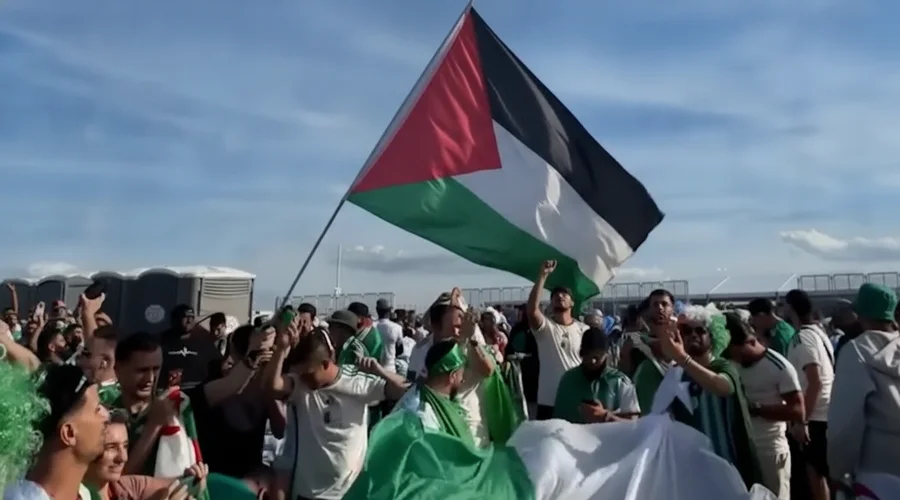
The 2026 FIFA World Cup, a global spectacle uniting nations through sport, has also become a platform for expressions of political and social solidarity, particularly concerning the Palestinian cause. Throughout various matches, fans from diverse backgrounds have utilized the international stage to draw attention to the situation in Gaza and voice their support for Palestinians.
This phenomenon has been observed across multiple venues, transcending geographical and cultural boundaries. Spectators, hailing from countries as far-flung as Algeria and Bosnia, have been seen displaying symbols and engaging in chants that honor Palestinians. This consistent presence of pro-Palestinian messaging highlights a sustained effort by some fan groups to ensure that the issue remains in the public consciousness, even amidst the excitement and competition of a major sporting event.
Visible Support in Key Matches
One notable instance of this solidarity occurred during a match in Kansas City, where Algeria faced Argentina. The atmosphere, already charged with the anticipation of a high-profile game, was further distinguished by the visible and audible support for the Palestinian cause. Flags bearing Palestinian colors were prominently displayed by sections of the crowd, while chants resonating with themes of Palestinian identity and resilience could be heard. These actions served as a powerful reminder that for many attendees, the World Cup is not solely about football, but also an opportunity to advocate for global issues they deeply care about.
The choice of such a prominent match and location underscores the deliberate nature of these displays. Kansas City, as one of the host cities for the World Cup, attracts a vast international audience, providing an ideal setting for these messages to reach a broad demographic. The presence of fans from Algeria, a nation with a historical connection to anti-colonial movements and a strong sense of solidarity with the Palestinian cause, further amplified the impact of these demonstrations.
A Recurring Theme in International Sporting Events
The use of major sporting events, such as the World Cup, as forums for political expression is not a new phenomenon. Historically, athletes and fans have leveraged these platforms to protest injustices, advocate for human rights, or express nationalistic sentiments. However, the consistent and widespread nature of pro-Palestinian solidarity at the 2026 World Cup suggests a deeply felt and organized effort by various groups to maintain visibility for the cause.
This trend reflects a broader global awareness and engagement with the Israeli-Palestinian conflict. Social media and international news coverage have ensured that events in Gaza and the wider Palestinian territories are widely disseminated, fostering a sense of connection and empathy among people worldwide. For many, the World Cup provides a unique, high-profile opportunity to translate this awareness into public action, demonstrating collective sentiment to a global audience and to political leaders.
Implications for the Host Nations and FIFA
The visible displays of solidarity also present certain considerations for the host nations and for FIFA, the governing body of international football. While FIFA's regulations generally aim to keep political statements separate from sporting events, the reality on the ground often proves more complex. The organization typically seeks to maintain a neutral stance, focusing on the sport itself and promoting unity among diverse participants.
However, when such widespread and emotionally charged expressions of solidarity occur, they inevitably become part of the event's narrative. Host cities and security personnel are tasked with balancing freedom of expression with maintaining order and ensuring the safety of all attendees. The management of these situations requires careful consideration, acknowledging the strong feelings involved while upholding the integrity of the sporting competition.
Ultimately, the presence of pro-Palestinian solidarity at the 2026 World Cup serves as a testament to the power of international sport as a stage for global dialogue. It underscores the reality that major events, while primarily focused on athletic competition, are also reflections of broader societal concerns and political landscapes. Fans, through their collective actions, continue to demonstrate that for many, the spirit of the game extends beyond the field, encompassing a commitment to humanitarian issues and global justice.
Source: Al Jazeera
Related Articles
 world
world
Global Water Crisis: Satellite Imagery Reveals Ten Disappearing Freshwater Sources
 world
world
Escalating Tensions: Israeli Actions in Lebanon Jeopardize US-Iran Agreement
 world
world
G7 Leaders Pledge Enhanced Support for Ukraine and Stricter Sanctions on Russia
 world
world