
Return to Ruin: Southern Lebanon's Post-Conflict Landscape
In the wake of a recently brokered ceasefire agreement between the United States and Iran, a significant number of Lebanese families who were forcibly displaced from their homes in southern Lebanon are now beginning to return. This tentative return, however, is not to peace and normalcy, but rather to scenes of profound devastation. Months of intense cross-border hostilities, marked by continuous shelling and aerial bombardments, have left an indelible mark on the region, transforming once-vibrant communities into landscapes of rubble and ruin.
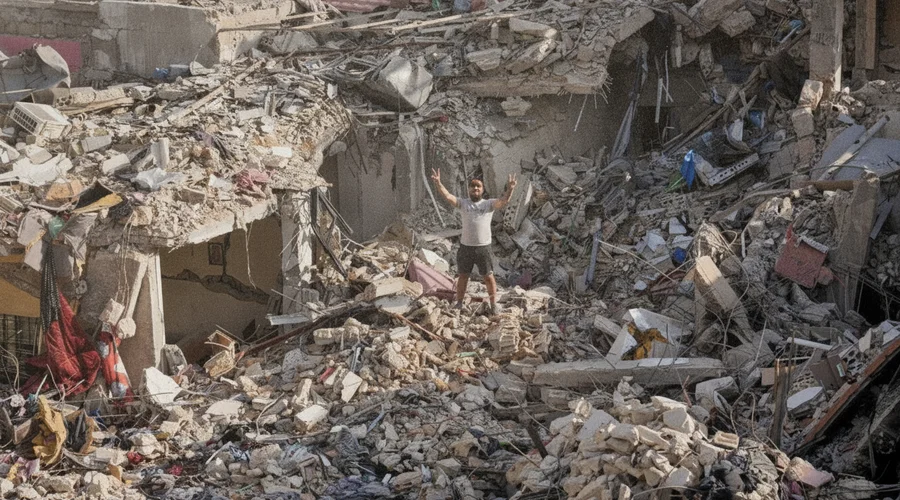
Entire neighborhoods, comprising residential homes, commercial establishments, and essential public infrastructure, have been systematically leveled. The scale of destruction is so extensive that many areas are now barely recognizable to their former inhabitants. This widespread damage underscores the severe impact of the conflict on civilian life and property, painting a stark picture of the challenges that lie ahead for reconstruction and recovery.
The Journey Back: Hope Mixed with Despair
As news of the ceasefire agreement began to disseminate, families who had sought refuge in various temporary accommodations – including overcrowded apartments, makeshift shelters in schools, or with relatives in safer regions – commenced the arduous journey back to their ancestral towns and villages. Their primary objective was to assess the extent of the damage to their properties and salvage whatever belongings might have survived the conflict.
However, the reality awaiting many of these returning residents has been grim. They are confronting collapsed roofs, the charred remains of vehicles, and homes that have been stripped bare, with doors and windows missing. The sheer scale of the destruction often leaves them with little to salvage beyond personal documents, a few items of clothing, or some essential household goods. The emotional toll of witnessing their homes in such a state of disrepair is immense, compounding the physical hardships they face.
Uncertainty and the Struggle for Survival
The return to southern Lebanon is fraught with challenges that extend beyond physical destruction. Basic services, including electricity, water, and sanitation, remain severely disrupted or entirely non-existent in many areas. Furthermore, the overall security situation, despite the ceasefire, remains precarious, casting a shadow of uncertainty over the long-term stability of the region. This combination of infrastructural collapse and security concerns compels many residents to make difficult decisions.
For some, the return is merely a temporary measure, an opportunity to retrieve vital possessions before seeking safer, more stable environments elsewhere. They find themselves in a distressing limbo, unable to fully resettle in their destroyed homes but also reluctant to abandon what little remains. Others, however, have no alternative. With nowhere else to go and limited resources, they are compelled to attempt the daunting task of rebuilding their lives amidst the widespread destruction, a testament to their resilience in the face of overwhelming adversity.
Human Cost of the Conflict
The human cost of the conflict in Lebanon has been catastrophic. According to data released by the Ministry of Public Health, Israeli attacks on Lebanon have resulted in the deaths of 3,798 individuals since March 2. Beyond the tragic loss of life, the conflict has also led to the massive displacement of approximately 1.2 million people, a staggering figure that highlights the profound humanitarian crisis triggered by the hostilities.
The images emerging from southern Lebanon tell a powerful story of resilience and despair. Photographs capture a man flashing a victory sign amidst the rubble of his destroyed home in Nabatiyeh, a poignant symbol of defiance. Displaced women are seen returning to their villages, some holding posters of political figures, others flashing victory signs from inside vehicles on the highway in Sidon, reflecting a mix of political identity and a yearning for peace. Men are seen meticulously packing salvaged belongings, while others inspect the damage to their homes, or collect religious books from destroyed libraries. These individual stories, collectively, paint a vivid picture of a population grappling with the aftermath of conflict, striving to reclaim their lives in a shattered landscape.
The return of these families to their devastated towns is not an end to their suffering, but rather the beginning of a new, arduous chapter. The international community, alongside local authorities, faces a significant challenge in providing the necessary support for humanitarian aid, reconstruction efforts, and ensuring a lasting peace that allows these communities to genuinely recover and rebuild.
Source: Original Article
Related Articles
 world
world
Global Water Crisis: Satellite Imagery Reveals Ten Disappearing Freshwater Sources
 world
world
Escalating Tensions: Israeli Actions in Lebanon Jeopardize US-Iran Agreement
 world
world
G7 Leaders Pledge Enhanced Support for Ukraine and Stricter Sanctions on Russia
 world
world