Israel's 'Buffer Zone' and Maritime Expansion
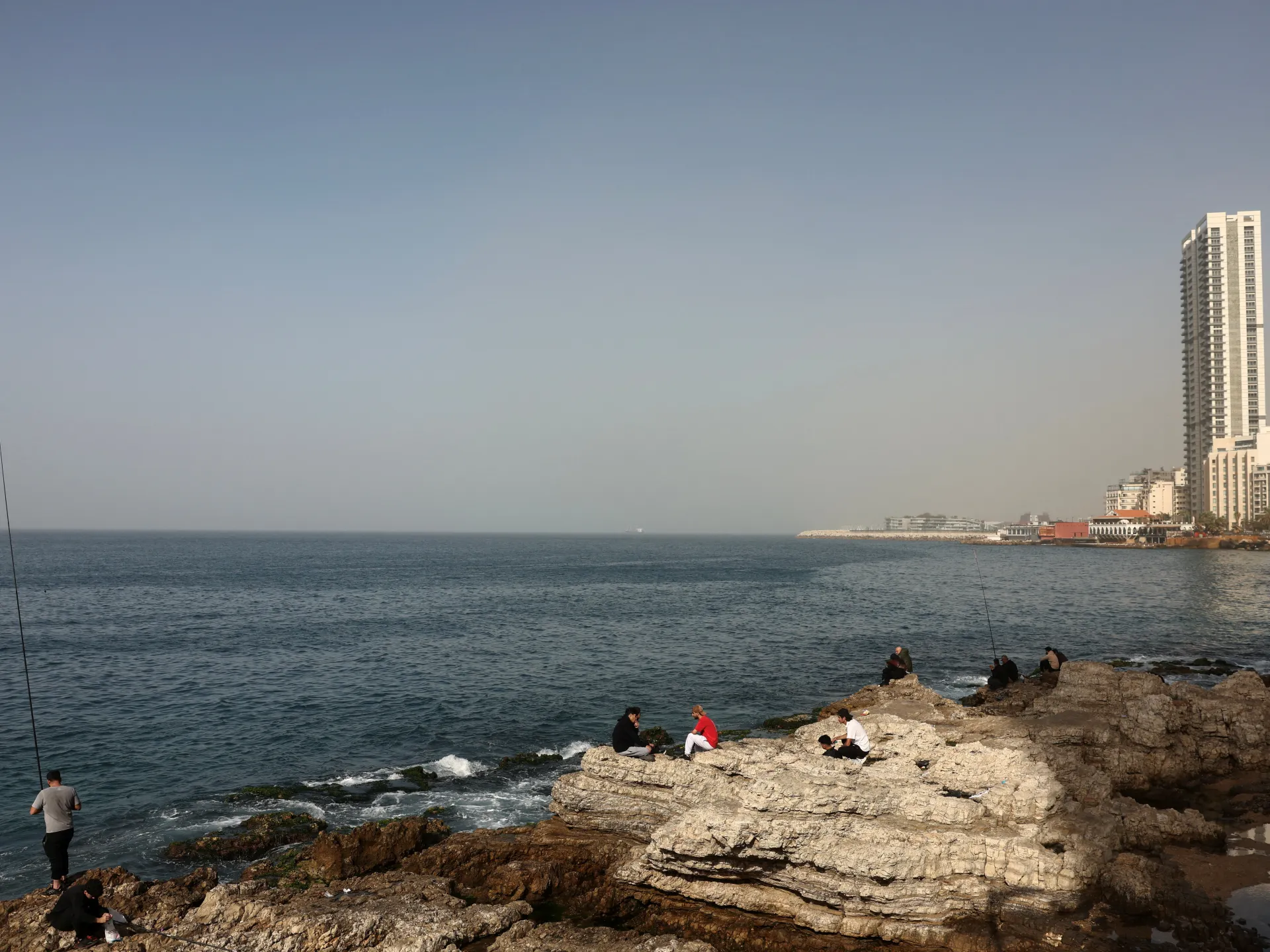
Israel's declaration of a 'security buffer zone' in southern Lebanon, which includes an extension into Mediterranean waters, has drawn sharp criticism from experts. Many believe this move signifies an intent to occupy Lebanese maritime territory, particularly given the area's potential for oil and gas reserves. The 'buffer zone,' delineated by what Israel terms the 'Yellow Line,' was publicly announced by Avichay Adraee, the Israeli army's Arabic-language spokesperson, on April 19. This announcement came shortly after a United States-brokered ceasefire between Israel and Lebanon was established.
Israel has asserted that the buffer zone, which penetrates approximately 10 kilometers (6 miles) into Lebanese territory and encompasses about 6 percent of the country's landmass, is necessary to prevent attacks from Hezbollah fighters. However, subsequent Israeli military actions have extended beyond this Yellow Line, fueling suspicions about Israel's broader intentions regarding Lebanese waters. Since the April ceasefire, nearly 3,700 individuals have been killed in Lebanon due to Israeli operations. The conflict in Lebanon escalated following Hezbollah's response on March 2 to the killing of Iranian Supreme Leader Ali Khamenei, which was part of a broader US-Israeli conflict with Iran. A similar Israeli buffer zone was established in the Gaza Strip under a US-brokered 'ceasefire' in October, resulting in Israel occupying over 60 percent of the enclave's territory.
Lebanon's Offshore Natural Gas Potential
Experts consulted by Al Jazeera have stated that Israel's new 'defense zone' not only contravenes the recent ceasefire but also encroaches upon Lebanon's Qana gas project. Exploration rights for this project were explicitly guaranteed to Lebanon through a 2022 US-mediated maritime border agreement with Israel. The newly demarcated Israeli line within Lebanon's exclusive economic zone (EEZ) in the Eastern Mediterranean now encompasses Block 9 and Block 8, which are parts of the Qana gasfield bordering Israeli waters and are slated for gas exploration.
In January, prior to the US and Israel initiating the conflict with Iran, a consortium comprising France's TotalEnergies, Italy's Eni, and QatarEnergy signed an offshore exploration permit with the Lebanese government specifically for Block 8. While reports of potential gas and mineral reserves off the Levantine coast date back to the early 1990s, concerted efforts to exploit these resources began in 2010 when Lebanon enacted a hydrocarbon law. This legislation granted oil companies rights for exploration and production. However, progress in offshore gas exploration in Lebanon has been limited since 2010, leading to disappointment, especially given government officials' long-standing promotion of an energy revolution as a solution to the country's persistent financial crises.
Laury Haytayan, a Lebanese oil and gas expert and the Middle East-North Africa director of the Natural Resource Governance Institute, explained that Lebanon possesses 10 offshore blocks, but only Block 8 currently has a contract for hydrocarbon activities. She noted that exploration in Block 4, initiated in 2020, was abandoned due to its economic infeasibility. Similarly, no significant findings were made in Block 9. Haytayan emphasized, "That’s why we don’t have any proven reserves to determine the financial value of these resources. Not all resources discovered are going to be exploited. The proven reserves are the ones you can exploit."
The 2022 Lebanon-Israel Maritime Agreement: A Violation?
After more than a decade of disputes over their maritime boundaries, Israel and Lebanon, with US mediation, signed a demarcation agreement on October 27, 2022. This agreement established a clear maritime boundary, resolving a dispute over an 860 square kilometer (332 square mile) area. Aref Fakhry, a maritime lawyer and associate professor at the World Maritime University in Malmö, Sweden, described it as more than just a maritime boundary agreement; it also included a partnership framework for exploring and exploiting potentially overlapping resources.
Given that Lebanon does not formally recognize the state of Israel, the US envoy Amos Hochstein facilitated the agreement without direct talks between the two nations. Fakhry clarified that despite this, it remains a binding treaty under international law. He characterized Israel's attempt to extend its borders into Lebanon's EEZ as an "outright land grab." The area Israel has incorporated into its 'buffer zone' includes waters within 12 nautical miles (22.2 km) of Lebanon's coast, which, under international law, constitute a country's territorial sea where it exercises full sovereign control.
Fakhry further explained that beyond the territorial sea, in the EEZ, such actions constitute a "resource grab," infringing upon sovereign rights and resources. Under the United Nations Convention on the Law of the Sea (UNCLOS), a country holds exclusive rights to explore, exploit, and manage natural resources within its EEZ. The 1982 convention also mandates that neighboring states negotiate their maritime boundaries in good faith. Fakhry concluded that Israel's new demarcation line "would represent a departure from these established legal norms and a further violation of international law by Israel."
Official Reactions and Potential Responses
The 2022 maritime agreement has been a subject of considerable debate within Israel. Prime Minister Benjamin Netanyahu's far-right government has expressed a desire to revoke the deal and claim more territory for 'security' purposes. In contrast, more moderate Israeli politicians have argued that the agreement benefits Israel. Opposition leader Yair Lapid, instrumental in passing the agreement, stated in 2022 that it "bolsters Israeli security and the Israeli economy." More recently, on April 28, Lapid posted on X, dismissing claims about the 'gas deal' by stating, "there’s no gas there, no security risk there, nothing there at all. Sea." Energy Minister Eli Cohen, however, countered that the deal "was a surrender agreement that ceded to Lebanon all the disputed territories. This agreement weakened Israel and strengthened Hezbollah." Despite Israel's apparent intentions to violate the maritime agreement, Lebanese Energy Minister Joe Saddi maintained on April 19 that, from a legal perspective, Israel's 'buffer zone' map "doesn’t change anything about the fact that there is a maritime border agreement."
Experts suggest several avenues for Lebanon to respond. Fakhry believes a primary argument would be to seek justice and hold Israel accountable to the terms of the 2022 agreement. This could involve Lebanon appealing to the US, as the mediator, to exert diplomatic pressure on Israel. Lebanon could also invoke the 1958 UN Convention on the Territorial Sea and the Contiguous Zone, which affirms a state's sovereign rights over its territorial sea. Both the 1958 and 1982 conventions assert that redrawing lines "violates the territorial integrity and jurisdictional rights of the coastal state under the UN Charter." Fakhry also suggested that Lebanon could approach the UN Security Council and cite the Barcelona Convention for the Protection of the Mediterranean Sea Against Pollution, to which both Lebanon and Israel are parties. This convention could compel Israel to provide compensation for environmental damage committed during warfare, given its legal obligation to protect the Mediterranean ecosystem.
Haytayan added that any exploration activities undertaken by Israel or international companies in the Lebanese EEZ would be deemed illegal under UNCLOS. This would likely deter international oil companies, upon whom Israel relies, from operating in an occupied EEZ due to potential legal complications.
Parallels with Gaza and Broader Implications
Analysts draw parallels between the potential economic impact of an Israeli maritime occupation in southern Lebanon and the situation in Gaza, which has been under an Israeli sea, land, and air blockade since 2007. Southern Lebanon's economy heavily relies on its land and sea resources. In Gaza, the UN estimates that 72 percent of the fishing fleet has been damaged or destroyed since the start of the conflict, severely impacting food availability. Even before the conflict, Gaza's fishermen operated under severe Israeli restrictions, with fishing zones frequently reduced and maritime boundaries from the 1993 and 1995 Oslo Accords rarely enforced.
Fakhry noted that in southern Lebanon, "We are witnessing a denial of basic maritime rights for fishing, of coastal settlements, towns being erased, which again could also raise the stakes of these violations to potential genocide." While the term 'genocide' has not been widely applied to Israel's actions in Lebanon, 'ecocide' has been used by researchers at the Arab Reform Initiative think tank. Environmental destruction in both Gaza and southern Lebanon is evident, notably through Israel's alleged use of white phosphorus, which is anticipated to have long-term impacts on ecosystems and public health.
Ahmed Baydoun, a Lebanese researcher focusing on conflict investigations, described Israeli attacks in Lebanon as "beyond ecocide or urbicide or all of these terms. It’s literally poisoning the soil, poisoning the land, poisoning the air. It’s beyond scorched earth policy. It’s weaponising the environment in itself." A key difference between Gaza and Lebanon is the discovery of a gas field in Gaza's waters in 2000 by British Gas, which Israel has historically prevented Palestinians from developing. This has been achieved through political and economic restrictions, hindering international recognition of a Palestinian state and ensuring that energy deals in the Eastern Mediterranean predominantly occur between Israel and Egypt.
The Gaza Marine field is estimated to hold 45.3 billion cubic meters (1.6 trillion cubic feet) of recoverable natural gas, according to the US Energy Information Administration. However, uncertainties surrounding maritime delineation among Israel, Gaza, and Egypt mean the field remains largely untapped, despite its potential to generate $4 billion in revenue. Haytayan concluded, "Regarding the Israelis, I think they’re just adding pressure on Lebanon to come to the negotiation table with more cards in their hands, as they know how much emphasis Lebanon has put on developing its natural resource."
Source: Is Israel’s ‘buffer zone’ inside Lebanon an attempt to grab gas reserves?
Related Articles
 world
world
Global Water Crisis: Satellite Imagery Reveals Ten Disappearing Freshwater Sources
 world
world
Escalating Tensions: Israeli Actions in Lebanon Jeopardize US-Iran Agreement
 world
world
G7 Leaders Pledge Enhanced Support for Ukraine and Stricter Sanctions on Russia
 world
world