
Diplomatic Undertones and Regional Stability
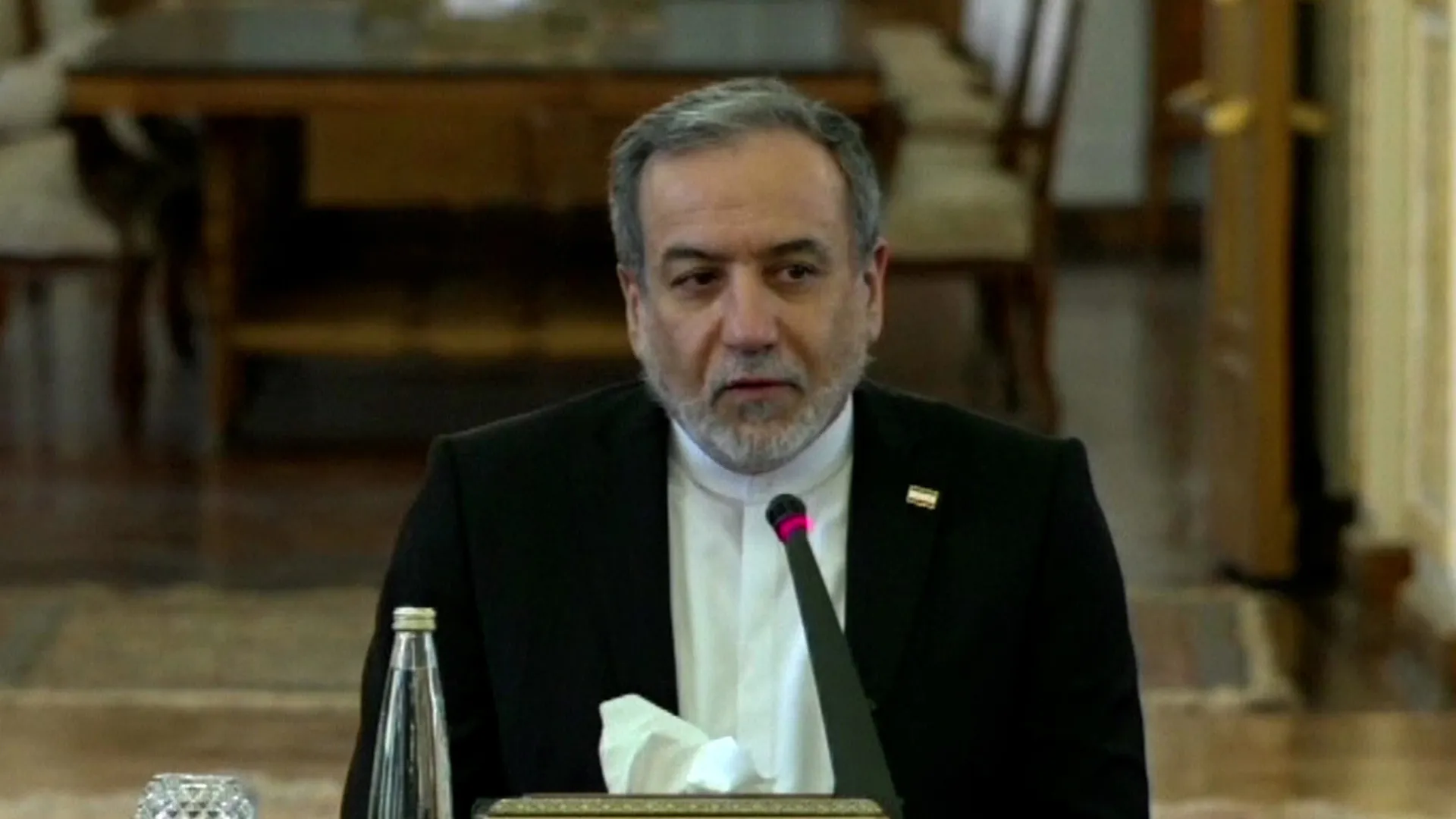
The geopolitical landscape of the Middle East remains a focal point of international attention, with recent statements from Iranian officials shedding light on evolving diplomatic relations and potential regional flashpoints. A significant declaration from Iran's Foreign Minister, Abbas Araghchi, suggests a pivotal moment in the country's engagement with the United States, while simultaneously issuing a cautionary note regarding Israeli activities in a neighboring state. This development underscores the intricate web of alliances and rivalries that characterize the region, where historical grievances often intersect with contemporary strategic interests.
Araghchi's remarks come at a time when global powers are actively seeking pathways to de-escalation and stability in areas prone to conflict. The prospect of a formal agreement between Tehran and Washington D.C. introduces a new dimension to these efforts, potentially reshaping established dynamics. However, the Iranian official's emphasis on the status of Lebanon suggests that even as broader diplomatic avenues open, specific regional issues remain highly sensitive and could easily become points of contention. The interplay between these larger agreements and localized disputes is critical for understanding the future trajectory of the Middle East.
A Memorandum of Understanding on the Horizon
Central to Araghchi's statement is the anticipated signing of a Memorandum of Understanding (MOU) between Iran and the United States. This document, reportedly scheduled for Friday, signifies a potential turning point in the often-strained relationship between the two nations. While the precise details of the MOU have not been publicly disclosed, its very existence suggests a mutual desire to establish a framework for engagement, possibly aimed at resolving long-standing disagreements or preventing future conflicts. Such an agreement, if successfully implemented, could have far-reaching implications for international diplomacy and regional security.
The declaration that the 'war with the US is over' is particularly striking, signaling a significant rhetorical shift from Tehran. This phrase, uttered by a high-ranking Iranian diplomat, could be interpreted as an official acknowledgment of a new era of relations, moving away from direct confrontation towards a more structured, albeit potentially cautious, dialogue. The transition from a state of perceived conflict to one of formal understanding would represent a major diplomatic achievement, reflecting sustained efforts by various international actors to foster peace and cooperation.
The Lebanese Dimension: A Potential Sticking Point
Despite the apparent rapprochement with the United States, Iran's Foreign Minister explicitly linked the success and integrity of the forthcoming MOU to the situation in Lebanon. Araghchi warned that any continued Israeli 'occupation' in Lebanon would constitute a breach of the understanding between Tehran and Washington D.C. This linkage highlights the interconnectedness of regional issues and the sensitivity of the Israeli-Lebanese border region, which has historically been a flashpoint for conflict.
The term 'occupation' as used by Iran typically refers to the presence or influence of Israeli forces in areas that Tehran views as Lebanese sovereign territory or within Lebanon's sphere of influence. This perspective is rooted in a complex history of military engagements and territorial disputes in the Levant. The implication of Araghchi's warning is that while Iran may be ready to engage diplomatically with the U.S., it will not overlook what it perceives as violations of regional sovereignty, particularly concerning its allies and strategic interests. The statement thus serves as a critical indicator of Iran's red lines and its expectations for regional conduct, even within the context of broader international agreements.
Implications for Regional Stability
The Iranian statement carries significant implications for regional stability. By explicitly connecting the U.S.-Iran MOU to the situation in Lebanon, Tehran is effectively signaling that its commitment to any broader agreement with Washington is contingent upon certain regional conditions being met or respected. This approach could complicate efforts to achieve comprehensive peace in the Middle East, as it links disparate issues and places a heavy burden on all parties to navigate complex geopolitical sensitivities.
For Israel, the Iranian warning may be viewed through the lens of national security concerns and its historical interactions with various non-state actors operating from Lebanese territory. The precise nature of what Iran considers 'occupation' or 'continued presence' will be crucial in determining how this warning is interpreted and acted upon by all involved parties. The coming days, particularly leading up to the scheduled signing of the MOU, will be critical in observing how these diplomatic threads unravel and whether the conditions set forth by Iran are acknowledged or contested by other regional and international actors. The delicate balance of power and the intricate web of alliances ensure that such pronouncements resonate far beyond the immediate parties involved, affecting the broader prospects for peace and security in an already volatile region.
Source: Original Article
Related Articles
 world
world
Global Water Crisis: Satellite Imagery Reveals Ten Disappearing Freshwater Sources
 world
world
Escalating Tensions: Israeli Actions in Lebanon Jeopardize US-Iran Agreement
 world
world
G7 Leaders Pledge Enhanced Support for Ukraine and Stricter Sanctions on Russia
 world
world