
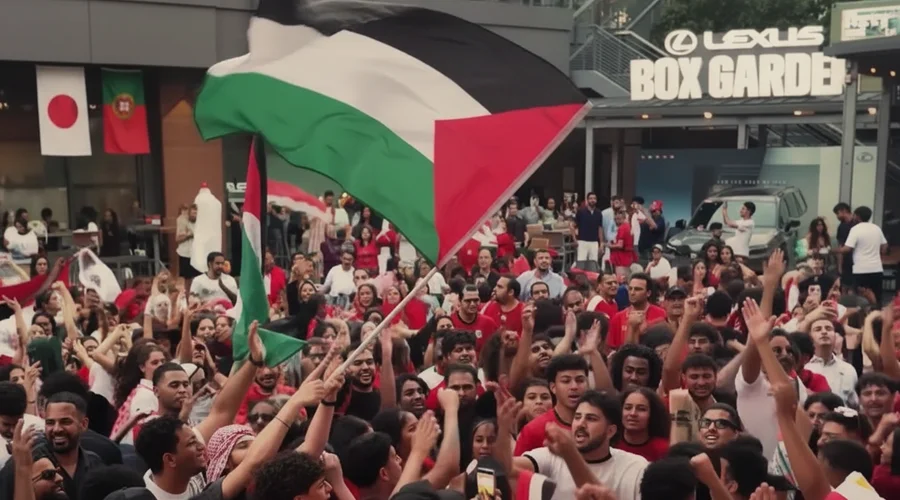
Collective Expression of Solidarity at World Cup Fan Zones
Recent celebrations following World Cup matches saw football enthusiasts from Egypt and Morocco engage in a collective display of solidarity with Palestinians. In a fan zone located in Dallas, supporters of both North African nations were observed singing 'My Blood is Palestinian,' a chant that underscores a broader sentiment of Arab unity and support for the Palestinian cause. This event, captured and shared widely, highlights how sporting events can become platforms for expressing socio-political sentiments.
The Context of Arab Solidarity
The expression of solidarity by Egyptian and Moroccan fans is not an isolated incident but rather a reflection of a long-standing tradition of Arab support for Palestinians. This sentiment is deeply rooted in shared cultural, historical, and religious ties that bind many Arab nations to the Palestinian people. The chant 'My Blood is Palestinian' encapsulates this profound connection, suggesting a familial or intrinsic link that transcends geographical borders and political differences. Such displays often emerge during significant public gatherings, like international sporting events, where collective identity and shared values are amplified.
The Role of Football in Social and Political Expression
Football, often referred to as 'the beautiful game,' possesses a unique capacity to unite people across diverse backgrounds. Its global reach and passionate fan bases make it an ideal conduit for the expression of various social and political messages. Historically, football stadiums and fan zones have served as arenas where supporters not only cheer for their teams but also voice opinions on broader societal issues. The World Cup, as one of the most-watched sporting events globally, provides an unparalleled stage for such expressions, drawing international attention to causes that might otherwise receive less mainstream media coverage.
The act of singing in unison, particularly a chant with such explicit political undertones, serves multiple purposes. It reinforces a sense of community among those who share the sentiment, making individuals feel part of a larger movement. It also acts as a public declaration, signaling to both local and international audiences the depth and breadth of support for the Palestinian cause among a significant segment of the Arab population. This collective vocalization can be a powerful tool for raising awareness and maintaining the visibility of an issue that remains a central point of concern in the Middle East and beyond.
Regional Dynamics and International Repercussions
The public display of solidarity by Egyptian and Moroccan fans also touches upon the complex regional dynamics within the Arab world. While individual governments may navigate their foreign policies with varying degrees of engagement on the Israeli-Palestinian conflict, public sentiment often remains consistently supportive of Palestinians. These fan expressions can, therefore, be seen as a reflection of popular opinion, which sometimes diverges from official state positions or diplomatic strategies.
Internationally, such demonstrations contribute to the ongoing narrative surrounding the Israeli-Palestinian conflict. They remind global audiences that the issue is not merely a political dispute but one that resonates deeply with people on a humanitarian and identity level. For many, the Palestinian cause symbolizes broader struggles for self-determination and justice, making it a powerful rallying point.
The Enduring Power of Symbolic Acts
While a chant sung in a fan zone may seem like a small act, its symbolic power is considerable. It reinforces a narrative of shared identity and collective struggle, keeps the Palestinian cause in the public consciousness, and demonstrates the persistent emotional and cultural ties that bind many in the Arab world to Palestinians. These moments, often spontaneous and heartfelt, highlight the enduring human element in geopolitical conflicts and the capacity of ordinary people to express their deeply held beliefs through cultural phenomena like sports.
The incident in Dallas serves as a poignant reminder of how global events can unexpectedly become platforms for profound expressions of solidarity, transcending the immediate context of athletic competition to address deeper social and political concerns. It underscores the ongoing relevance of the Palestinian issue to a broad spectrum of people, particularly within the Arab world, and the creative ways in which support for it continues to be articulated.
Source: Original Article
Related Articles
 world
world
Lebanese President Appeals to US for Continued Support Amidst Regional Tensions
 world
world
Iranians Brave Extreme Heat for Second Day of Supreme Leader's Funeral Rites
 world
world
Shifting Global Dynamics: The End of Unrivalled US Dominance
 world
world