
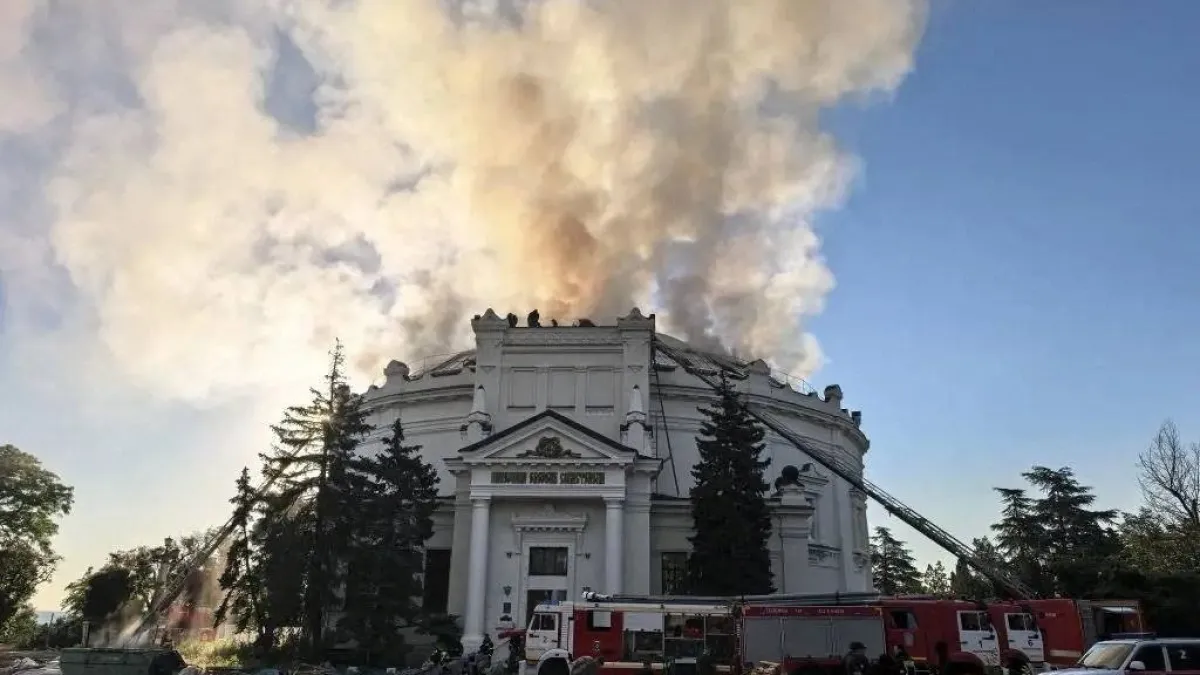
Crimea's Growing Vulnerability Underpins Public Anxiety
The Crimean Peninsula, annexed by Russia in 2014, is currently grappling with significant challenges and a palpable sense of apprehension among its inhabitants. Recent Ukrainian military actions, primarily through drone strikes, have disrupted critical supply lines, leading to fuel shortages, damaged infrastructure, and a general atmosphere of fear and uncertainty. These developments are transforming the region from a perceived resort destination into a frontline area, deeply impacting daily life and the local economy.
One resident, Dilyaver, a 52-year-old Crimean Tatar, recently recounted spending nearly seven hours in a lengthy queue at a gas station near Simferopol, Crimea's administrative capital, just to purchase a limited amount of fuel. He observed Russian tourists in the line, many of whom appeared to be cutting their vacations short and attempting to leave the peninsula via the Crimean Bridge. Dilyaver noted that the tourism season, a vital economic driver for Crimea, has been severely affected, compounding the difficulties faced by residents. The agricultural sector, already struggling due to Ukraine's damming of a crucial water artery, further exacerbates the economic strain.
Logistical Lifelines Under Attack
Experts suggest that the fuel scarcity is merely one symptom of a larger problem: the successful targeting of Crimea’s logistical routes by Ukrainian forces. Nikolay Mitrokhin, a researcher at Germany's Bremen University specializing in the Russia-Ukraine conflict, highlighted that the primary concern is the extensive use of Ukrainian drones against the peninsula's internal roads and supply networks. Since mid-May, Ukrainian drones have reportedly struck numerous trucks transporting fuel, ammunition, and other essential goods from southwestern Russia to Crimea via the 'land bridge' – a route through occupied Ukrainian territories. These drones are also said to be deploying small, magnetically or motion-sensor-equipped mines on these roads, further impeding transport.
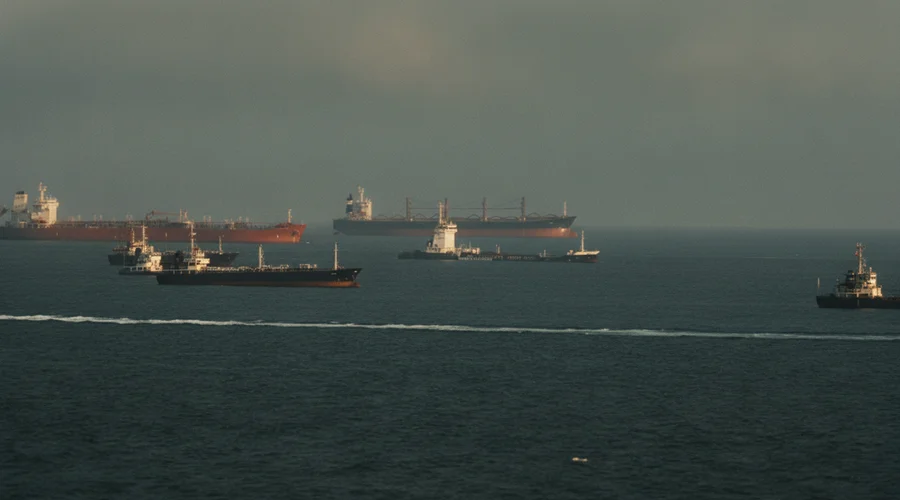
Beyond land routes, cargo ships attempting to deliver supplies to Crimea or export goods from occupied southern Ukrainian regions have also come under attack. Volodymyr Fesenko, head of the Kyiv-based Penta think tank, emphasized that these actions underscore Crimea's inherent vulnerability. He asserted that Ukraine possesses the capability to regularly target military and infrastructure sites across the peninsula, effectively turning Crimea into an 'island surrounded by war and fire.'
Strategic Control and Infrastructure Damage
Ukraine's Third Special Battalion recently claimed to have achieved 'aerial control' over the strategic supply route stretching from the occupied city of Melitopol to the Chongar bridge in northern Crimea. This assertion was accompanied by a warning that more attacks are anticipated. The Chongar bridge, a critical entry point to Crimea, was recently damaged by drones, restricting its use to light vehicles and necessitating the use of a nearby pontoon bridge for heavier traffic. This disruption significantly impacts the flow of goods and people into the peninsula.
In addition to these land-based targets, Ukrainian drones have also struck fuel depots within Crimea, alongside air defense systems, airfields, military bases, command centers, and facilities belonging to Russia's Black Sea Fleet. A substantial portion of the Black Sea Fleet has reportedly relocated to the Russian port of Novorossiysk after sustaining considerable losses. Following its annexation in 2014, Russia invested billions in militarizing Crimea, deploying various naval assets, advanced S-400 air defense systems, tens of thousands of personnel, and constructing new military infrastructure. Fesenko commented that by transforming Crimea into a military base, President Putin inadvertently made it one of the most vulnerable locations in the conflict.
Public Outcry and Lingering Fears
The Crimean Bridge, a vital connection to mainland Russia, is currently unable to handle redirected traffic, as trucks exceeding 1.5 tonnes are no longer permitted to cross. Further exacerbating the situation, a recent Ukrainian drone strike on a moving train reportedly resulted in a fatality and halted the movement of several other trains, with passengers being evacuated by buses.
Even prominent figures within Russia have voiced concerns. Igor Girkin, a former intelligence officer and a vocal critic of Moscow's military strategy, described the situation at Crimean gas stations as a 'real nightmare' for both locals and servicemen. Writing from prison, Girkin, who was sentenced for criticizing military failures, stated that Kyiv is 'acting brazenly' to cut off fuel supplies to the peninsula and southern military groups. He stressed that Crimea, despite its resort image, is now a frontline region.
For Crimean Tatars like Dilyaver, the current crisis is intertwined with a long history of struggle. Since the 2014 annexation, the community, comprising about one-tenth of Crimea's population, has faced ongoing pressure, including house searches, arrests, and trials for alleged 'extremism,' 'separatism,' and 'terrorism.' Many have been imprisoned, and some have gone missing. Dilyaver himself, once a small business owner, was forced to close his grocery store due to increased taxes, demands for bribes, and a scam, now barely making a living selling pies.
His 77-year-old mother, Gulsum, whose parents were deported by Stalin in 1944, expressed deep-seated distrust, stating, 'If a Russian lives next to you, keep an axe ready.' The Ukrainian attacks have also led to concerns about food security, with reports of staples like macaroni, flour, and canned goods disappearing from shelves. Dilyaver observed that a 'Soviet mentality' of panic-buying, particularly buckwheat, has emerged, reflecting a deep-seated anxiety among the populace.
Source: Original Article
Related Articles
 world
world
Global Water Crisis: Satellite Imagery Reveals Ten Disappearing Freshwater Sources
 world
world
Escalating Tensions: Israeli Actions in Lebanon Jeopardize US-Iran Agreement
 world
world
G7 Leaders Pledge Enhanced Support for Ukraine and Stricter Sanctions on Russia
 world
world