
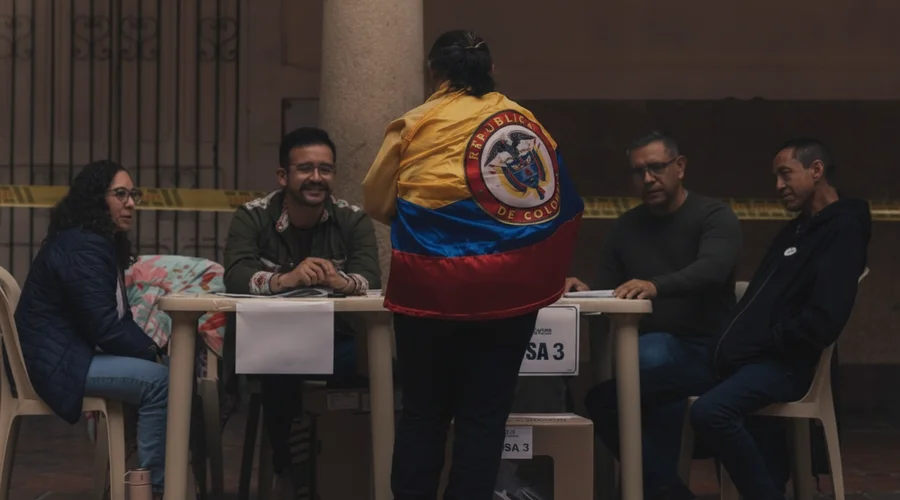
Colombians Head to Polls for Decisive Presidential Run-off
Citizens across Colombia are preparing to cast their votes in a critical presidential run-off election. This contest features a prominent leftist lawmaker, Ivan Cepeda, who is seen as a successor to the country's current progressive administration, against Abelardo de la Espriella, a far-right criminal defense lawyer advocating for a tough stance on law and order. The election, scheduled for Sunday, will see over 41 million eligible voters decide between these two distinct political figures, who emerged from an initial field of 11 candidates in the first round held on May 31.
Contrasting Approaches to National Security and Peace
Both candidates have centered their campaigns on addressing the pervasive issue of violence that has historically afflicted Colombia, including incidents of car bombings, kidnappings, and disappearances. However, their proposed remedies diverge significantly, reflecting opposing ends of the political spectrum.
Abelardo de la Espriella, a political newcomer often referred to as “The Tiger,” proposes a stringent, heavy-handed approach to combat crime. His platform includes a commitment to aggressively pursue criminals and the construction of ten 'mega-prisons.' This strategy draws inspiration from policies implemented by El Salvador's President Nayib Bukele, which have been credited with reducing homicide rates but have also attracted criticism regarding human rights implications. De la Espriella's tough-on-crime stance has garnered him the endorsement of United States President Donald Trump.
Conversely, Ivan Cepeda pledges to continue the current administration's efforts, including President Gustavo Petro's strategy of seeking dialogue with various armed groups. This approach, initiated in 2022, has faced considerable scrutiny, with its success being limited. Recently, however, a small armed group, comprising approximately 100 members, reportedly surrendered its weapons and began a process of resettlement and reintegration into civilian life, marking a rare positive development in this strategy.
Addressing Socio-Economic Challenges
Beyond security, the candidates also present differing solutions for Colombia's struggling healthcare system, increasing public debt, and deeply entrenched corruption. These socio-economic issues are significant concerns for the electorate, further contributing to the highly polarized political climate.
John Manrique, a lawyer residing in Bogota, expressed his apprehension regarding the current political division. “Right now, what worries me is the polarization that exists between us: There are two very extreme sides, and the violence is concerning,” Manrique stated. He emphasized the importance of national unity post-election, adding, “What I hope is that people accept who won. Let’s accept it, regardless of the side, and try to reach a social consensus. … Let’s not go out and fight.”
First-Round Results and Post-Election Discourse
In the initial round of voting, official results indicated that Ivan Cepeda secured 41 percent of the vote, while Abelardo de la Espriella received 44 percent. Notably, President Gustavo Petro publicly questioned the integrity of these results, without providing specific evidence, after Cepeda, who had consistently led in pre-election polls, failed to achieve an outright victory and finished behind de la Espriella.
A Decade Since the FARC Peace Accord
This presidential election occurs a decade after Colombia signed a landmark peace agreement with the Revolutionary Armed Forces of Colombia (FARC). This historic pact had initially sparked hope for an end to the nation's protracted cycle of conflict between armed groups and the government.
However, despite the peace deal, violence has seen a resurgence in recent years. This escalation is largely attributed to various rebel groups abandoning their ideological motivations in favor of the lucrative financial benefits derived from drug trafficking. Last year, authorities recorded 14,780 homicides, marking the highest figure since at least 2015. This increase in fatalities has been primarily driven by clashes among illegal armed factions. The violence also claimed the life of conservative presidential hopeful Miguel Uribe. Furthermore, cases of extortion have dramatically increased, reaching 13,417 in 2025, more than double the number reported in 2015, highlighting the ongoing security challenges facing the nation.
Source: Colombians to vote in presidential run-off pitting leftist against hardliner
Related Articles
 politics
Public Sentiment Guides US Approach to Iran Peace Deal Amidst Political Divisions
 politics
UK Prime Minister Starmer Faces Calls to Resign Following Burnham's By-Election Triumph
 politics
Iran's Political Factions Divided Over Interim US Peace Agreement
 politics