
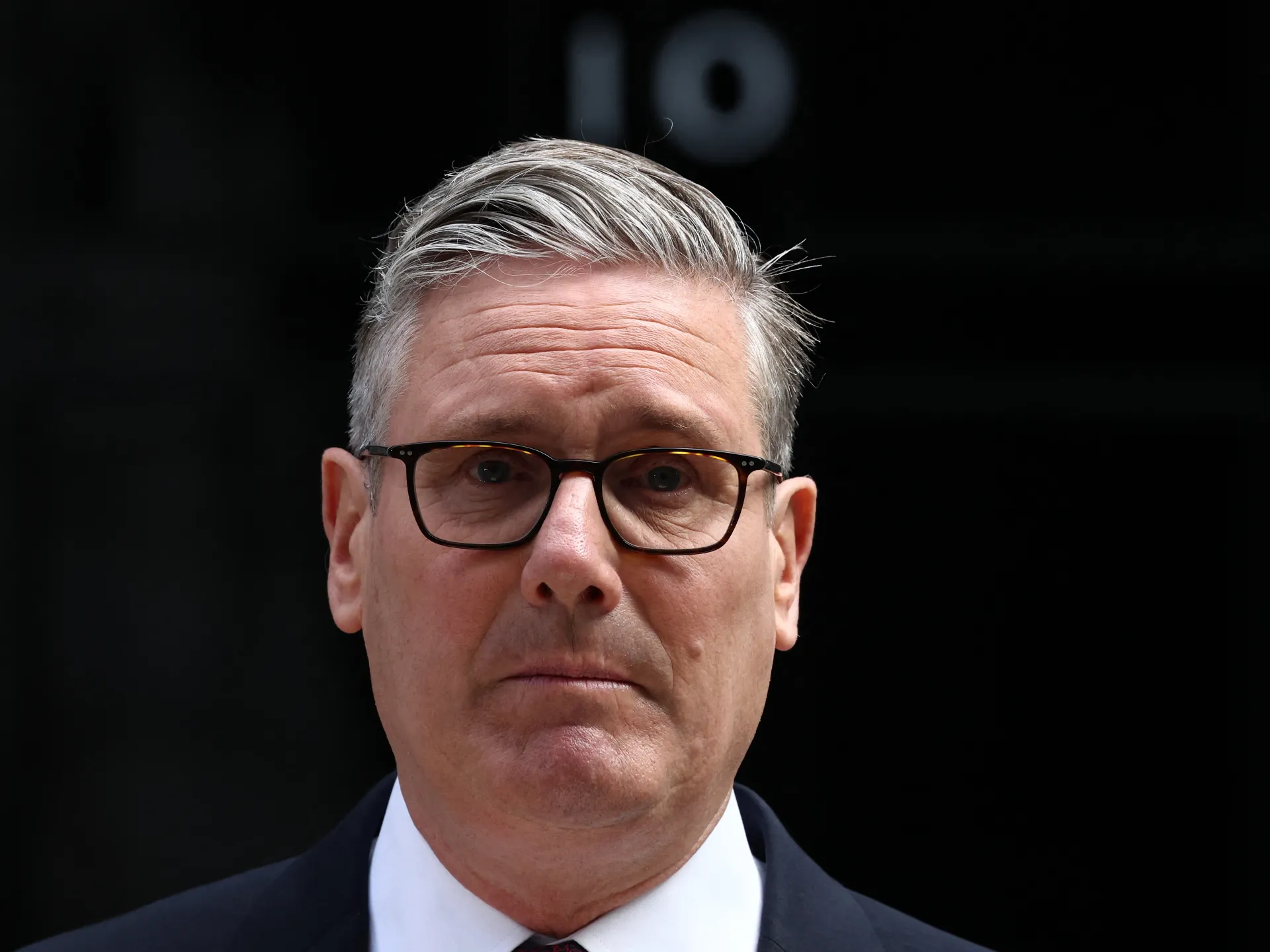
A New Chapter in British Political Leadership
For a significant portion of the post-war period, the United Kingdom was characterized by the enduring tenures of its prime ministers. Leaders who ascended to Downing Street were generally expected to remain in office for extended periods. This stability was underpinned by a political system featuring two dominant parties, relatively cohesive parliamentary factions, and a first-past-the-post electoral system that frequently translated votes into effective parliamentary majorities. Figures like Margaret Thatcher and Tony Blair exemplify this era, each serving for approximately a decade – a duration that now appears almost inconceivable.
However, recent years have witnessed a dramatic shift, with British prime ministers entering and exiting office at an accelerated pace. The nation is currently on track to see its seventh prime minister in a single decade. Theresa May and Boris Johnson each served just over three years, while Liz Truss’s premiership famously lasted only 49 days. Even Keir Starmer, who came to power with a substantial Labour majority in 2024, departed after merely two years. This raises a fundamental question: what has led to Britain’s celebrated political stability giving way so swiftly to such apparent turmoil?
Exploring the Explanations for Instability
Several factors have been put forward to explain this phenomenon, though none fully account for it in isolation. The rise of social media is often cited as a contributor to hardening political divisions, and while its influence is undeniable, Britain is not unique in its exposure to the internet. Similarly, Brexit’s impact on governance is significant; it fractured traditional party lines, intensified political identities, and presented prime ministers with the complex task of navigating not just policy debates but fundamental disagreements about the nation’s identity. Yet, as political analysts have noted, Brexit did not create this instability from scratch but rather amplified existing pressures within the political system.
Another perspective suggests a recent succession of ineffective leaders. While it is true that some recent prime ministers have faced challenges relating to competence – Theresa May's struggle to pass her Brexit deal, Liz Truss's quickly collapsing economic policies – or judgment and ethics – Boris Johnson's Partygate scandal and subsequent denials, Keir Starmer's perceived policy indecision and questionable appointments – attributing the entire trend to individual failings is incomplete. Britain has historically had its share of less successful politicians; the current situation points to deeper systemic issues.
The Evolving Relationship Between Prime Ministers and MPs
A more profound explanation lies in the transformation of the relationship between prime ministers and their parliamentary parties. A prime minister fundamentally relies on their MPs to enact their legislative agenda and to defend them during periods of difficulty. In much of the post-war era, this relationship was more dependable. However, since the 1970s, MPs have progressively demonstrated a greater readiness to defy their party lines, challenge their leaders, and, when necessary, contribute to their removal. Political scientist George Jones's analogy of a prime minister's power as an elastic band – capable of stretching, but only so far – aptly describes this shift.
This strained relationship between MPs and prime ministers has been a driving force behind many pivotal moments in British politics since the 1990s. The Iraq War significantly eroded Tony Blair's authority within his own party, with a substantial rebellion of Labour MPs in 2003 threatening his premiership. Although the rebellion did not succeed in removing him, the conflict created a lasting rift. David Cameron's decision to hold the Brexit referendum was partly a response to persistent pressure from Eurosceptic MPs within his party. When the public voted to Leave, he resigned. Boris Johnson's downfall was precipitated by his own MPs withdrawing support following the Partygate scandal. More recently, Keir Starmer's welfare cuts and strict immigration policies forced Labour MPs to choose between party loyalty and their principles.
This increasing willingness of MPs to act against their leaders has made the removal of prime ministers between general elections a recurring feature of modern British politics. Edward Heath, in 1974, was the last prime minister to both enter office by winning a general election and leave by losing one. Since then, leaders have more frequently been ousted by internal party pressure, scandals, resignations, or successions rather than directly by voters at the ballot box. This trend is accelerating; of the last five prime ministers, four have resigned due to internal party pressure, with only Rishi Sunak being removed by voters in a general election.
The Impact of Changing Voter Dynamics
A final element contributing to the current instability is the evolving nature of the British electorate. The UK no longer operates as a robust two-party system. In England, voters are increasingly distributing their support across multiple parties, rather than consistently aligning with Labour or the Conservatives. Scotland's political landscape remains heavily influenced by the independence debate, while Northern Ireland follows a distinct party system shaped by unionism, nationalism, and a growing centrist bloc. In Wales, Labour faces a stronger challenge from Plaid Cymru and Reform.
This fragmented electoral environment complicates matters for both prime ministers and MPs. For leaders, electoral success is no longer simply about consolidating Labour or Conservative voters. It involves strategic decisions about which voter segments to target, which policy promises to adjust, and which factions within the party's coalition can be risked. For instance, Keir Starmer's inner circle reportedly believed that tougher immigration policies could retain or attract voters leaning towards Reform, but these policies alienated Labour MPs and created an opening for the Green Party on the left, which demonstrated its capacity to gain votes and seats from Labour.
Fragmented voting patterns also render sitting MPs more vulnerable. With diminished voter loyalty and weaker traditional party allegiances, MPs are more prone to panic when their leader becomes unpopular, reckless, or embroiled in scandal. This incentivizes them to act preemptively rather than waiting for public judgment at the next general election. Consequently, leaders become easier to remove, and prime ministers are replaced more swiftly.
A Self-Perpetuating Cycle of Instability
The convergence of less effective leaders, increasingly assertive MPs, and fragmented voting patterns has created a self-reinforcing cycle. Each failed premiership appears to make the next one more challenging. A new prime minister arrives promising a fresh start, yet inherits the same underlying issues, the same anxious parliamentary colleagues, and an even less patient public. Rather than restoring stability, each change of leadership seems to inadvertently pave the way for the next prime minister's downfall. This is the cycle that Andy Burnham would inherit, and the critical question is whether he possesses the capacity to break it.
Burnham, who served as Mayor of Greater Manchester before returning to Parliament, has cultivated a reputation among his supporters for effective governance and clear communication. His victory in the Makerfield by-election, where Labour increased its vote against a trend of political fragmentation, offered some evidence for these claims. However, much remains uncertain. Doubts persist about the extent of his achievements in Greater Manchester. While public control of transport provided a compelling narrative, a national government role would subject such promises to far more rigorous scrutiny. If he maintains Labour’s stringent immigration policies, if his pledges for public control prove less substantial than anticipated, or if his popularity wanes, internal party goodwill could dissipate rapidly. Burnham would then confront the same peril as his predecessors: MPs concluding that their leader represents an unacceptable risk, thereby trapping him within the very cycle he aimed to disrupt.
Related Articles
 politics
A Decade On: Unwavering Conviction Among Some Brexit Supporters
 politics
Progressive Candidates Secure Key Victories in New York City Democratic Primaries
 politics
US Senate Approves Iran War Powers Resolution, Challenging Presidential Authority
 politics