
Congressional Effort to Limit Presidential War Powers
The United States Senate has approved a resolution designed to compel President Donald Trump to either cease military operations against Iran or secure explicit congressional authorization for any future engagements. This vote, which saw four Republican senators aligning with Democrats, marks a significant moment in the ongoing debate over executive and legislative authority in matters of war.
This recent development follows a similar measure passed by the House of Representatives earlier in June. The Senate's 50-48 vote, with a narrow Republican majority in both chambers, underscores a bipartisan concern regarding the extent of presidential power in initiating military conflicts. The resolution represents the tenth attempt by Congress to assert its constitutional role in the US-Iran conflict.
Background to the Senate Vote
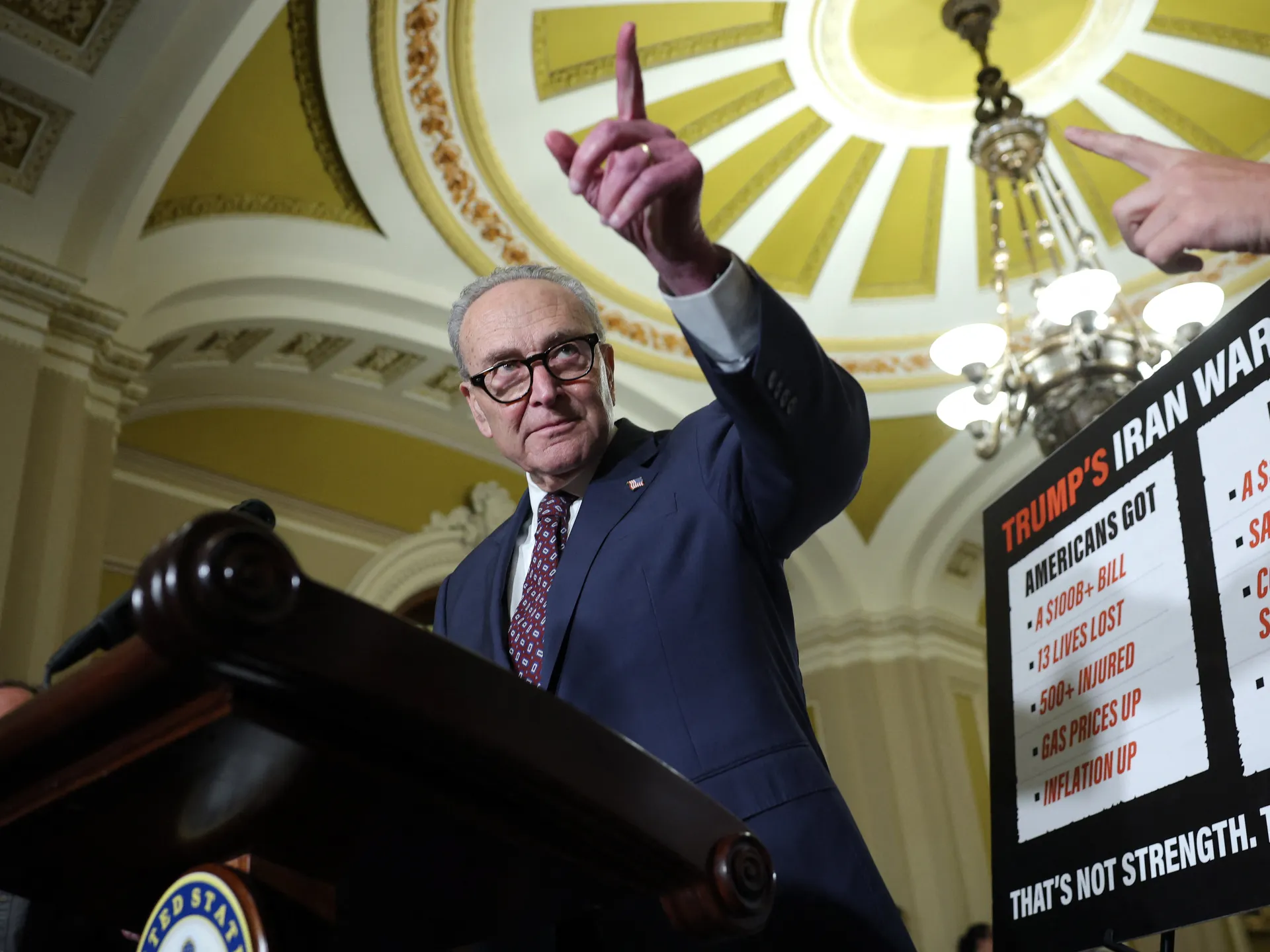
The push for this resolution stems from a perceived lack of congressional oversight in the Trump administration's military campaign against Iran. Senator Chuck Schumer, a leading Democrat, voiced strong criticism of the President's approach, arguing that his 'maximum pressure' strategy had resulted in 'maximum confusion, maximum chaos, maximum cost' for the American populace. Schumer emphasized the unpopularity of the conflict, citing a Reuters/Ipsos poll indicating that only 24 percent of respondents believed the war was justified by its costs.
While the Senate had previously passed a procedural war powers resolution concerning Iran in May, that attempt did not advance. This latest vote, however, carries more weight, reflecting a deeper legislative commitment to reining in executive military action.
Voting Breakdown and Key Players
The resolution's passage was made possible by a rare instance of bipartisan cooperation. Four Republican senators—Bill Cassidy of Louisiana, Lisa Murkowski of Alaska, Susan Collins of Maine, and Rand Paul of Kentucky—crossed party lines to vote in favor. With the exception of Pennsylvania's John Fetterman, all Democratic senators present also supported the measure. Notably, two Republican senators, Mitch McConnell of Kentucky and Dave McCormick of Pennsylvania, did not cast votes.
Provisions of the Resolution
The approved war powers resolution explicitly 'directs the President to remove United States Armed Forces from hostilities against the Islamic Republic of Iran.' It stipulates that further military force against Iran would only be permissible if 'explicitly authorised by a declaration of war or a specific congressional authorisation.' However, the resolution does include a provision allowing for a limited military presence in the Middle East to counter any 'imminent attack' against the US or its allies.
Implications of the Vote
This vote signals growing apprehension, even among some within the Republican Party, regarding the widely unpopular conflict, which commenced with US-Israeli airstrikes on Tehran in February. It marks the first time both chambers of Congress have passed a resolution specifically directing a president to withdraw US armed forces from a conflict zone under the War Powers Act. While the Trump administration is technically now required to seek explicit congressional approval for additional strikes on Iran, the practical impact on the ongoing conflict remains uncertain.
Historically, past administrations have found ways to circumvent such resolutions by securing more limited Authorizations for Use of Military Force (AUMFs). For instance, the 2001 AUMF, passed after the 9/11 attacks, granted President George W. Bush broad authority for the 'war on terror.' Similarly, a 2002 AUMF authorized military action against Saddam Hussein's government in Iraq. These authorizations remain in effect and have been utilized by subsequent presidents to justify military actions without seeking new congressional approval, as seen with the 2020 assassination of Iranian General Qassem Soleimani under the 2003 AUMF.
Experts suggest that despite its significant symbolic nature as a rebuke to President Trump, the resolution may not have immediate legal force. Resolutions, by themselves, do not carry the full weight of law.
Impact on US-Iran Negotiations
Prior to the vote, some Republican senators expressed concerns that passing the resolution could undermine President Trump's position in ongoing negotiations with Iran in Switzerland. Senator James Risch of Idaho cautioned that such a move could prompt Iranian negotiators to withdraw, perceiving it as a weakening of the President's authority. 'If this passes, the Iranians are going to simply stand up and walk away from negotiations,' Risch stated, arguing that Congress would effectively be telling the President to 'Leave us alone. We can do whatever we want to do.'
Administration's Potential Response
Risch also contended that the resolution's symbolic nature might render it ineffectual, predicting that 'The president isn’t going to pay any attention to it.' The US Constitution grants Congress the exclusive power to declare war, a division of power that has eroded over the past 75 years as presidents have increasingly committed US forces to overseas conflicts unilaterally. President Trump has often cited this precedent to argue that congressional authorization is not always necessary. In a recent interview, he reportedly dismissed any 'lesson' about the limits of his executive powers during the Iran conflict, asserting, 'There are no limits.'
The last time Congress formally declared war was during World War II, although it has passed AUMFs in subsequent decades, enabling limited military engagements without a full-scale declaration of war. During Trump's initial term, there were concerns that he might invoke the 2001 AUMF to strike Iran, based on unproven allegations of Tehran's support for al-Qaeda. Some observers have also suggested that the willingness of Republicans to challenge Trump on this issue now may be influenced by the upcoming November midterm elections, as they seek to defend their seats.
Source: Original Article
Related Articles
 politics
Progressive Candidates Secure Key Victories in New York City Democratic Primaries
 politics
Progressive Challengers Secure Victories Over Incumbents in Recent Primaries
 politics
The Enduring Influence of Meir Kahane on Contemporary Israeli Politics
 politics