
Venezuela Grapples with Dual Crises: Natural Disaster and Sanctions
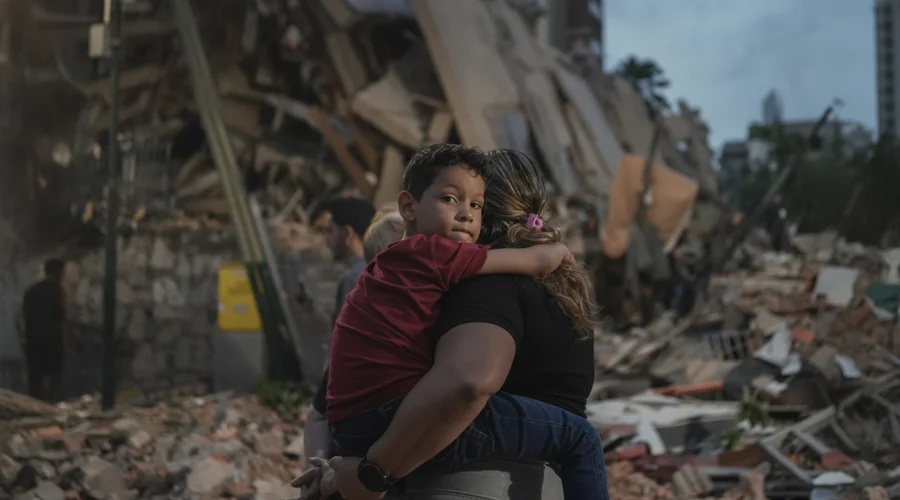
Venezuela is currently facing a profound humanitarian crisis after a series of powerful earthquakes struck the nation. The tremors, which occurred in quick succession, caused widespread destruction, leading to the collapse of numerous buildings across cities, including the capital, Caracas. Initial reports indicate a tragic loss of at least 164 lives, with close to 1,000 individuals sustaining injuries. In response to the catastrophic events, the Venezuelan government has officially declared a state of emergency, highlighting the severity of the situation and the urgent need for assistance.
Amidst the immediate aftermath, the international community has begun to mobilize. The United States, a nation with a complex and often strained relationship with Venezuela due to long-standing sanctions, has expressed its readiness to provide aid. US President Donald Trump publicly pledged support, stating his administration's willingness to assist. This offer was met with gratitude from Delcy Rodriguez, who currently leads Venezuela's interim government. The exchange underscores a recent shift in diplomatic relations, following the abduction of former President Nicolas Maduro earlier in the year, which led to a partial easing of some US sanctions and a renewed interest in US investment in Venezuela's oil sector.
The Intricate Web of Sanctions and Aid Delivery
While the partial lifting of sanctions, including those directly targeting Rodriguez, theoretically allows for more fluid transactions between Venezuela and US entities, experts are flagging two primary concerns regarding humanitarian operations. Sarah Schiffling, Deputy Director of Finland's HUMLOG Institute, which specializes in humanitarian logistics, articulated these worries. Firstly, there is apprehension that essential aid may not reach the most vulnerable populations. Secondly, there is a geopolitical concern that the disaster could be leveraged by the US to expand its influence within Venezuela.
Understanding the full scope of the challenge requires a look at the existing sanctions framework. Beyond US sanctions, which have been in place since 2005 and target specific individuals and groups, the European Union and the United Kingdom also imposed sanctions on Venezuela in 2017. These measures were enacted in response to perceived political repression and democratic backsliding under the previous Maduro administration. EU sanctions, for instance, include an embargo on arms and equipment for internal repression, alongside travel bans and asset freezes on designated individuals. Although some US sanctions have been eased, including those on Rodriguez and certain banking transactions, Venezuelan officials, including Rodriguez, have consistently advocated for a complete lifting of all sanctions to foster economic stability and attract sustained foreign investment.
Secondary Effects: How Sanctions Impede Humanitarian Efforts
Sanctions, while intended to exert political pressure, often carry unintended secondary consequences that significantly impede humanitarian aid operations. Schiffling explains that financial sanctions can create substantial hurdles for non-governmental organizations (NGOs) attempting to transfer funds to Venezuela to cover operational costs, such as staff salaries or supplier payments. Furthermore, these restrictions can introduce additional administrative burdens, causing delays in operations and complicating the import of essential goods and the deployment of humanitarian personnel.
Compounding these issues, aid agencies frequently operate with an abundance of caution to avoid inadvertently violating sanction regulations, which can lead to a slowdown or even a complete halt in aid deliveries. More broadly, the existing sanctions have already had a detrimental impact on Venezuela's domestic market. Sanctions imposed by the US, Canada, and the EU on Venezuela's critical oil and financial sectors have exacerbated the country's economic woes. United Nations figures from 2024 reveal that nearly eight out of ten Venezuelans live in poverty, with many lacking adequate access to food and vital medicines.
Michael Fakhri, the UN Special Rapporteur on the Right to Food, has highlighted that sanctions are a primary factor limiting the Venezuelan government's capacity to implement social protection programs and provide essential public services. Following a visit to Venezuela in early 2024, Fakhri observed that widespread food insecurity, malnutrition, and the deterioration of livelihoods have contributed to a significant exodus of people from the country. Schiffling emphasized that the recent earthquakes have struck a population already in dire need, possessing limited capacity to cope with additional disruptions. The domestic market for essential items is likely insufficient, underscoring the critical need for international shipments.
Geopolitical Dimensions of Aid and Reconstruction
In response to the earthquakes, the US Department of State has confirmed that Washington is coordinating with the interim Venezuelan government to dispatch search and rescue teams, medical supplies, and humanitarian aid. However, Schiffling cautions that while humanitarian principles dictate impartiality, neutrality, and independence, these ideals are not always upheld in practice. There is a strong possibility that the US may strategically position its aid efforts to enhance its influence in the country.
Since the military operation in January that led to Maduro's abduction, Washington has actively sought to capitalize on economic opportunities, particularly in Venezuela's oil industry. President Trump previously claimed that the US had recovered its costs many times over through oil extraction following the operation. While Rodriguez has largely accommodated US ambitions by liberalizing Venezuela's economy and encouraging foreign investment, observers suggest she had limited alternatives, given past warnings from the Trump administration about potential further military action. In January, Venezuela's acting president signed legislation to facilitate private foreign investment in the oil sector, an initiative estimated to be worth $8 billion. While framed as mutually beneficial, specific details regarding oil sales and revenues have not been publicly disclosed by either side.
The current earthquake disaster could potentially pave the way for increased direct US investment, not only for immediate needs like drinking water infrastructure but also for long-term reconstruction projects. However, operating in regions with compromised security, such as parts of Venezuela, may necessitate armed escorts for aid workers, which can raise concerns about neutrality. Schiffling explained that this can compromise the perception of impartiality, as an organization might be seen as aligned with a particular armed group. Furthermore, government funding for humanitarian initiatives often raises questions about whether the aid serves a broader political agenda, rather than solely humanitarian objectives.
Source: Original Article
Related Articles
 news
news
Strong Earthquake Rocks Northern Japan, No Tsunami Threat Issued
 news
news
Northern Venezuela Grapples with Aftermath of Devastating Twin Earthquakes
 news
news
Haitian Diaspora in US Finds Pride and Apprehension in World Cup Journey
 news
news