
A Long-Awaited Return to the Global Stage
Haiti's journey in the 2026 World Cup, though brief, resonated profoundly with its diaspora, particularly those residing in the United States. For supporters like 52-year-old Murielle Lodvil, the two goals scored against Morocco marked a significant milestone, ending a 52-year drought since Haiti's last World Cup goals. Lodvil, alongside countless others in New York's vibrant Haitian communities, watched with bated breath as the match unfolded, experiencing a rollercoaster of emotions from silence to exhilaration with each goal and equalizer.
Despite Haiti's early elimination from Group C following losses to Scotland and Brazil, the experience transcended mere football results. Murielle Lodvil celebrated her birthday by purchasing tickets for herself and her 41-year-old sister, Barbara Albert, to witness Haiti play Brazil. "That is why Haiti participating on this world stage was so special to me," Lodvil remarked, emphasizing that "Every moment of this experience counts, ending with two goals, even with the outcome." Albert echoed this sentiment, highlighting the immense pride felt by supporters witnessing Haiti's return to such a prominent international platform. "The representation was really good. We're proud of our Haitian community. We really showed up for them," she stated.
Widespread Support and Community Spirit
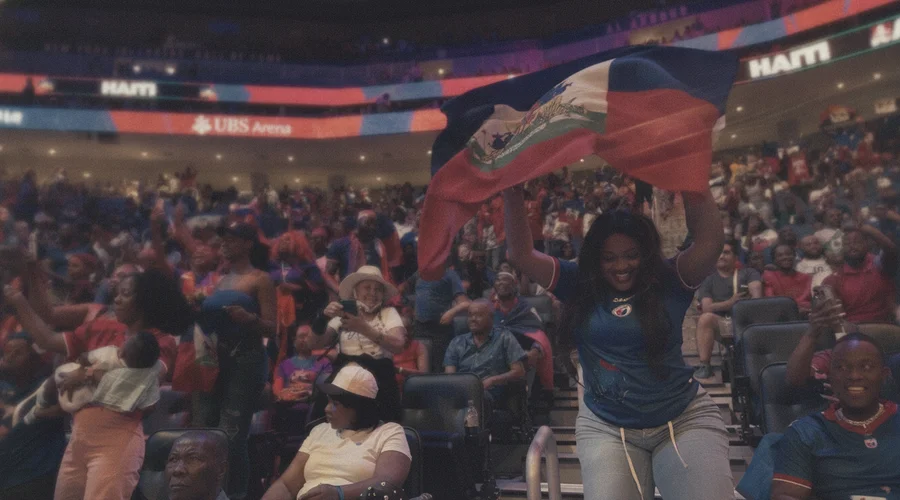
The enthusiasm was palpable at the UBS Arena in Elmont, New York, an area home to a significant Haitian population, estimated at around 113,000 residents by the 2024 US Census Bureau. Before Haiti's match against Brazil, the stadium was awash in a sea of red and blue, with thousands of fans donning Haitian jerseys, wigs, and flags. Maude Schwartz, a 58-year-old Pilates studio owner who immigrated from Haiti in 1990, embodied this spirit, waving her flag and dancing into the arena with her family. While her twin sons attended the match, Schwartz found immense satisfaction in the watch party atmosphere, exclaiming, "Oh my goodness, my entire family is here."
However, the celebration was not without its underlying tensions. Schwartz lamented that her niece, despite repeated attempts, had been denied a visa to enter the United States, preventing her from joining the family for this historic occasion. This personal struggle reflects a broader challenge faced by many Haitian supporters, impacted by a travel ban initiated by the Trump administration last year and expanded in January. These restrictions have created barriers for individuals seeking to travel to the US, even for significant cultural events.
Immigration Hurdles and Their Impact
The travel restrictions also affected the Haitian national team itself. Defensive midfielder Woodensky Pierre, who resides in Haiti, was only able to secure travel to the United States a mere 10 days before Haiti's opening match against Scotland on June 13. Jean-Marc, a 55-year-old former player in the Long Island Football League, expressed his dismay, asserting, "This is a world event and people should not be denied entry to this country." Born in the US to Haitian parents, Jean-Marc, who spent part of his childhood in Haiti before returning in 1986 following the fall of the Duvalier regime, described watching Haiti compete in his adopted country as a "momentous event for all Haitians."
A Blend of Identities and Overcoming Stereotypes
In Flatbush, Brooklyn, often referred to as Little Haiti, Nadege Fleurimond, owner of the Haitian-Caribbean restaurant BunNan, opened her doors for every Haiti match. Her establishment provided a gathering place for those unable to afford stadium tickets, fostering a sense of community. Fleurimond, who immigrated from Haiti at the age of seven, has witnessed firsthand the pervasive immigration uncertainties affecting Haitian families. For her, watching Haiti's World Cup participation in the country where she built her life carried a unique significance. "I am Haitian, and I am also American," she affirmed. "The United States gave me opportunities, education and the ability to build businesses and create jobs. Haiti gave me my roots, my values, my resilience and my culture."
Fleurimond emphasized that the experience served as a powerful reminder that "immigrants don't have to choose one identity over the other." Having grown up hearing more about Haiti's challenges than its achievements, the team's presence in the World Cup was a profound validation. "It was proof that we belong in rooms and on stages people often count us out of," she concluded, encapsulating the dual sense of pride and lingering apprehension that defined the World Cup experience for many Haitians in the US.
Source: Original Article
Related Articles
 news
news
Strong Earthquake Rocks Northern Japan, No Tsunami Threat Issued
 news
news
Northern Venezuela Grapples with Aftermath of Devastating Twin Earthquakes
 news
news
Venezuelan Earthquake Aftermath: Examining the Impact of Sanctions on Humanitarian Aid
 news
news