
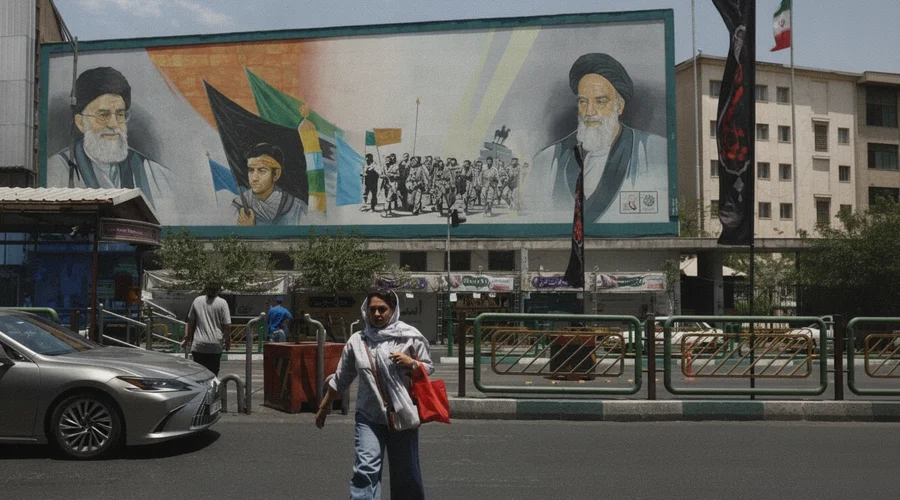
Diplomatic Tensions Amidst Negotiation Efforts
As negotiators strive to finalize an agreement within a 60-day timeframe, significant disagreements persist between Iran and the United States on key issues. These include the scope of nuclear oversight and the implementation details of any prospective deal. The ongoing dispute highlights the complex challenges both nations face in reaching a comprehensive resolution.
US Secretary of State Marco Rubio reiterated Washington's stance that Iran would not be permitted to impose tolls in the Strait of Hormuz, emphasizing the critical importance of keeping the strategic waterway open for international shipping. Conversely, Iran has refuted claims by US President Donald Trump, who asserted that Tehran had agreed to reinstate nuclear inspectors, maintaining that no such agreement has been reached for the return of International Atomic Energy Agency (IAEA) monitors. These contradictory statements underscore the substantial gaps that diplomatic efforts are still attempting to bridge.
Iran's Evolving Military Stance and Nuclear Program
Iran's military strategy is reportedly undergoing a significant shift, moving from a purely defensive posture to one that incorporates preemptive operations. General Ahmad Reza Pourdastan, head of Iran’s Army Strategic Studies and Research Center, indicated that Tehran could employ surprising tactics if its national interests were threatened, suggesting that a considerable portion of its military capabilities remains undisclosed. This development signals a more assertive approach in Iran's defense doctrine.
Regarding nuclear inspections, Iranian Foreign Ministry spokesperson Esmaeil Baghaei has denied any scheduled meetings with IAEA chief Rafael Grossi, stating that there are no immediate plans for visits or inspections by the UN nuclear watchdog. Baghaei affirmed that Iran’s engagement with the IAEA would continue to adhere to established procedures, safeguards obligations, parliamentary legislation, and directives from the Supreme National Security Council. Iran had previously suspended its cooperation with the IAEA following reported US and Israeli strikes on its nuclear facilities in June 2025. Despite ongoing diplomacy under a 60-day framework, Tehran maintains it has not authorized the return of inspectors.
Skepticism on Negotiation Timeline and Regional Reassurance
Analysts express skepticism regarding the feasibility of finalizing a comprehensive deal between Washington and Tehran within the 60-day window repeatedly cited by President Trump. Charles Kupchan, a senior fellow at the Council on Foreign Relations, suggested that a final agreement is unlikely before the next calendar year, speculating that both sides might simply extend negotiations to maintain stability in the Strait of Hormuz without reaching a definitive deal by the end of Trump's presidency.
In the Persian Gulf, US Secretary of State Marco Rubio is on a regional tour, visiting the United Arab Emirates, Kuwait, and Bahrain. These nations are considered to have been significantly impacted by the conflict with Iran. Rubio, who also serves as Trump's national security adviser, aims to reassure regional allies about the enduring nature of US security commitments. He is also expected to address the Gulf Cooperation Council in Bahrain, where he is reportedly seeking to garner support for the proposed deal amidst concerns over Washington's response to Iranian actions.
Meanwhile, Qatar, the world's second-largest producer of liquefied natural gas (LNG), is preparing to resume normal production. Prime Minister Sheikh Mohammed bin Abdulrahman bin Jassim Al Thani indicated that most LNG production could return to pre-conflict levels within weeks, with the exception of the damaged Ras Laffan facility. Production had been halted in March following an Iranian drone attack. QatarEnergy will lift its force majeure declaration only after ensuring all safety and operational concerns are fully addressed.
US Senate Curbs Presidential War Powers
In a significant development in the United States, the Senate has approved a resolution to limit President Trump's war powers concerning Iran. The measure, which passed with a 50-48 vote, mandates congressional approval for any further US military action against Iran. This marks the first time a war powers resolution pertaining to the conflict has successfully cleared both chambers of Congress. Four Republican senators—Bill Cassidy, Lisa Murkowski, Susan Collins, and Rand Paul—joined the majority of Democrats in supporting the resolution, while Pennsylvania Democrat John Fetterman cast a dissenting vote. The resolution is anticipated to face a presidential veto.
Israeli Concerns and Lebanese Ceasefire
Israeli National Security Minister Itamar Ben-Gvir voiced strong skepticism regarding US beliefs that Iran would abandon its nuclear ambitions, suggesting that Israel might take unilateral action against Tehran. Ben-Gvir asserted that confronting the Iranian threat is Israel's responsibility, implying that Israel would not be constrained by the directives of its allies, even the United States. These remarks surface amidst reported tensions between Washington and Tel Aviv, particularly concerning Israel's actions in Lebanon and ongoing US-Iran negotiations. Previously, US Vice President JD Vance publicly criticized Israeli cabinet ministers for their perceived attacks on Washington, reminding them that the US remains Israel's primary powerful ally.
In southern Lebanon, the United Nations has reported that the ceasefire is largely holding, despite continued Israeli military ground and air activity. UN spokesperson Stephane Dujarric noted that UNIFIL troops observed heavy machine-gun fire and three tank rounds from Israeli forces near Biyyada, along with drone activity apparently monitoring UNIFIL peacekeepers. This incident followed a day without exchanges of fire, marking a rare lull since fighting escalated in March. The UN has urged all parties to fully adhere to the ceasefire and avoid any escalation, particularly during this sensitive period of ongoing negotiations.
Source: Original Article
Related Articles
 news
news
Ukraine's Recovery Conference in Poland Amidst Diplomatic Tensions
 news
news
Ukrainian Forces Target Key Railway Bridge in Northern Crimea Amid Supply Route Campaign
 news
news
Addressing South Africa's Challenges: Beyond Blaming Migrants
 news
news