
US Military Engages Suspected Drug Smuggling Vessel
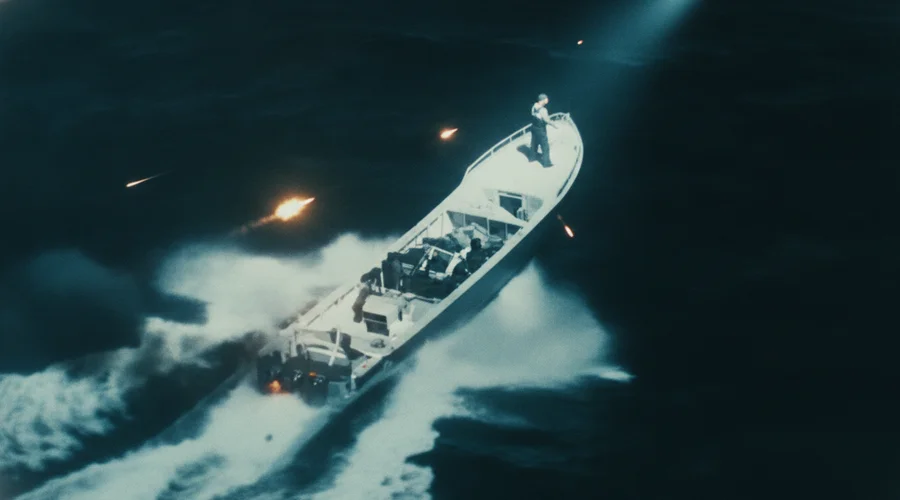
The United States military has reported a recent operation in the Eastern Pacific Ocean that resulted in the deaths of three individuals. The strike, which took place on a Thursday, targeted a vessel that U.S. authorities allege was involved in the smuggling of illicit narcotics. This action marks another instance in a series of military engagements aimed at disrupting what Washington describes as 'narco-terrorist' operations in waters proximate to the United States.
According to statements from U.S. officials, the intercepted vessel was reportedly transporting unidentified narcotics from Latin America, destined for the U.S. market. The U.S. Southern Command, through a public statement on social media, confirmed the execution of a “lethal kinetic strike on a vessel operated by Designated Terrorist Organisations.” The statement further elaborated, “Intelligence confirmed the vessel was transiting along known narco-trafficking routes in the Eastern Pacific and was engaged in narco-trafficking operations. Three male narco-terrorists were killed during this action.”
Details of the Operation and Broader Context
An unclassified video, disseminated alongside the official statement, appeared to depict the moment a high-speed boat was impacted by a projectile, subsequently erupting in flames. This incident contributes to a cumulative death toll of at least 211 individuals in similar strikes across the Pacific region. The U.S. government, under the current administration, has articulated a stance characterizing the country as being in an “armed conflict” with drug cartels operating in Latin America. The stated objective of these operations is to curtail the flow of illegal drugs into the United States.
However, the administration has faced scrutiny regarding the provision of concrete evidence linking all casualties directly to drug trafficking activities. Critics have voiced concerns that some of these strikes may inadvertently affect local fishermen who lack any established connections to drug cartels. The legality of these military actions has been consistently challenged by various entities, including members of the U.S. political establishment and international human rights organizations.
Calls for Transparency and Accountability
In response to growing concerns, U.S. senators recently issued a demand for the Pentagon to release “unedited” video footage pertaining to these boat strikes. A specific incident in September garnered significant attention from U.S. lawmakers. In that particular strike, the military acknowledged employing a “double-tap” method, which resulted in the deaths of two individuals who had survived an initial impact. That earlier operation led to a total of eleven fatalities.
The administration has defended the subsequent strike in the September incident as an act of “self-defense.” Nevertheless, critics maintain that targeting and killing survivors is a violation of established legal norms. These ongoing operations and the associated controversies underscore a complex and evolving situation in the Eastern Pacific, where national security objectives intersect with humanitarian and legal considerations.
The U.S. government's intensified efforts to combat drug trafficking in the Eastern Pacific reflect a strategic priority to disrupt illicit supply chains. However, these actions continue to be met with calls for greater transparency, robust accountability, and adherence to international legal frameworks, particularly concerning the identification of targets and the treatment of individuals involved in such incidents.
Source: US kills 3 in strike on alleged drug smuggling boat in Eastern Pacific
Related Articles
 news
news
Syrian Activist Hassan Akkad Detained in Damascus Amidst Legal Dispute
 news
news
Trump Signals Potential Shift in Approach to North Korean Nuclear Program
 news
news
ICC Prosecutor Karim Khan Suspended by British Legal Body Amid Misconduct Allegations
 news
news