
President Trump's Shifting Priorities
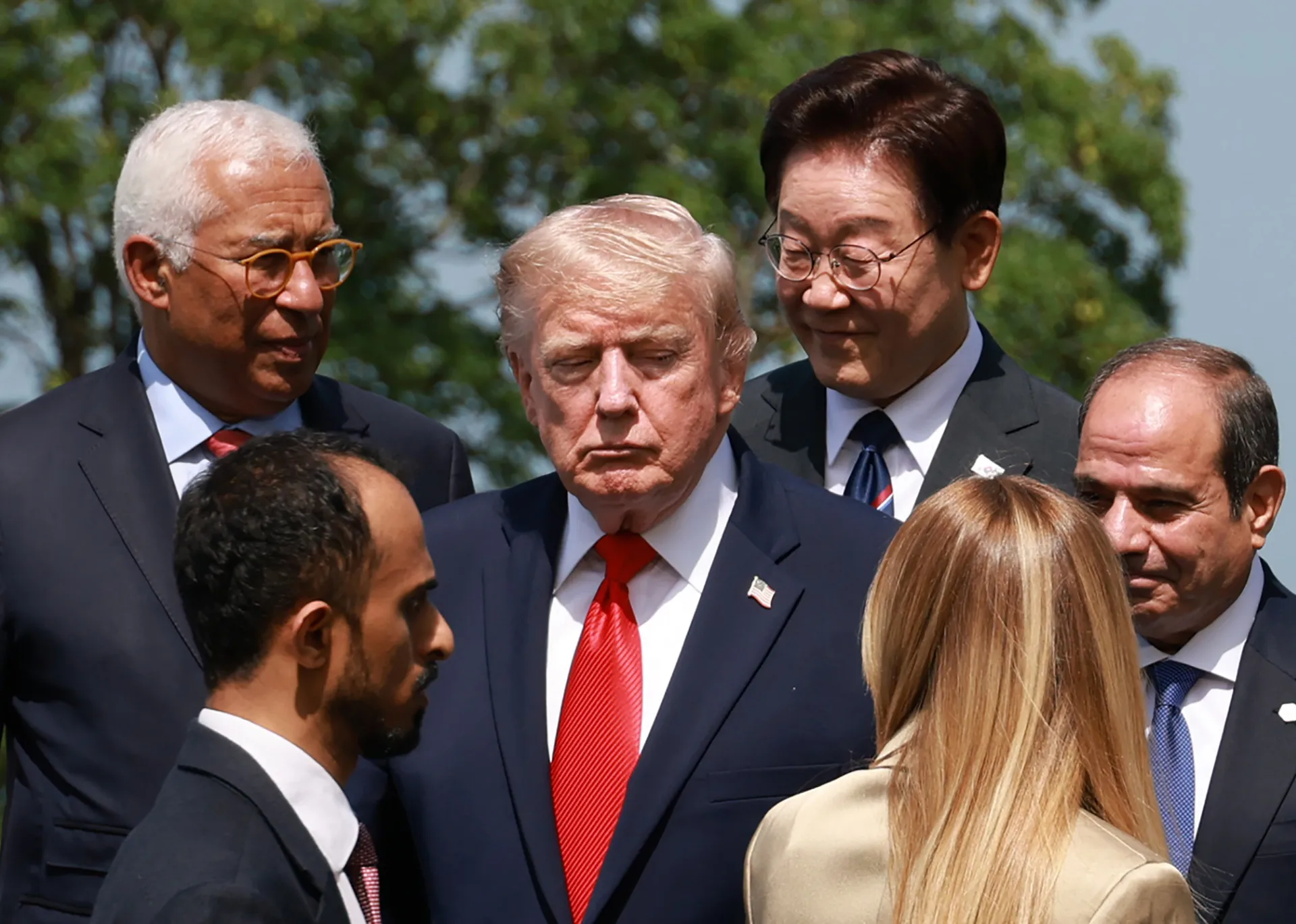
United States President Donald Trump has reportedly signaled a potential change in his administration's strategy regarding North Korea's nuclear program. This indication comes after the U.S. successfully finalized an agreement with Iran. South Korean President Lee Jae Myung conveyed this information during a news conference, stating that President Trump informed him at a G7 dinner that "the time had come to pay attention to the North Korea issue." This comment suggests a possible re-engagement by the U.S. concerning Pyongyang's ongoing development of nuclear weapons.
The discussion between the two leaders occurred amidst broader international dialogues, with President Trump's remarks potentially marking a new chapter in the complex relationship between Washington and Pyongyang. The U.S. has historically sought the complete denuclearization of North Korea, a goal that has seen varying degrees of diplomatic effort and success over the years.
South Korean Perspective on Sanctions
During their conversation, President Lee Jae Myung also expressed his view to President Trump that sanctions imposed on North Korea have proven to be "ineffective." He cited the growing military collaboration between Pyongyang and Moscow as evidence of this ineffectiveness, suggesting that even limited support from Russia significantly benefits North Korea. This perspective highlights the challenges of international sanctions in altering North Korea's strategic calculus, particularly when the nation finds alternative avenues for support and cooperation.
The Korean Peninsula remains in a state of technical conflict, as the 1950-53 Korean War concluded with an armistice rather than a formal peace treaty. A Demilitarized Zone (DMZ) separates the two Koreas. North Korea first conducted a nuclear test in 2006 and is widely believed to possess dozens of nuclear weapons, posing a significant security concern for its neighbors and the international community.
North Korea's Diplomatic Engagements and Nuclear Ambitions
In recent times, North Korea's leader, Kim Jong Un, has actively pursued efforts to strengthen ties with allied nations. This includes sending military personnel and munitions to assist Russia in its conflict with Ukraine. Furthermore, Kim Jong Un recently hosted Chinese President Xi Jinping in Pyongyang. This meeting followed a series of summits in Beijing where President Xi engaged with both U.S. President Trump and Russian leader Vladimir Putin. Notably, official statements from both Pyongyang and Beijing regarding the visit did not mention the topic of North Korean denuclearization. Experts have interpreted this omission as a tacit acceptance by China of North Korea's status as a nuclear power.
Since the collapse of a 2019 summit between Kim and Trump in Hanoi, which faltered over disagreements concerning the scope of denuclearization and sanctions relief, Pyongyang has consistently affirmed its status as an "irreversible" nuclear state. Kim Jong Un has publicly committed to expanding North Korea's nuclear capabilities, including the unveiling of a new facility dedicated to developing nuclear bomb fuels. These actions underscore North Korea's determination to advance its nuclear program despite international pressure and sanctions.
Past Diplomatic Efforts and Future Prospects
During his initial term, President Trump engaged in three direct meetings with Kim Jong Un, famously remarking at one point that they were "in love." These high-profile diplomatic efforts aimed to achieve a breakthrough on denuclearization, a long-standing objective for the U.S. However, these meetings ultimately yielded no substantial progress towards denuclearization. Despite the lack of tangible results, President Trump continued to pursue engagement with Kim Jong Un, even expressing a "100 percent" openness to another meeting during an Asia tour last year. This offer, however, has not received a response from Pyongyang.
In a departure from established U.S. policy, President Trump also publicly acknowledged North Korea as "sort of a nuclear power." This statement represented a significant shift in diplomatic language. More recently, President Trump posted an uncaptioned photograph of himself and Kim Jong Un, taken during their 2018 meeting in Singapore, on a social media platform. This post, without further context, has fueled speculation regarding the future direction of U.S. policy towards North Korea and the potential for renewed diplomatic initiatives.
The future of the U.S. approach to North Korea's nuclear program remains uncertain, but President Trump's recent comments suggest a potential refocusing of attention on this critical geopolitical issue, following developments in U.S. foreign policy with other nations.
Source: Original Article
Related Articles
 news
news
US Military Strike in Eastern Pacific Targets Suspected Drug Smugglers, Killing Three
 news
news
Syrian Activist Hassan Akkad Detained in Damascus Amidst Legal Dispute
 news
news
ICC Prosecutor Karim Khan Suspended by British Legal Body Amid Misconduct Allegations
 news
news