
Fragile US-Iran Agreement Under Strain
A recently forged interim peace agreement between the United States and Iran, intended to pave the way for a more comprehensive resolution, is facing significant challenges. The escalating military actions by Israel in southern Lebanon threaten to unravel the delicate understanding before formal negotiations can even commence. This agreement initiated a 60-day period for the two nations to finalize a lasting peace deal, with initial talks scheduled to begin in Switzerland.
However, these crucial discussions have been postponed. US Vice President JD Vance unexpectedly canceled his trip to Switzerland following an Israeli bombing campaign in southern Lebanon that resulted in at least 18 fatalities. In response, Iran indicated that its negotiators would not be prepared to engage in talks until there was clear evidence of the agreement’s ceasefire provisions, particularly those pertaining to Lebanon, being implemented. Analysts suggest that Israel's persistent military activities in southern Lebanon could severely undermine any prospects for de-escalating the conflict in the Middle East.
Reasons for Postponed Negotiations
Neither the US nor Iran has provided an official, detailed explanation for the cancellation of the planned talks at the Burgenstock Resort in Stansstad, Switzerland. A statement from the White House acknowledged that the "plans for the upcoming technical talks have not been finalised," and that the US delegation, led by Vice President Vance, was "prepared to depart at the first available opportunity." The statement also highlighted the inherent complexities and unpredictability of these negotiations, noting that the Vice President would not be departing as previously scheduled.
Iran's semi-official Tasnim news agency reported that Iranian negotiators had not confirmed their travel plans, as they awaited tangible signs that the preliminary agreement, which includes Lebanon in the US-Iran ceasefire, was being honored. Subsequently, the Swiss Foreign Ministry confirmed the postponement of talks aimed at implementing the initial deal between Tehran and Washington to end the conflict. A new date for the commencement of these discussions has not yet been established, despite the 60-day negotiation window having already begun.
Escalation in Lebanon
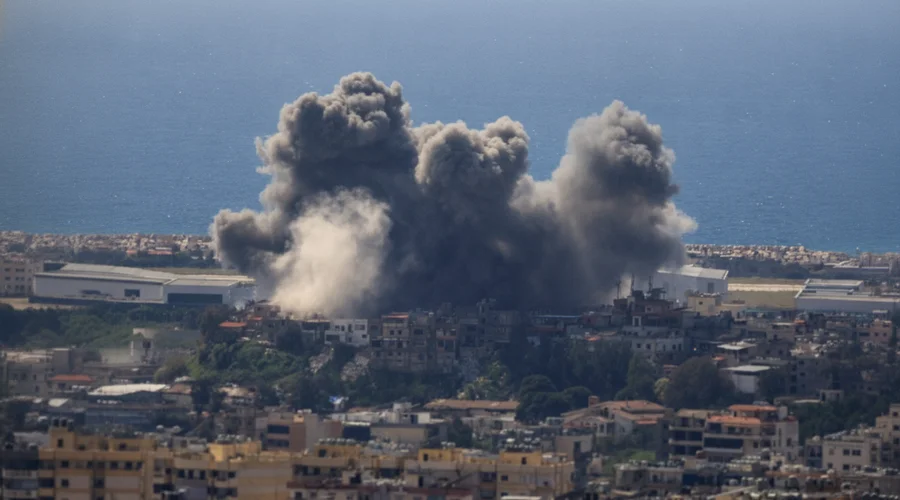
Hours before the scheduled US-Iran talks, residents in southern Lebanon experienced intense Israeli bombardment of their communities. These attacks have reportedly claimed at least 18 lives and injured dozens, with a significant number of casualties recovered from a destroyed residential building in Harouf village. This recent surge in Israeli military activity marks one of the deadliest periods in southern Lebanon since the US and Iran reached their initial agreement to cease hostilities across all fronts, including Lebanon.
Israel initiated near-daily attacks on Lebanon in early March, following rocket fire into Israel by the Iran-backed Lebanese group Hezbollah. This exchange of fire was reportedly in response to US-Israeli attacks on Tehran that resulted in the deaths of Iran's Supreme Leader, Ayatollah Ali Khamenei, and other high-ranking Iranian officials. Despite a US-brokered ceasefire in April and the subsequent US-Iran memorandum of understanding (MoU), Israeli attacks have continued. The Israeli military stated on Friday that its overnight attacks in southern Lebanon were a response to Hezbollah's "repeated violations of the ceasefire." Hezbollah acknowledged targeting Israeli military positions within Lebanon, and the Israeli military later reported the deaths of four of its soldiers during combat in Lebanon.
Itamar Ben-Gvir, Israel's far-right National Security Minister, a political ally of Prime Minister Netanyahu, asserted that "all of Lebanon must burn." He emphasized Israel's need to convey to the international community that the security of its citizens and soldiers is paramount, advocating for a forceful response against perceived threats in the region.
Lebanon's Role in the Peace Agreement
The memorandum of understanding signed by the US and Iran explicitly addresses the situation in Lebanon. Its first clause outlines an agreement for the "immediate and permanent termination of military operations on all fronts, including in Lebanon." Furthermore, it states that both parties commit to ensuring the "territorial integrity and sovereignty of Lebanon." However, the MoU makes no direct mention of Israel, leading experts to suggest that the interpretation of this clause remains open. Given that Israel and Hezbollah are not signatories to this agreement, it is unclear how a ceasefire in Lebanon would be enforced or whether it implies a cessation of Iranian financial support for Hezbollah.
Esmaeil Baghaei, Iran’s Foreign Ministry spokesperson, stated that Tehran "does not separate the United States and the Israeli regime," implying that the US bears the responsibility for ensuring Israel adheres to the commitments outlined in the memorandum.
Israel's Reaction and International Tensions
The US-Iran deal has been met with considerable discontent within Israel, leading to political scrutiny of Prime Minister Netanyahu from both allies and the opposition. Reports indicate that Israel was not involved in the negotiations nor permitted to review the text of the agreement before its signing by US President Donald Trump and Iranian President Masoud Pezeshkian. Netanyahu declared that "the battle is not over yet" and that "Israel still faces additional challenges," asserting that the military would not withdraw from occupied Lebanese territory. He stated that Israel would "restore security to the north" through "maintaining the security strip in southern Lebanon," and would not withdraw from this area "as long as Israel’s security needs require it."
Defence Minister Israel Katz reiterated this stance, stating that he and Netanyahu are pursuing a policy under which the military will remain in "security zones in Lebanon, Syria and Gaza for an unlimited period of time" to protect Israeli borders and communities. These statements occur against a backdrop of increasing friction between Washington and Israel. At the G7 summit in France, President Trump criticized Netanyahu’s bombing tactics in Lebanon, citing a high number of civilian casualties. He remarked that Israel had been fighting Hezbollah "too long and too many people are being killed," questioning the necessity of destroying residential buildings in pursuit of targets. Vice President Vance also publicly criticized Israeli cabinet ministers for their opposition to the deal, urging Israeli leaders to consider alternative solutions to national security challenges beyond military force.
Future of the Peace Deal
Ali Vaez, director of the Iran Project at the International Crisis Group, emphasized that the onus is now on US President Trump to determine the fate of the MoU. Vaez suggested that if Trump desires the deal to succeed, he must leverage American influence not just to admonish Netanyahu, but to compel him to halt the conflict in Lebanon. From Tehran's perspective, Vaez noted, if Trump is unwilling or unable to control Netanyahu, any agreement with the US would be rendered meaningless.
Tahani Mustafa, a visiting fellow on the Middle East and North Africa program at the European Council on Foreign Relations, commented that the MoU does not inherently guarantee Israel's compliance or prevent it from attempting to sabotage the process, especially given existing tensions between the US and Israel and domestic pressures on Netanyahu ahead of national elections. Mustafa indicated that Israel could indeed try to derail the deal, pointing to past instances of Israeli defiance despite US pressure. She concluded that sustained, significant pressure on Israel is the only factor that could ensure continued negotiations, though Washington has demonstrated a lack of political will to apply such pressure. This situation, Mustafa suggested, leaves the burden of keeping peace talks on track to Iran, even if Israeli bombing in Lebanon persists.
However, Vaez warned that continued casualties in Lebanon would swiftly undermine the negotiations. He concluded that while Iran might eventually be able to separate the issue of Lebanon from the broader agreement, this is not feasible while the MoU is still in its nascent stages.
Source: Can US-Iran peace ‘deal’ survive Israeli bombing of Lebanon?
Related Articles
 world
world
US-Iran Ceasefire Talks Postponed Amidst Escalating Israeli-Lebanese Tensions
 world
world
World Cup: A Yemeni Fan's Enduring Passion Amidst Decades of Conflict
 world
world
Escalating Tensions: Israeli Strikes Persist in Southern Lebanon Amid Diplomatic Efforts
 world
world