
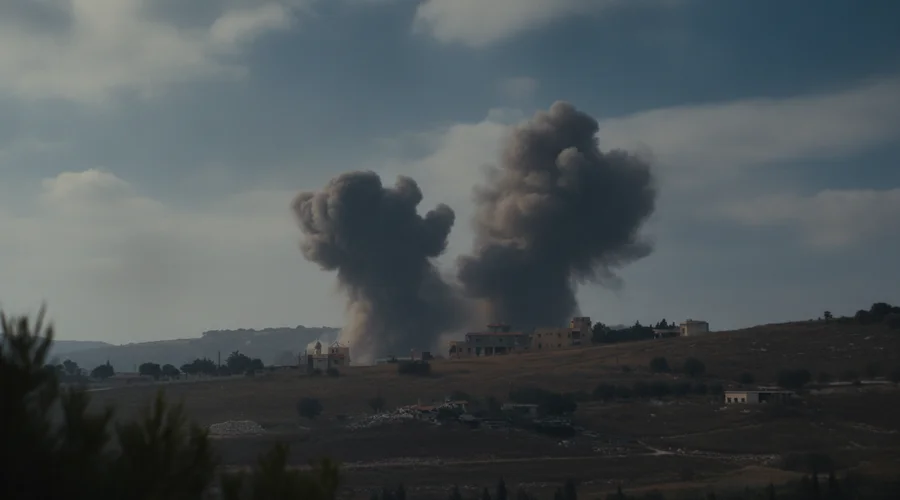
Continued Hostilities in Southern Lebanon
Recent reports indicate that Israeli military operations in southern Lebanon have persisted, even as diplomatic efforts, including a US-Iran Memorandum of Understanding (MOU), sought to mitigate regional tensions. These ongoing actions have resulted in a notable loss of life and a deepening of the humanitarian crisis in the affected areas, raising concerns among international observers about the effectiveness of current de-escalation strategies.
The latest wave of confrontations has reportedly led to the deaths of at least 18 individuals in overnight clashes. These casualties are believed to be a mix of combatants and civilians, although specific breakdowns are often difficult to ascertain in the immediate aftermath of such events. The intensity of these engagements underscores the volatile nature of the border region and the persistent challenges in achieving a lasting cessation of hostilities.
Impact of the US-Iran Memorandum of Understanding
The US-Iran Memorandum of Understanding was widely perceived as a significant diplomatic initiative aimed at fostering stability in the broader Middle East. Among its core objectives was the cessation of cross-border attacks between various regional actors, including those involving Israel and Hezbollah. The continued military activity, particularly the Israeli strikes on southern Lebanon, suggests that the MOU's immediate impact on ground-level dynamics may be limited, or that its provisions are being interpreted differently by the parties involved.
Observers had hoped that the agreement would create a window for dialogue and a reduction in military posturing, thereby preventing further escalation. However, the ongoing violence points to deeply entrenched grievances and strategic imperatives that may be difficult to overcome through diplomatic instruments alone. The situation highlights the complexities inherent in regional conflicts, where multiple actors with diverse interests are at play.
Regional Implications and International Response
The sustained conflict in southern Lebanon carries significant regional implications. Lebanon, already grappling with profound economic and political instability, faces additional strain from the ongoing military actions. Displacement of populations, destruction of infrastructure, and the disruption of daily life contribute to an already precarious humanitarian situation. International aid organizations have voiced concerns about the ability to deliver essential services and assistance effectively in such an environment.
The international community has largely called for restraint and adherence to international law. However, the specific responses from various global powers have varied, reflecting differing geopolitical alignments and strategic interests. The United Nations and other multilateral organizations have reiterated their appeals for a peaceful resolution and the protection of civilians, emphasizing the need for all parties to respect existing cease-fire agreements and international humanitarian law. The lack of a unified and forceful international response might be perceived by some actors as an indication of limited accountability, potentially emboldening continued military actions.
Historical Context and Future Outlook
The current situation is deeply rooted in a long history of conflict and mistrust between Israel and Hezbollah, as well as broader regional power dynamics. Previous attempts at de-escalation and peace have often been short-lived, with cycles of violence recurring. Understanding this historical context is crucial for appreciating the challenges in achieving a sustainable peace.
Looking ahead, the path to de-escalation remains uncertain. The efficacy of the US-Iran MOU will likely be re-evaluated in light of these continued hostilities. Future diplomatic efforts may need to consider more robust enforcement mechanisms or alternative approaches that address the core security concerns of all parties. Without a comprehensive and mutually acceptable framework for security and coexistence, the risk of further escalation and humanitarian crisis in southern Lebanon will likely persist. The international community's role in facilitating genuine dialogue and ensuring compliance with agreements will be paramount in shaping the future trajectory of this volatile region.
Source: Al Jazeera
Related Articles
 world
world
US-Iran Ceasefire Talks Postponed Amidst Escalating Israeli-Lebanese Tensions
 world
world
World Cup: A Yemeni Fan's Enduring Passion Amidst Decades of Conflict
 world
world
US-Iran Peace Efforts Face Jeopardy Amid Escalating Israeli Actions in Lebanon
 world
world