
Overview of Recent Developments
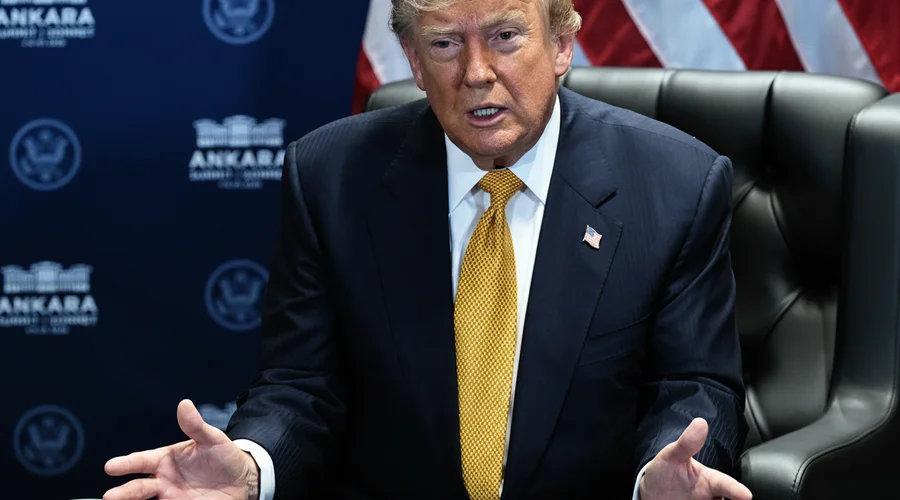
The temporary cessation of hostilities between the United States and Iran has reportedly concluded, as stated by US President Donald Trump during a NATO summit in Ankara, Turkey. This declaration follows a recent exchange of military actions between the two nations, which involved Iranian strikes on US military facilities and prior American assaults on Iranian territories.
President Trump's remarks came after Iran asserted that it had targeted 85 US military sites situated in Bahrain and Kuwait. These actions by Iran were presented as a response to earlier US military operations against Iran's Hormozgan province and the port city of Mahshahr. The United States, in turn, indicated that its initial strikes, described as "powerful," were directed at over 80 "targets" after Iranian involvement in attacks on three vessels within the Strait of Hormuz. This critical maritime passage is significant for global trade, facilitating approximately 20 percent of the world's traded oil.
President Trump's Statement and Perspective
Addressing the situation at the NATO summit, President Trump was questioned about the status of the ceasefire with Iran. He responded by stating, "I think it’s over. I don’t want to deal with them any more, they’re scum." He further characterized Iranian leadership and its people, remarking, "They’re scum, they’re sick people, they’re led by sick people, and they’re vicious, violent people. And if they had a nuclear weapon, they’d use it."
Regarding future diplomatic engagement, President Trump mentioned his intention to consult with his Middle East envoy, Steve Witkoff, and his son-in-law, Jared Kushner, who have been instrumental in the US's negotiation efforts with Iran. However, he emphasized that the onus was on Tehran to re-engage in discussions. He expressed skepticism about the efficacy of further negotiations, commenting, "As far as I’m concerned, it’s just a waste of time dealing with them. They’re liars."
Background of the Ceasefire and Escalation
The recent escalation threatens to undermine an agreement reached last month between the US and Iran. This agreement aimed to prolong their ceasefire and initiate discussions to resolve the ongoing conflict. Despite the current tensions, neither country has yet officially indicated a complete withdrawal from potential future negotiations.
The latest series of events also follows a brief pause in US military actions, which was observed to allow for the funeral processions of Iranian Supreme Leader Ayatollah Ali Khamenei. Ayatollah Khamenei reportedly died in joint US and Israeli strikes at the commencement of the conflict on February 28.
The Strait of Hormuz: A Point of Contention
The Strait of Hormuz has repeatedly emerged as a flashpoint in the ongoing tensions. Its strategic importance as a major conduit for global oil shipments means that any disruption or military activity in the area carries significant international implications. Attacks on shipping in this waterway have consistently heightened concerns about energy security and regional stability.
International Reactions and Future Outlook
The international community is closely monitoring the situation, with many nations urging de-escalation and a return to diplomatic solutions. The breakdown of the ceasefire and the strong rhetoric from the US President introduce further uncertainty into an already volatile region. The prospect of renewed negotiations remains unclear, contingent on the willingness of both sides to re-engage in dialogue despite the recent hostile exchanges.
The diplomatic efforts led by Steve Witkoff and Jared Kushner have, up until now, sought to navigate the complex relationship between the US and Iran. The President's latest statements suggest a significant shift in the US's approach, potentially signaling a more confrontational stance. The coming days will likely reveal whether these declarations are definitive or part of a broader strategy to exert pressure on Iran.
Source: Original Article
Related Articles
 world
world
Spectator Displays Israeli Flag During Argentina-Egypt World Cup Match
 world
world
Gaza's Children Face a Summer Devoid of Play Amidst Ongoing Conflict
 world
world
International Debate Intensifies Over US Embargo on Cuba at United Nations
 world
world