
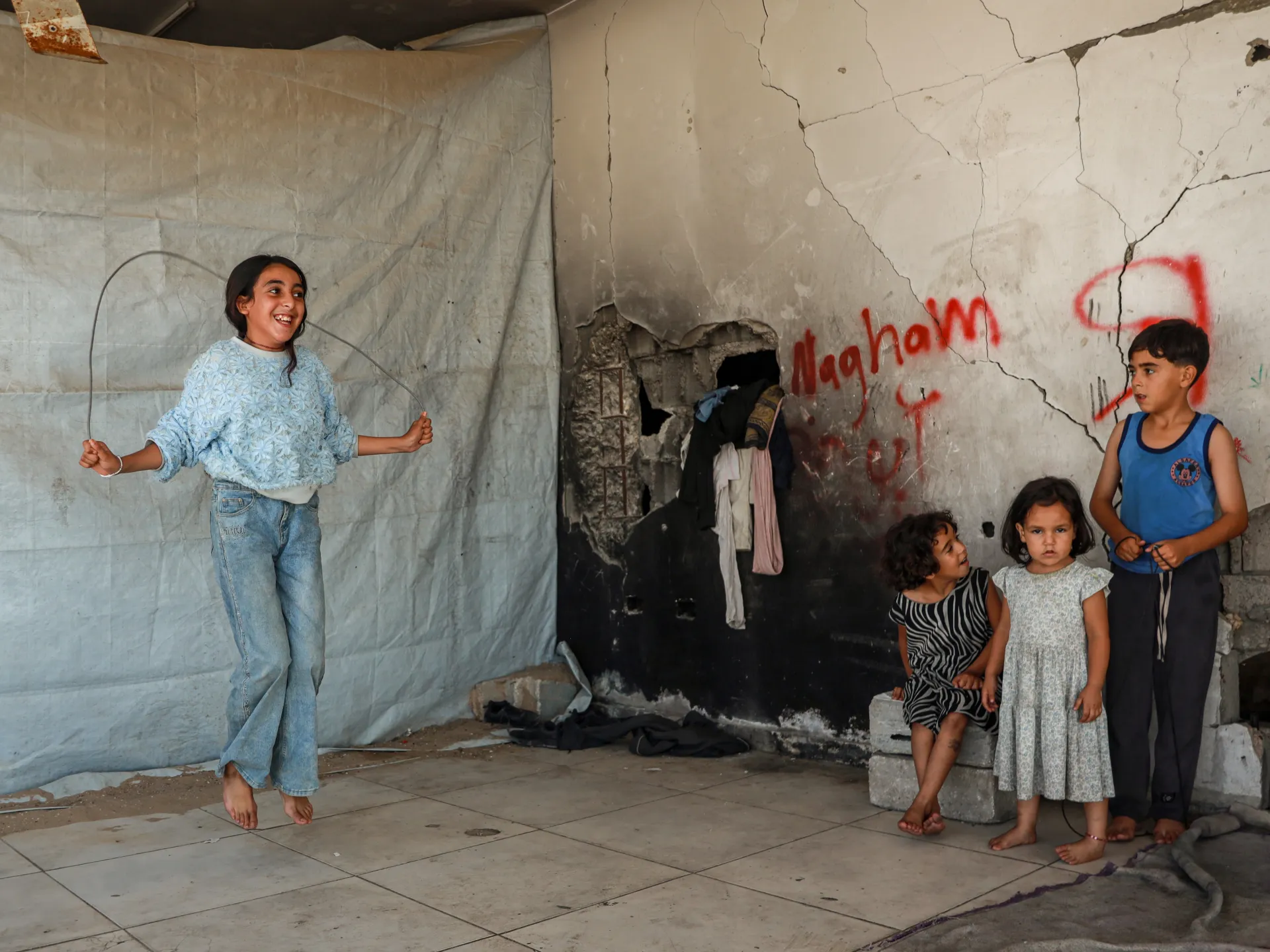
A Childhood Interrupted by Necessity
In the western part of Gaza City, within a building that bears the scars of conflict, Faten Nabhan, a 35-year-old mother of six school-aged children, pauses to rest. Her mornings are consumed by the essential task of collecting water from trucks that visit their displacement camp. As summer descends, Faten grapples with the challenge of providing her children with stimulating or educational activities, a task made nearly impossible by the prevailing circumstances.
Since October 2023, Gaza has endured a period of intense conflict, rendering the summer holidays a stark contrast to previous years. The conflict has resulted in a significant loss of life, including thousands of children, widespread destruction of infrastructure, and mass displacement. Consequently, the focus for Palestinians in Gaza has shifted entirely to survival. The traditional summer experiences, such as camps, excursions, and games, which once defined the season, have been replaced by daily routines centered on basic needs. Children now begin their days by fetching water, collecting food from communal kitchens, and gathering firewood – responsibilities far beyond their typical age.
Faten observes that her children, like many others in Gaza, have limited avenues for self-expression, recreation, or psychological release. "There are no activities, no camps, no drawing, no colors, nothing at all," she states, highlighting the severe lack of resources. Her efforts to engage them are confined to teaching them parts of the Quran, a reflection of the scarcity of other options. She laments the absence of creative outlets, noting, "We have ideas… summer is a time for unleashing energy and developing children’s skills, but the resources simply don’t exist. There are no resources, no supplies at all… no toys, no notebooks, no crayons… not even paper and a pen."
Coping with Loss and Responsibility
Faten shoulders the immense responsibility of keeping her children occupied alone, as her husband, Raafat, was tragically killed in an Israeli air strike in October 2024. "I can barely manage to feed my children and provide their basic needs," she explains. Her children have been forced to take on adult responsibilities, assisting with water collection, gathering firewood, and helping their mother in their father's absence. "I feel deep sorrow that they’re spending their childhood this way. This is a time for play, not a time for responsibility," Faten adds, expressing her anguish over their lost innocence.
The lack of community or institutional support for children's psychological well-being in the displacement camps during the summer holidays further compounds the issue. Faten describes their situation as being in "a forgotten corner of the world," where she witnesses "loss and sorrow in their eyes" daily. Even the most fundamental need of play is absent. This crisis is echoed by international organizations; a UNICEF assessment in May revealed that young children in Gaza lack the "safe and stimulating environments essential for early development," while older children face "prolonged learning disruptions with limited prospects for recovery without targeted intervention" and a decline in social and psychological development.
Jonathan Crickx, UNICEF’s chief of communications in Palestine, emphasized in February that play is not a luxury but a vital necessity for children in Gaza, stating, "Play is how children reclaim what war stole from them."
Fleeting Moments of Normalcy
Asmaa Saleh, a 41-year-old mother of five, is also displaced in Gaza. She has navigated constant movement to find safety while striving to maintain her children's education. Her determination extends to their summer holidays, where she ensures all her children memorize verses from the Quran. Through a local charity, she managed to secure spots for two of her children at a summer camp, albeit only once a week.
Despite its infrequency, this single day at camp becomes a significant event for her children. Asmaa recounts, "On camp day, they wake up early with unusual excitement, rushing to shower, style their hair, and get dressed… sometimes even skipping breakfast entirely out of eagerness to make it to camp on time." However, the rest of the week reverts to the familiar routine of waking, eating, and assisting with daily chores like washing, cooking, kneading dough, and fetching water.
Asmaa, a former UNICEF case manager, understands the profound impact of even one day at camp. She observes that "organized group activities during the vacation build intelligence, emotional development, cooperation, and bonding, while prolonged confinement in the tent, with no outlet, builds up tension that sometimes turns into aggression and fighting among the siblings themselves." She offers a poignant example: her third daughter, who does not attend the camp, frequently shows signs of tension and friction with her siblings, while her older daughters return from camp days "fresh and happy."
This disparity underscores the critical importance of play and education, fundamental rights enshrined in international conventions. Asmaa laments, "Today, our children in Gaza are deprived of these very rights, at the exact time they’re supposed to be exercising them in their simplest forms." In an effort to mitigate this, she recently acquired crayons and drawing paper from a charity, and now dedicates time each day to draw and color with her children. "I try to do anything to make use of their summer time," Asmaa states, adding, "And I keep going, because I can feel the psychological shift that even one hour of organized play and drawing with them creates."
Source: Childhood on hold: How Gaza’s children spend a summer without play
Related Articles
 world
world
Spectator Displays Israeli Flag During Argentina-Egypt World Cup Match
 world
world
International Debate Intensifies Over US Embargo on Cuba at United Nations
 world
world
NATO Summit Continues Amidst Geopolitical Tensions and Internal Divisions
 world
world