
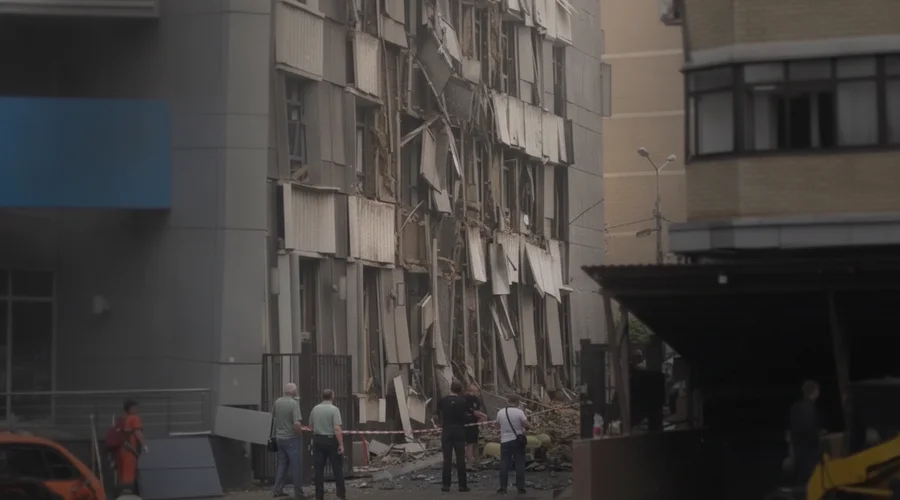
Intensified Strikes on Key Russian Facilities
Ukrainian forces have reportedly launched a series of drone attacks targeting critical oil infrastructure in Russian-occupied Crimea and Russia's Krasnodar region. These strikes, which occurred overnight into Sunday, have resulted in fatalities and injuries, along with significant damage to fuel depots and transport facilities vital for Russian military operations.
According to Sergey Aksyonov, the Moscow-appointed leader of Crimea, at least four individuals lost their lives, and 28 others sustained injuries during the drone assaults on the peninsula. The attacks specifically impacted an oil depot and various fuel facilities that Russia utilizes to support its military forces stationed in the region.
Concurrently, authorities in Russia's Krasnodar region, situated immediately east of Crimea, reported a separate Ukrainian drone strike. This incident targeted an oil transport facility, resulting in the death of one person aboard a passenger ferry and igniting a fire at an oil terminal. The Russian Ministry of Defence stated that 239 Ukrainian drones were intercepted overnight across various locations.
Confirmation and Impact
Ukrainian President Volodymyr Zelenskyy acknowledged that Ukrainian forces had successfully struck an oil depot in Kerch, Crimea, and an oil transport facility in Krasnodar. Social media channels widely reported multiple explosions and subsequent fires across different parts of Crimea following the attacks. The Telegram channel Krymsky Veter specifically noted a fire at the fuel depot in Kerch, a crucial port city at the eastern tip of the peninsula, along with a substantial plume of smoke visible over the area. In response to the incidents, Russian authorities temporarily closed the bridge connecting Kerch with Krasnodar to all traffic overnight.
Escalating Fuel Crisis in Crimea
These recent drone attacks represent an intensification of Ukrainian efforts to target Crimea, which serves as the headquarters for Russia's Black Sea Fleet. The primary objective appears to be the disruption of the peninsula's supply routes, which has already triggered a growing fuel crisis as the summer holiday season commences. A local power grid operator reported electricity outages in several areas, attributing them to damage sustained by electrical networks.
Mikhail Razvozhayev, the Moscow-appointed Governor of Sevastopol, communicated via Telegram that fuel deliveries were experiencing delays. He further announced the cancellation of a scheduled petrol allocation for private motorists on Sunday, emphasizing that fuel would only be available for official services. The tourism sector in Crimea, a popular destination for Russian travelers, has projected a significant decline in visitors this summer, with millions expected to forgo trips to the peninsula due to the ongoing instability and fuel shortages.
Historical Context and Strategic Importance
Crimea holds considerable strategic importance in the ongoing conflict. Russia annexed the peninsula in March 2014 following a disputed referendum, a move widely rejected by the international community. Since its full-scale invasion of Ukraine in February 2022, Russia has utilized Crimea as a primary staging ground for launching attacks on the Ukrainian mainland. The current Ukrainian strikes on oil and fuel infrastructure are designed to degrade Russia's logistical capabilities and complicate its military operations from the peninsula.
The targeting of these facilities underscores a broader strategy by Ukraine to impose costs on Russia and disrupt its war efforts by striking key logistical and energy assets. The humanitarian impact, including casualties and disruptions to civilian life, highlights the escalating nature of the conflict and its far-reaching consequences for both military and civilian populations in the affected regions.
Source: Ukraine strikes hit oil facilities in Crimea, Russia’s Krasnodar
Related Articles
 news
news
Former Trump Aide Praises Iran's World Cup Visa Approvals Amid Logistical Challenges
 news
news
Family Grieves Loss of Al Jazeera Cameraman in Gaza Airstrike
 news
news
Tributes Pour in for Slain Gaza Journalist Ahmed Wishah Amidst Ongoing Conflict
 news
news