
Overview of Recent Developments in Crimea
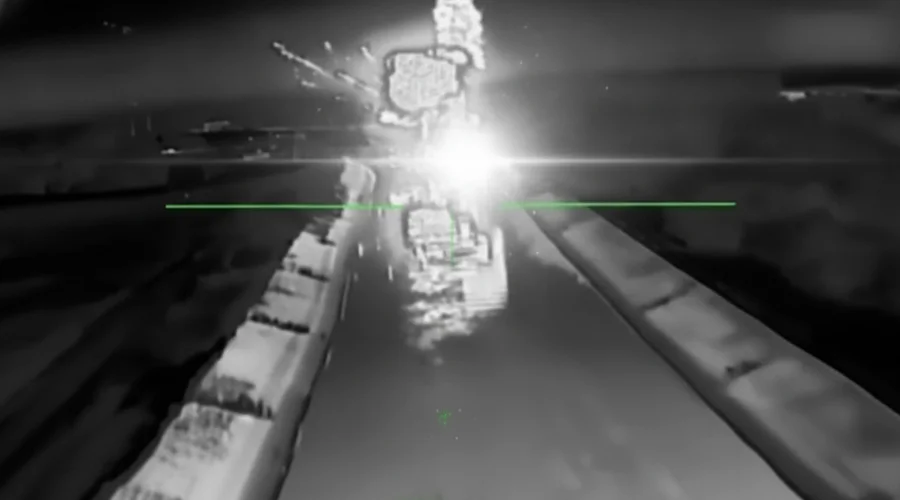
Recent reports indicate that Ukrainian forces have carried out an attack on a crucial railway bridge situated over the North Crimean Canal. This incident is part of a broader, intensified campaign by Ukraine aimed at disrupting the logistical capabilities of Russian forces operating within and around the Crimean Peninsula. The Ukrainian military has released drone footage, which it claims substantiates the success of these strikes, showing the aftermath of the explosions on the infrastructure.
The North Crimean Canal region holds considerable strategic importance due to its function as a vital conduit for both water and transportation links between mainland Ukraine and Crimea. The railway bridge, specifically, is understood to be a key component in the supply network utilized by Russian military units. Its alleged destruction would represent a notable development in the ongoing conflict, potentially complicating Russia's ability to reinforce its positions and sustain its operations in the occupied territory.
Strategic Importance of the North Crimean Canal
The North Crimean Canal, constructed in the 1960s and 1970s, was designed to divert water from the Dnieper River to Crimea, which naturally has limited water resources. Following Russia's annexation of Crimea in 2014, Ukraine largely cut off water supplies through the canal, leading to significant challenges for agriculture and industry on the peninsula. Russian forces subsequently seized control of the canal's headworks in the early stages of the 2022 invasion, aiming to restore water flow to Crimea. Beyond water supply, the canal corridor also hosts critical transportation infrastructure, including railway lines and roadways, making it a highly contested zone.
For Russia, maintaining control over this corridor is essential for several reasons. Firstly, it ensures water security for Crimea, which has been a persistent issue. Secondly, and perhaps more critically in the context of military operations, the railway lines traversing this area are integral for moving troops, heavy equipment, ammunition, and other vital supplies from Russia into Crimea and subsequently to the southern fronts of the conflict. Disrupting these lines could severely impede Russia's logistical chain, forcing them to rely on less efficient or more vulnerable alternative routes, such as the Kerch Bridge, which itself has been a target of previous attacks.
Ukrainian Campaign to Isolate Crimea
The strike on the railway bridge aligns with a discernible pattern of Ukrainian military strategy focusing on the isolation of Crimea. Over the past several months, Ukrainian forces have progressively escalated their efforts to target infrastructure that supports Russian military operations on the peninsula. This has included repeated attacks on the Kerch Bridge, which connects Russia directly to Crimea, as well as strikes on airfields, naval facilities, and other logistical hubs within Crimea itself.
The objective behind this strategy appears to be multifaceted. By degrading Russia's ability to resupply its forces in Crimea, Ukraine aims to weaken their defensive capabilities, reduce their capacity to launch offensive operations from the peninsula, and potentially create conditions for future counter-offensive actions. Furthermore, disrupting supply lines can have a significant psychological impact on the occupying forces and the local population, signaling Ukraine's continued resolve and capability to strike deep into Russian-held territory.
Implications for the Conflict
Should the reported destruction of the railway bridge be confirmed and its impact prove significant, it could have several implications for the broader conflict. Logistically, Russian forces might face increased difficulties in transporting heavy equipment and large volumes of supplies, potentially leading to shortages at the front lines. This could necessitate a greater reliance on road transport, which is generally slower, more susceptible to interdiction, and has lower carrying capacity than rail.
Strategically, such an attack underscores Ukraine's evolving capabilities and its willingness to employ long-range precision strikes against high-value targets. It also highlights the ongoing vulnerability of Russian supply lines, even in areas considered relatively secure. The effectiveness of these strikes in altering the balance of power will depend on various factors, including the extent of the damage, Russia's ability to repair or establish alternative routes, and the sustained pressure applied by Ukrainian forces.
The conflict continues to be characterized by a dynamic interplay of offensive and defensive actions, with both sides seeking to exploit vulnerabilities and gain strategic advantages. The targeting of critical infrastructure, such as the North Crimean Canal railway bridge, represents a key aspect of this evolving military landscape, with potential ramifications for the trajectory of the war in southern Ukraine.
Source: Original Article
Related Articles
 news
news
US and Iran Disagree on Nuclear Inspections as Senate Moves to Limit Presidential War Powers
 news
news
Ukraine's Recovery Conference in Poland Amidst Diplomatic Tensions
 news
news
Addressing South Africa's Challenges: Beyond Blaming Migrants
 news
news