
Overview of the US-Iran Interim Agreement
The Trump administration's recent interim agreement with Iran has encountered notable opposition from within the Republican party. Critics contend that the memorandum of understanding (MoU) is a significant misstep in foreign policy, potentially squandering substantial taxpayer funds while doing little to genuinely curb Iran's nuclear development. The 14-point agreement, formalized on a Wednesday, outlines a mutual commitment from both the United States and Iran to achieve an "immediate and permanent end to military operations on all fronts," specifically mentioning Lebanon.
Key provisions of the deal include Iran's pledge to fully reopen the Strait of Hormuz, a critical maritime passage that had been largely inaccessible since late February. In return, Washington has committed to formulating a "definitive, mutually agreed plan" to allocate $300 billion towards Iran's reconstruction and development efforts. Furthermore, the agreement stipulates that Iran will refrain from "procuring or developing nuclear weapons."
Republican Concerns Regarding the MoU
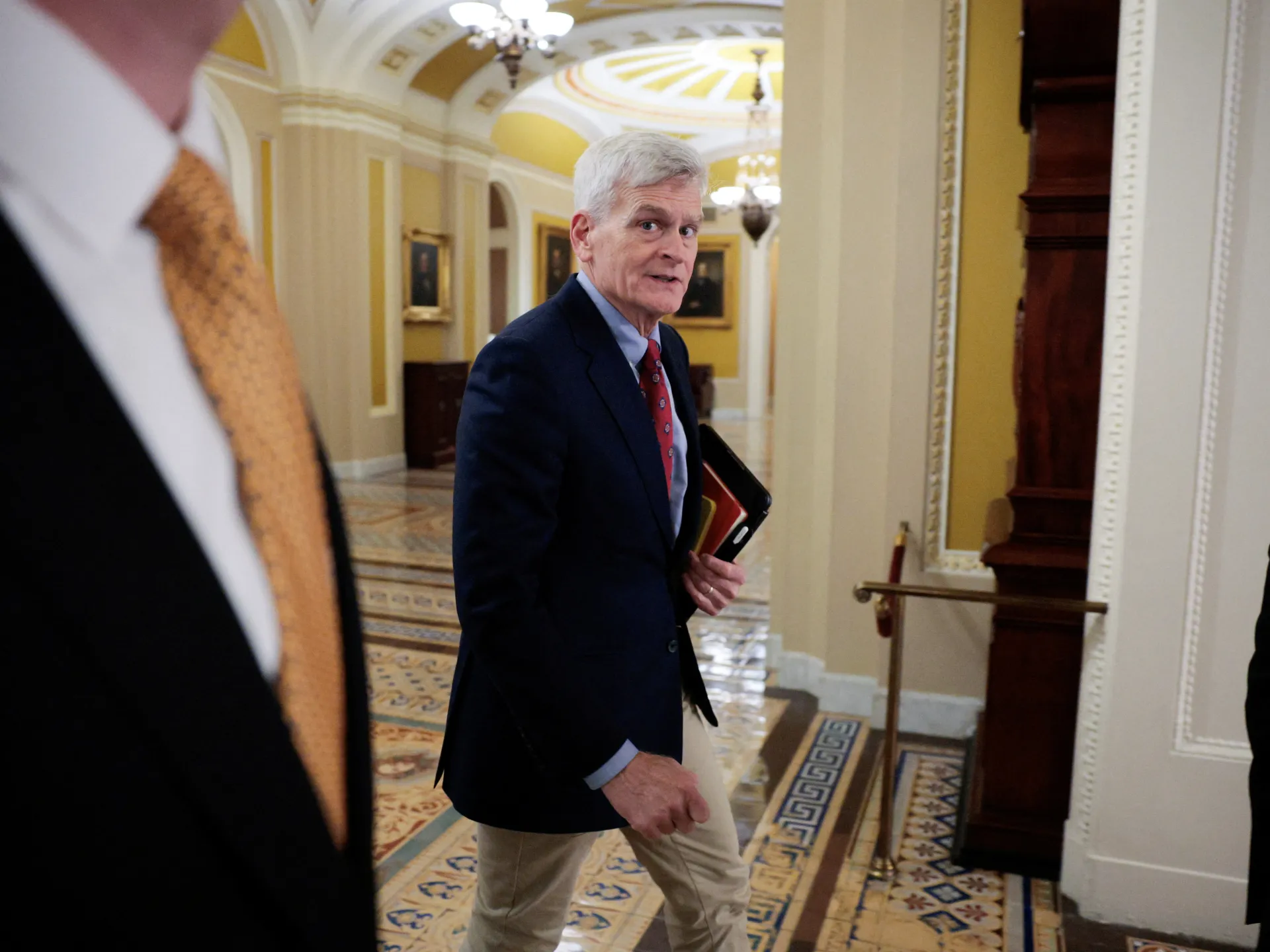
Senator Bill Cassidy of Louisiana, a Republican known for occasionally diverging from former President Trump's stance and who recently lost a primary bid, vehemently denounced the MoU. He labeled it as "the worst foreign policy blunder in decades," drawing a stark comparison to historical conservative figures by stating, "Reagan is rolling over in his grave." Cassidy expressed apprehension that the agreement fails to sufficiently restrict Iran's nuclear aspirations and, moreover, implies that threatening the Strait of Hormuz can be an effective negotiating tactic for Tehran, potentially encouraging its future use. He also highlighted that the deal enables Iran to construct new infrastructure.
Another Republican Senator, Thomas Massie of Kentucky, who also faced a primary challenge from a Trump-backed candidate, raised objections to the $300 billion assistance package. Massie asserted that this figure dwarfs the annual expenditure by the US Congress on domestic infrastructure projects like roads and bridges, claiming it is five times greater.
Nikki Haley, who served as the US ambassador to the UN during Trump’s first term, also voiced strong reservations about the US commitment to aid Iran's post-war reconstruction. Haley questioned the rationale behind providing substantial financial assistance to a regime that, in her view, has historically displayed hostility towards the United States. She remarked, "This regime chants death to America, murders our troops, and attempts to assassinate Americans on US soil. They believe they have an obligation to destroy us. Now, we plan to unlock billions of dollars and lift sanctions, with the promise of even more money."
Comparisons to Previous Administrations and Alternative Perspectives
The Trump administration's interim agreement has drawn comparisons to the 2015 deal brokered by former President Barack Obama's administration, known as the Joint Comprehensive Plan of Action (JCPOA). The JCPOA saw Iran agree to limitations on its nuclear program in exchange for sanctions relief. Former President Trump had withdrawn the US from the JCPOA in 2018, arguing that it had "enriched the Iranian regime and enabled its malign behaviour."
Mike Pence, who served as Trump's first vice president, suggested that the current US-Iran MoU bears resemblance to the "appeasement" that the Trump administration had previously rejected in its critique of the Obama-era nuclear deal. Pence advocated for an agreement that would compel Iran to dismantle its nuclear and missile programs, cease support for proxy groups, and ensure the permanent opening of the Strait of Hormuz. He concluded by stating that, in the absence of such an agreement, the US military should be permitted to "finish the job on our terms."
Conversely, Senator Ted Cruz of Texas defended the MoU against direct comparisons to the Obama deal, but he did express significant reservations about the provision of funds to Iran. Cruz urged the president not to relinquish the strategic advantage gained, stating, "I do want to urge the president not to give up the victory; we have destroyed their military, and we should not fund the rebuild."
The varied reactions from within the Republican party highlight the ongoing debate regarding the most effective approach to managing relations with Iran and addressing its regional and nuclear activities. The interim agreement, while intended to de-escalate tensions, has clearly ignited a significant internal discussion among conservative policymakers concerning its long-term implications and strategic value.
Source: Trump’s MoU with Iran draws backlash from some Republicans
Related Articles
 politics
The Transformation of Sweden's Far-Right: From Fringe to Governmental Influence
 politics
Georgia Primary Elections Yield Mixed Outcomes for Trump-Backed Candidates
 politics
US Primary Elections: Mixed Results for Trump-Endorsed Candidates Ahead of Midterms
 politics