
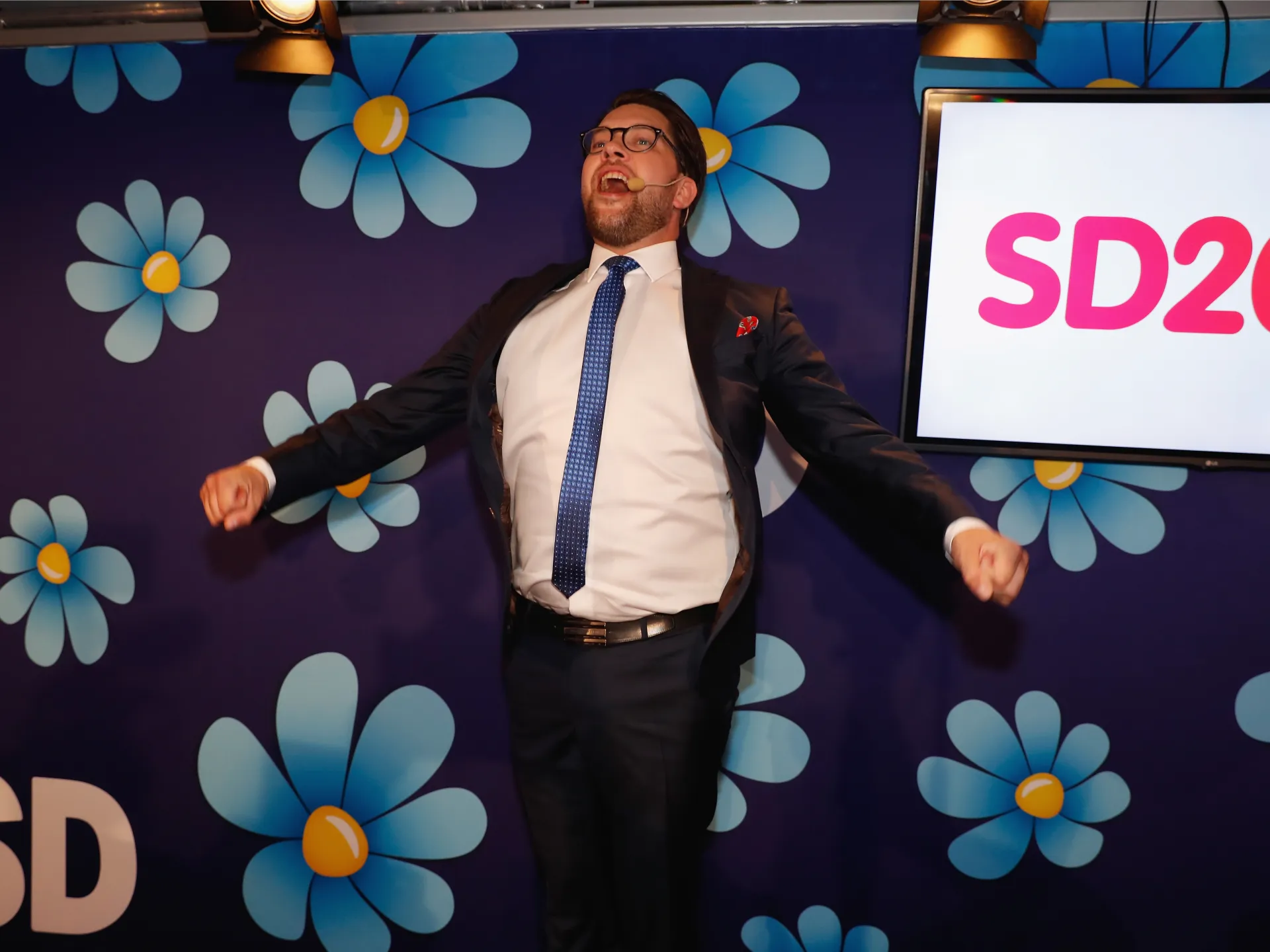
A Shift in Sweden's Political Landscape
In Swedish political discourse, the phrase "to be let into the warmth" signifies acceptance and integration. For a considerable period, the Sweden Democrats (SD), a far-right, anti-immigration party with historical ties to neo-Nazi movements, found themselves excluded from mainstream political alliances. However, recent years have witnessed a dramatic shift, culminating in the SD becoming a crucial parliamentary supporter of the current Swedish government. This evolution marks a significant transformation for a party once universally shunned by major political forces.
From Extremist Roots to Mainstream Appeal
The Sweden Democrats were established in the 1980s, emerging from the 'Keep Sweden Swedish' skinhead movement and including early members with backgrounds in Nazi-sympathizing organizations, such as a former SS veteran. Over time, the party embarked on a concerted effort to shed its extremist image. According to Morgan Finnsio, a researcher at the Expo Foundation specializing in far-right movements, the SD initiated a "cleanup" process to distance itself from neo-Nazism. This included the adoption of the concept of "open Swedishness" in 2003, theoretically allowing for assimilation into Swedish identity regardless of biological origin.
Further strategic adjustments occurred between 2014 and 2020. The SD rebranded itself as a "conservative" party, making cosmetic changes and gestures of moderation. This involved expelling some members and its youth wing for "extremism," and discouraging the promotion of far-right alternative media. Notably, the party also dropped its long-standing demands for Sweden's withdrawal from the European Union and its opposition to NATO membership. Daphne Halikiopoulou, Chair in Comparative Politics at the University of York, observes that the SD's trajectory mirrors that of other hard far-right European parties, which have gradually softened their rhetoric and repackaged their image, often adopting innocuous symbols like a flower for their logo instead of more aggressive imagery.
Gaining Political Ground
The SD first entered parliament in September 2010, surpassing the 4 percent threshold and securing 20 seats. The 2015 European refugee crisis proved to be a pivotal moment for the party. With approximately 1.3 million asylum seekers arriving in Europe, and Sweden receiving 163,000 – the highest per capita intake in the EU – immigration rapidly became the top concern for 53 percent of Swedish voters, according to the annual SOM survey. The SD, which had consistently linked immigration to issues of crime, terrorism, and national security, capitalized on this sentiment. By the 2018 election, the party had garnered 17.5 percent of the vote, securing 62 seats and becoming the third-largest party in Sweden.
This increased electoral success began to dismantle the "pariah party" label previously attached to the SD. Zina al-Dewany, a political commentator, noted a series of symbolic gestures between 2018 and 2022 that signaled the party's gradual acceptance into the political mainstream. A notable moment was the "meatball lunch" in July 2019, where Christian Democrats leader Ebba Busch met with SD leader Jimmie Åkesson. This was followed by Ulf Kristersson, then leader of the Moderate Party and now Prime Minister, engaging in a traditional Swedish 'fika' (coffee break) with Åkesson. These seemingly informal meetings carried significant political weight, indicating a breakdown of the 'cordon sanitaire' that had previously isolated the SD.
The Tido Agreement and Its Implications
The political integration of the SD culminated in October 2022, when the Liberal Party also engaged with them. Leaders of four right-wing parties convened at Tido Castle, where they signed the 62-page Tido Agreement. This landmark document established Sweden's current coalition government and outlined major policy shifts, particularly in the areas of crime and immigration. While the Liberals agreed to negotiate policies with the SD, they initially maintained a boundary, refusing to serve alongside them in a formal government cabinet.
However, this final boundary was crossed in May 2026. Simona Mohamsson, the Liberal leader and Minister for Education and Integration, announced that her party would permit the SD to participate in a future government. A public embrace between Mohamsson and Åkesson on live television sent shockwaves across Sweden. This moment was particularly significant given Mohamsson's background as an anti-racist activist and social liberal, born in Germany to Palestinian and Lebanese parents, who had previously campaigned against the far-right and expressed reservations about the SD's conduct.
Normalizing Far-Right Ideology and Policy
Since the Tido Agreement, the SD has become deeply integrated into governmental decision-making, effectively operating as a "shadow government," according to al-Dewany. Their influence is particularly evident in criminal justice, where they have advocated for tougher sentencing and expanded incarceration. While their push to lower the age of criminal responsibility to 13 did not secure full parliamentary support, the government settled on 14, a significant reduction from the previous age of 15.
The SD's transformation has also led other right-wing parties to adopt similar rhetoric. Finnsio observes that the Moderates and Christian Democrats, in particular, have embraced the narrative that migration, especially among those perceived as "failing to integrate," is at the root of many of Sweden's social and economic problems. This has led to mainstream political messaging boasting about record-low levels of asylum immigration, a rhetoric that was previously unthinkable in Swedish politics. The Moderates have increasingly linked crime to migration, while the Christian Democrats have emphasized the need to assert "Swedish and Christian values" against perceived challenges from migration. Al-Dewany warns that as mainstream parties normalize the SD, they also normalize its policies, potentially imperiling individuals with foreign backgrounds and contributing to increased bullying and anti-Muslim sentiment.
Assimilation Versus Integration
Tanvir Mansur, a Swedish political journalist, argues that the right-wing rhetoric around "integration" often masks an expectation of "assimilation." He illustrates this through workplace dynamics, where individuals of color may feel pressured to adopt a "white-sounding voice" and cultural references to fit in. Mansur views Mohamsson's embrace of the SD as an example of "overcompensation" to prove her Swedishness, akin to wearing a "nationalist mask." This desire for acceptance is also reflected in her family's history; her Palestinian father changed their surname from Mohammed to Mohamsson upon moving to Sweden.
Al-Dewany points to policies such as the recent deportations of young people, some of whom arrived as children and have spent most of their lives in Sweden, as evidence that the government is directly targeting "non-ethnic Swedes." Mansur contends that the Sweden Democrats are not the origin of Swedish racism but rather a symptom of deeper historical issues. He highlights Sweden's involvement in the transatlantic slave trade and the existence of the State Institute for Racial Biology (1922-1959), which used pseudoscientific methods to legitimize eugenics. After World War II, this history was largely suppressed, replaced by a national myth of Sweden as a "humanitarian superpower," which, Mansur argues, overlooked the historical treatment of Sami, Roma, and Black Swedes.
Upcoming Elections and Enduring Questions
While some polls suggest a potential left-wing victory in the upcoming September election, which could diminish the SD's formal influence, Mansur believes the deeper questions extend beyond a single party or election. He points to figures like Nooshi Dadgostar, the Left Party leader of Iranian origin, who rarely discusses her ethnic background, suggesting a broader societal pressure towards assimilation. The long-term impact of the SD's political ascendancy and the normalization of its ideology remain central to Sweden's political and social future.
Source: How Sweden’s far right went from political pariah to powerbroker
Related Articles
 politics
Trump Administration's Interim Iran Agreement Faces Republican Scrutiny
 politics
Georgia Primary Elections Yield Mixed Outcomes for Trump-Backed Candidates
 politics
US Primary Elections: Mixed Results for Trump-Endorsed Candidates Ahead of Midterms
 politics