
Judicial Decision Reached in Decade-Long Bombing Case
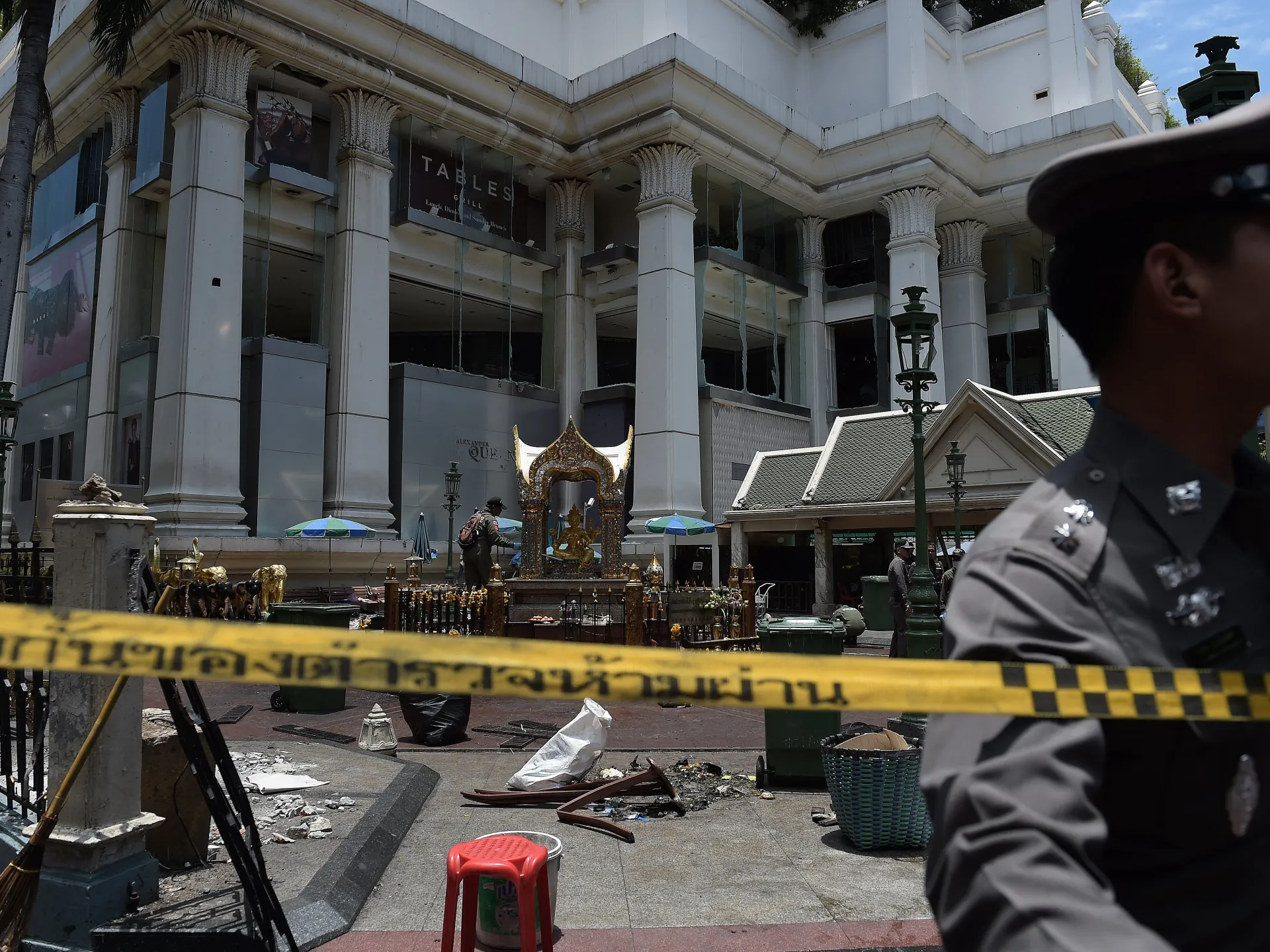
After a protracted legal process spanning over a decade, a court in Thailand has delivered a verdict in the 2015 Erawan shrine bombing case, sentencing two individuals to death. The incident, which occurred on August 17, 2015, at a prominent shrine in Bangkok's commercial district, resulted in the deaths of 20 people and left more than 100 injured. This attack stands as the most devastating bombing in Thailand's recorded history.
The Bangkok South Criminal Court issued its long-anticipated ruling, finding two ethnic Uighur men guilty of premeditated murder and attempted murder for their roles in planting the explosive device. The blast caused extensive damage, scattering debris and motorbike fragments across the site where both worshippers and tourists had gathered. Among the casualties were numerous individuals from mainland China and Hong Kong.
Defendants Identified and Charges Filed
The defendants, identified as Chinese nationals Yusufu Mieraili and Bilal Mohammed, faced a range of charges, including murder, attempted murder, and illegal possession of explosive materials. Prosecutors presented various forms of evidence, including video footage and fingerprints, to establish a connection between the men and the bombing. Despite the evidence, both Mieraili and Mohammed have consistently asserted their innocence throughout the proceedings.
Following the pronouncement of the verdict, Choochat Kanpai, a legal representative for one of the convicted men, informed the media of their intention to appeal the sentence within the stipulated one-month period. Mieraili, upon hearing his sentence, reportedly expressed strong disapproval, stating, “RIP Thailand’s justice system. I don’t accept any of this. I didn’t do anything wrong.”
Complex and Lengthy Legal Proceedings
The judicial process for this case has been notably prolonged, taking over ten years to reach a conclusion. Prosecutors undertook an extensive investigation, gathering testimony from hundreds of witnesses. A significant challenge encountered during the process was securing an appropriate interpreter for the suspects, further contributing to the delays.
Al Jazeera’s Tony Cheng, reporting from Bangkok, highlighted the complexities of the legal journey. He noted that the case began in 2016 under a military court, a period when Thailand was governed by military rule following a coup. It was later transferred to a civilian court in 2022. The volume of evidence presented was substantial, comprising approximately 10,000 pages of testimony and involving the questioning of over 400 witnesses.
“It’s a case that has dragged on for a decade. It started in 2016 in a military court; that was the period when Thailand was under military rule after the military coup. It then moved in 2022 to a civilian court. A lot of the evidence has been very dense, very complicated – 10,000 pages of testimony submitted; more than 400 witnesses questioned,” Cheng explained.
Unanswered Questions Regarding Motive and Network
Despite the guilty verdict and the death sentences, the full extent of the alleged network surrounding the defendants remains largely unclear. No group officially claimed responsibility for the bombing. However, security analysts have widely speculated that the attack may have been an act of retaliation. This theory suggests a connection to Thailand's forced deportation of over 100 Uighurs in the month preceding the bombing.
Cheng further elaborated on this hypothesis, stating, “One of the assumptions after the attack is that it was targeting Chinese tourists and that’s why these two Uighur nationals, and the investigation afterwards, focused on Uighur nationalists – because they felt it was a response to the crackdown that was going on in western China at the time and the fact that Thailand had extradited a number of Uighurs who had escaped and sought sanctuary in Thailand.”
Uighurs have frequently reported fleeing China's northwestern Xinjiang region due to alleged persecution, claims that Beijing consistently denies. China has faced international criticism for its perceived stringent restrictions on religious and cultural freedoms within Xinjiang, where the majority of the Uighur population resides.
Following the court's decision, China voiced its support for Thailand's sentencing of the two individuals. Chinese foreign ministry spokesman Lin Jian conveyed this stance at a news briefing, asserting, “The attackers were totally inhumane and extremely heinous. China supports Thailand in conducting the trial in accordance with the law and severely punishing the murderers.”
The Erawan shrine, situated in the heart of the Thai capital, is described by Al Jazeera’s Cheng as “Bangkok’s most celebrated shrine.” It continues to attract a significant number of both local residents and international tourists, including a considerable number of Chinese visitors.
Source: Thailand court sentences two men to death for 2015 Bangkok bombing
Related Articles
 news
news
Escalation in Middle East as Iran Retaliates Against US Strikes, Closes Vital Strait
 news
news
Belfast Experiences Second Night of Anti-Immigration Unrest Amidst Stabbing Charges
 news
news
Fatal US Strike on Oil Tanker Claims Lives of Three Indian Seafarers
 news
news