
Widespread Condemnation Follows Violent Demonstrations in Belfast
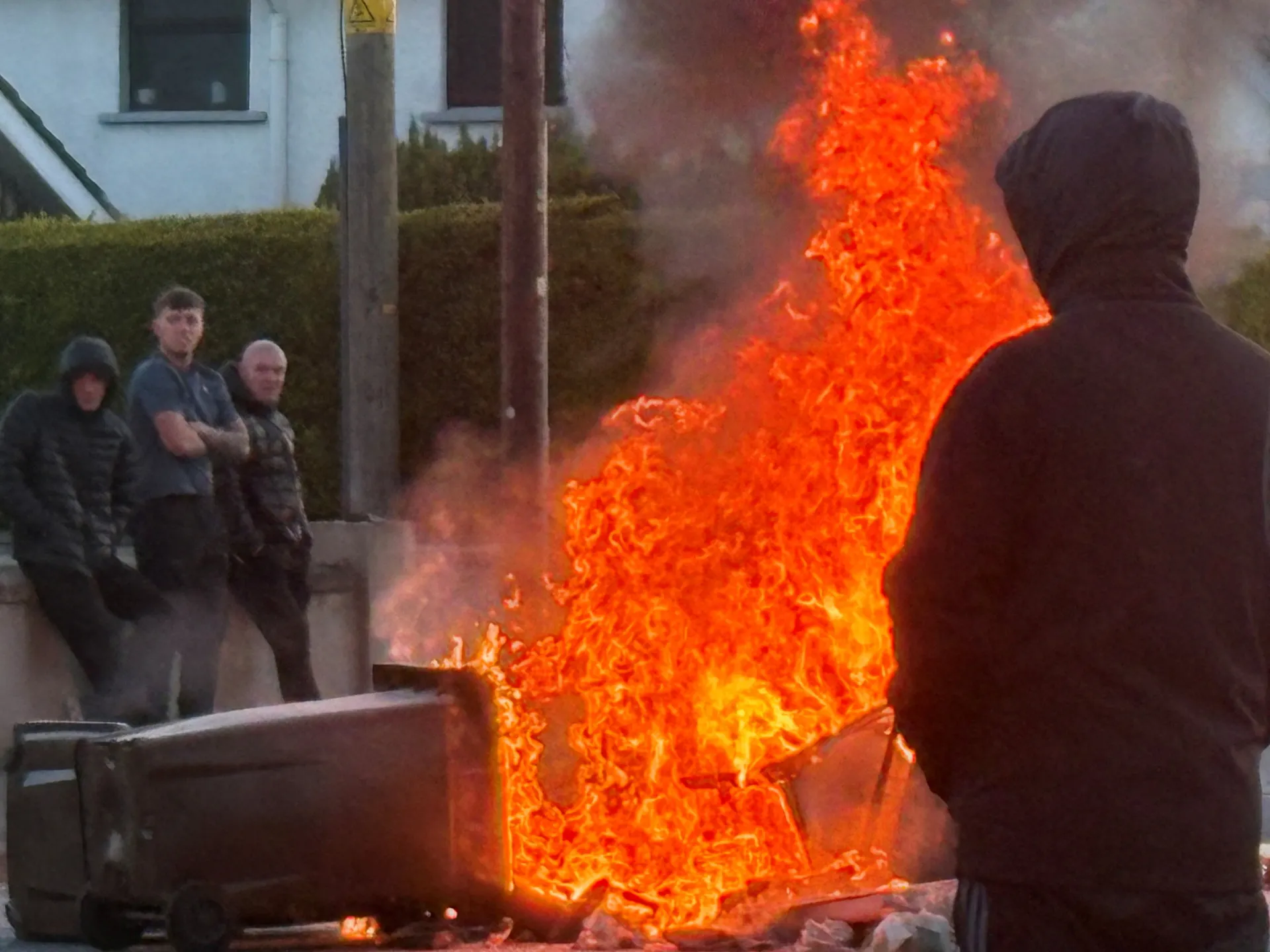
Belfast has been the scene of significant unrest for a second consecutive night, as anti-immigration protests erupted into violence, leading to clashes with police and the deployment of water cannons. The demonstrations, which saw protesters hurl bricks, rocks, and bottles at riot police, and set small fires, have been widely condemned by political figures across Northern Ireland.
The disturbances on Wednesday evening followed a court appearance earlier in the day, where a 30-year-old man was charged with attempted murder in connection with a stabbing incident. This event has been cited as a catalyst for the escalating anti-immigration sentiment and subsequent violence in the city.
Escalation of Violence and Police Response
Eyewitness accounts and reports indicate that demonstrators, many wearing masks, actively dismantled walls to acquire bricks and used sledgehammers to break up pavements, transforming these materials into projectiles to be thrown at law enforcement officers. The intensity of the confrontations necessitated a robust response from the Police Service of Northern Ireland (PSNI).
Chief Constable Jon Boutcher of the PSNI confirmed that an additional 200 officers were deployed to the streets on Wednesday to manage the escalating situation. He also indicated that the force was seeking supplementary support from other services to help contain the widespread disorder. The police utilized water cannons as a crowd control measure, a clear sign of the severity of the clashes.
Political Leaders Denounce 'Thuggery'
The violence has drawn sharp criticism from political leaders across Northern Ireland's government, who have united in their condemnation of the actions. Michelle O’Neill, the First Minister and a member of the Irish nationalist party Sinn Fein, characterized the unrest as 'thuggery,' expressing strong disapproval of the aggressive behavior displayed by protesters.
Similarly, Deputy First Minister Emma Little-Pengelly, representing the pro-British Democratic Unionist Party, voiced her dismay, stating that 'taking frustration at the evil actions of a person out on those who had no part in it is utterly wrong.' Her comments underscored a sentiment that while frustration may exist, it should not be directed at innocent parties or manifest in destructive behavior.
Adding to the chorus of condemnation, Hilary Benn, Britain's minister for the province, described the days of anti-immigrant unrest and associated violence as 'racist thuggery' during an interview on Thursday. These unified condemnations from diverse political perspectives highlight the seriousness with which the authorities view the recent events.
Broader Context of Immigration Debates
The recent events in Belfast are unfolding within a broader context of ongoing debates surrounding immigration and its perceived links to crime in the United Kingdom. Just last week, a separate incident involving the fatal stabbing of a university student in Southampton in December garnered significant attention.
This particular case was leveraged by activists and even by US Vice President JD Vance, who controversially attributed the violence to immigration. However, this argument has been explicitly rejected by prominent British politicians, including Prime Minister Keir Starmer, who have consistently pushed back against such narratives, emphasizing the need for evidence-based discussions on crime and societal issues rather than scapegoating immigrant communities.
The recurring theme of immigration being linked to violence, whether in Southampton or now in Belfast, underscores a sensitive and often contentious public discourse. While politicians strive to maintain a balanced perspective and prevent the generalization of criminal acts to entire groups, the emotional intensity surrounding these incidents continues to fuel protests and public debate.
The situation in Belfast remains tense, with authorities working to restore calm and prevent further outbreaks of violence. The focus now shifts to maintaining public order while addressing the underlying concerns that have contributed to the recent unrest, ensuring that justice is pursued through legal channels rather than through street violence.
Source: Original Article
Related Articles
 news
news
Escalation in Middle East as Iran Retaliates Against US Strikes, Closes Vital Strait
 news
news
Thai Court Imposes Death Penalty on Two for 2015 Bangkok Shrine Bombing
 news
news
Fatal US Strike on Oil Tanker Claims Lives of Three Indian Seafarers
 news
news