
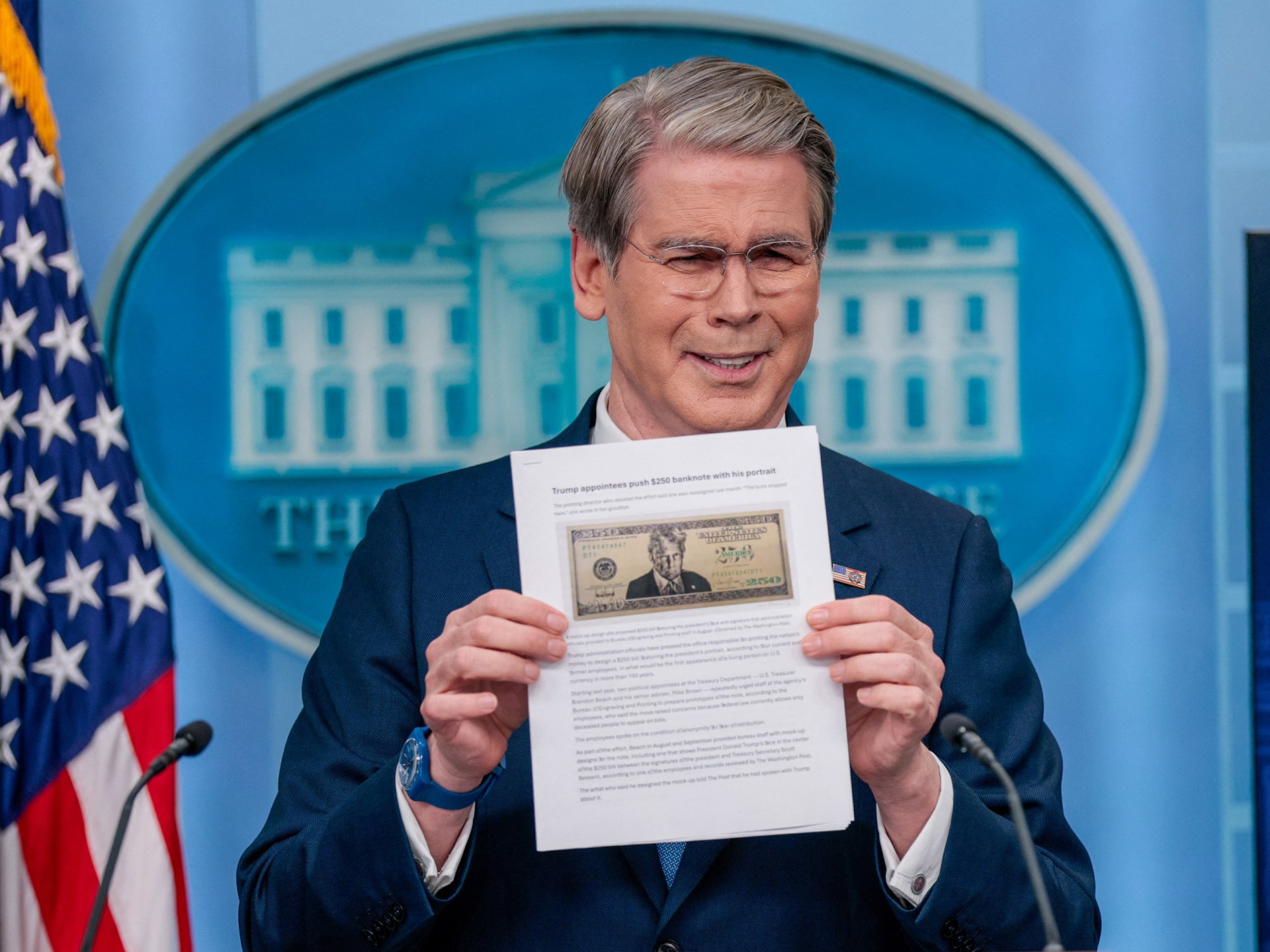
Hypothetical Currency Design Sparks Discussion
Recent reports have brought to light discussions concerning a speculative $250 banknote within the United States. The central point of interest revolves around the unprecedented possibility of such a bill depicting a living U.S. president. This concept has generated considerable commentary, particularly given the long-standing tradition of featuring historical figures on American currency.
Historical Context of U.S. Currency
For more than a century, U.S. monetary policy has largely adhered to the practice of reserving currency depictions for deceased individuals who have made significant historical contributions. This tradition aims to prevent the politicization of currency and to honor figures whose legacies are firmly established. The last instance of a living person appearing on U.S. currency dates back to the early 20th century, making any contemporary proposal a notable departure from established norms.
The notion of a $250 bill featuring a living individual represents a significant shift from the historical precedents governing U.S. currency design and its underlying philosophy.
The current denominations, ranging from $1 to $100, prominently feature figures such as George Washington, Abraham Lincoln, Alexander Hamilton, Andrew Jackson, Ulysses S. Grant, and Benjamin Franklin. These choices reflect a deliberate effort to commemorate individuals pivotal to the nation's founding and development.
Implications of Such a Proposal
Should a $250 bill featuring a living president ever materialize, it would undoubtedly trigger extensive debate. Critics might argue that such a move could be perceived as self-aggrandizing or as an attempt to use national symbols for political purposes. They might also raise concerns about setting a new precedent that could erode the historical integrity of U.S. currency.
Conversely, proponents might suggest that recognizing a sitting president on currency could symbolize current leadership or significant contemporary achievements. However, the deeply ingrained cultural and historical significance of U.S. banknotes means that any alteration to these traditions is typically met with careful scrutiny and often considerable public discourse.
The Process of Currency Design and Approval
The process for designing and approving new U.S. currency is complex, involving multiple government agencies, including the Treasury Department and the Bureau of Engraving and Printing. Any significant change, such as the introduction of a new denomination or the depiction of a living person, would likely require legislative action or, at minimum, extensive public and governmental review. This ensures that any modifications reflect broad consensus and uphold the integrity of the nation's financial symbols.
Ultimately, while the idea of a $250 bill with a living president's image remains in the realm of discussion, it underscores the profound historical and symbolic weight carried by U.S. currency. Any move in this direction would not only be a technical change but also a significant cultural and political statement, prompting widespread analysis and debate across various sectors of society.
Source: Al Jazeera
Related Articles
 news
news
Curfew Imposed in New Jersey Following Escalation of Immigration-Related Demonstrations
 news
news
Ultra-Orthodox Protesters Clash with Israeli Police in Jerusalem
 news
news
Euphrates River Flooding Prompts Rescue Operations in Eastern Syria
 news
news