
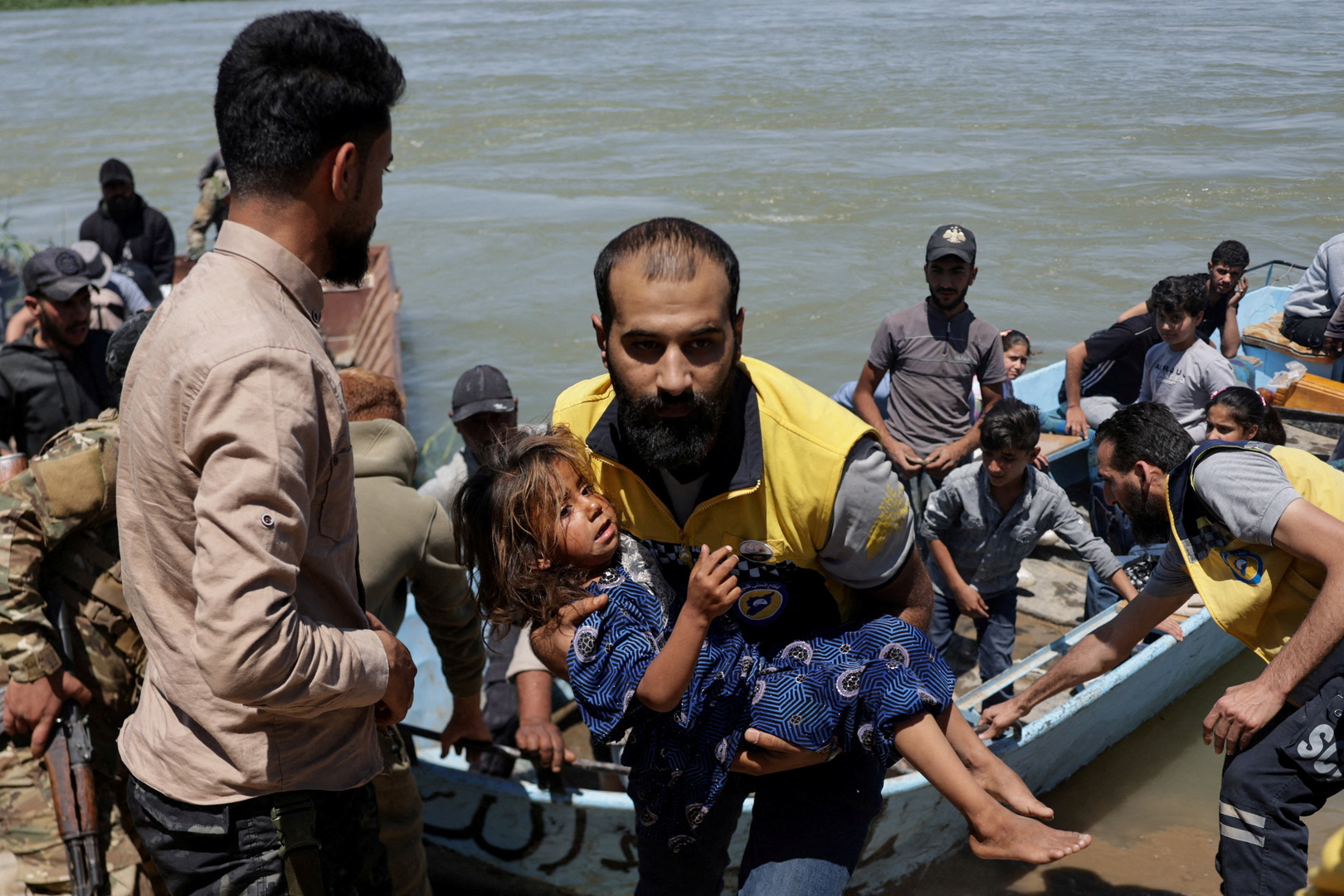
Euphrates River Flooding Prompts Rescue Operations in Eastern Syria
Recent events in eastern Syria have seen emergency responders actively engaged in rescuing individuals from floodwaters. The situation arose after the Euphrates River, a vital waterway in the region, experienced a significant overflow, causing its banks to burst in several locations.
The impact of this natural event was particularly felt in agricultural communities situated along the river. Farmers, whose livelihoods are intrinsically linked to the river and its surrounding lands, found themselves stranded amidst the rising waters. Reports indicate that these individuals required urgent assistance to be evacuated from the inundated areas.
The Euphrates River and its Significance
The Euphrates River is one of the longest and historically most important rivers in Western Asia. Originating in Turkey, it flows through Syria and Iraq before converging with the Tigris River to form the Shatt al-Arab, which then empties into the Persian Gulf. For millennia, the river has been a lifeline for civilizations, providing water for irrigation, drinking, and transportation. Its banks are often fertile, supporting extensive agricultural activity, particularly in regions like eastern Syria.
The flow of the Euphrates is influenced by various factors, including seasonal rainfall, snowmelt from its headwaters, and upstream dam management. Fluctuations in water levels, both excessively high and dangerously low, can have profound effects on the communities and ecosystems that depend on the river.
Impact on Local Communities
For the farmers in eastern Syria, the overflowing of the Euphrates represents a significant challenge. Agricultural land, essential for crop production and livestock grazing, can be submerged, leading to potential crop losses and damage to infrastructure. Beyond the immediate danger of being stranded, the long-term consequences of such flooding can include soil erosion, salinization of agricultural fields, and displacement of residents.
The need for rescue operations underscores the immediate danger posed by rapidly rising waters. Emergency services are typically tasked with locating and extracting individuals from hazardous situations, often utilizing boats and specialized equipment to navigate flooded terrain. These operations are critical in preventing loss of life and ensuring the safety of affected populations.
Responding to Natural Disasters
Natural disasters, such as riverine flooding, highlight the vulnerability of communities, especially those in low-lying or riverine areas. Effective disaster preparedness and response mechanisms are crucial for mitigating the impact of such events. This includes early warning systems, coordinated rescue efforts, and post-disaster humanitarian aid.
While the immediate focus remains on rescue and ensuring the safety of those affected, the aftermath of such flooding often involves extensive recovery efforts. This can include assessing damage to property and infrastructure, providing temporary shelter for displaced individuals, and offering support for the restoration of livelihoods, particularly for agricultural communities that bear the brunt of the damage.
Source: Al Jazeera
Related Articles
 news
news
Curfew Imposed in New Jersey Following Escalation of Immigration-Related Demonstrations
 news
news
Ultra-Orthodox Protesters Clash with Israeli Police in Jerusalem
 news
news
Rescue Efforts Continue in Laos Cave After Flooding Traps Villagers
 news
news