
Context of the Incident
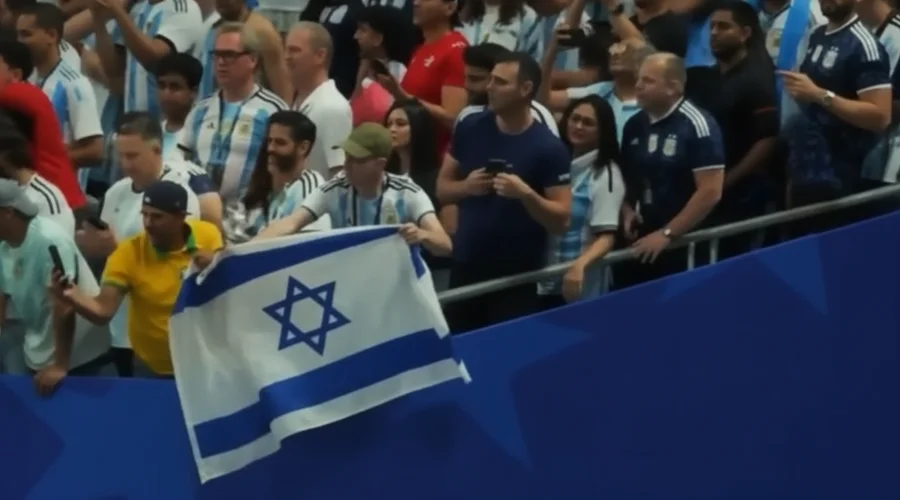
An incident involving the display of an Israeli flag by an Argentina supporter occurred during a high-stakes FIFA World Cup Round of 16 match between Argentina and Egypt. The event took place amidst the fervent atmosphere typical of international football tournaments, where national symbols and expressions of identity are common. The flag was visible in the spectator stands, drawing attention from various media outlets and social commentators.
Match Details and Significance
The match itself was a crucial encounter for both national teams, representing a significant stage in the World Cup tournament. For Egypt, reaching the Round of 16 and achieving their first-ever knockout victory in the competition was a landmark accomplishment. This historic win was particularly noted for the dedication expressed by Egypt's coach, Hossam Hassan, who publicly dedicated the team's success to the people of Gaza. This dedication added a layer of geopolitical context to the sporting event, especially for audiences in the Middle East and beyond.
Interpretations and Reactions
The appearance of the Israeli flag in this specific context led to diverse interpretations. For some, the act was seen as a deliberate provocation, particularly in light of Coach Hassan's earlier statements. The timing and visibility of the flag raised questions about the motivations behind its display, with suggestions ranging from a simple expression of personal identity to a more pointed political statement intended to elicit a reaction. The intersection of sports and politics is not uncommon, and such incidents often become subjects of broader discussion, reflecting underlying geopolitical tensions.
Historical Precedents and Sporting Events
Major international sporting events, such as the FIFA World Cup, frequently become venues where political statements, both subtle and overt, are made. Athletes, coaches, and spectators alike have historically used these global platforms to express views on various social and political issues. The display of national flags, while generally an act of support for one's own country or a friendly nation, can take on different meanings depending on the geopolitical landscape and the specific context of its presentation. In regions with long-standing conflicts, such symbols can be particularly sensitive.
Fan Behavior and Stadium Regulations
Stadium regulations regarding banners and flags vary by host nation and tournament organizers. Generally, flags representing recognized nations are permitted unless they are deemed offensive, incite violence, or disrupt public order. The distinction between an expression of national pride and a provocative political statement often lies in the interpretation by authorities and the audience. Incidents like these prompt discussions about the boundaries of free expression within sports venues and the responsibilities of spectators.
Broader Implications
The incident, while seemingly isolated, contributes to the ongoing discourse surrounding the intertwining of sports, culture, and politics. It highlights how global events, even those primarily focused on athletic competition, can become stages for the manifestation of complex international relations and sentiments. The reactions generated by such acts underscore the deep-seated nature of certain political issues and their capacity to permeate various aspects of public life, including mass entertainment like football. The event serves as a reminder that sports, despite their unifying potential, can also reflect and amplify existing divisions.
Ultimately, the waving of the Israeli flag by an Argentina fan during the match against Egypt became a point of discussion, interpreted through the lens of recent geopolitical events and the specific dedications made by the Egyptian team's coach. The incident underscores the intricate relationship between global sports and international affairs, where even seemingly simple acts can carry significant symbolic weight and generate considerable commentary.
Source: Original Article
Related Articles
 world
world
Gaza's Children Face a Summer Devoid of Play Amidst Ongoing Conflict
 world
world
International Debate Intensifies Over US Embargo on Cuba at United Nations
 world
world
NATO Summit Continues Amidst Geopolitical Tensions and Internal Divisions
 world
world