
Historical Context of US-Iran Trade Relations
Before the Islamic Revolution in 1979, the United States and Iran maintained robust trade relations, with Tehran serving as a key ally for Washington in the Middle East. This partnership saw substantial growth in trade from the 1950s through the late 1970s. A pivotal moment in this history was the 1953 event where the US played a role in reinstating Shah Mohammad Reza Pahlavi after the ousting of Prime Minister Mohammad Mosaddegh, who had sought to nationalize the oil industry. The economic exchange primarily involved Iranian oil exports to the US, while America supplied Iran with aircraft, sophisticated military hardware, industrial machinery, vehicles, agricultural products, and technology. Major American corporations such as Boeing, General Electric, and Bell Textron held considerable business interests in Iran until the 1979 revolution, which saw Ruhollah Khomeini overthrow the Pahlavi dynasty.
Following the 444-day hostage crisis at the US embassy in Tehran in 1979, then-US President Jimmy Carter froze billions in Iranian assets and prohibited Iranian imports to the US. In 1995, President Bill Clinton enacted an executive order imposing a comprehensive trade embargo. Secondary sanctions on Iran were later eased by the 2015 Joint Comprehensive Plan of Action (JCPOA), an agreement signed between Iran, the US Obama administration, and other global powers aimed at curbing Iran's nuclear program. However, in 2018, during his first term, President Donald Trump withdrew the US from this agreement, reinstating many of the previous sanctions.
Discrepancies Over Unfrozen Iranian Assets
In the ongoing negotiations aimed at de-escalating the conflict in the Middle East, the United States has put forward a proposal for how unfrozen Iranian assets might be utilized. The Trump administration has stated that these funds would be designated for the purchase of US agricultural products, which would then be supplied to Iran. This initiative could potentially inject approximately $12 billion into the currently limited bilateral trade between the US and Iran, which is predominantly restricted to humanitarian goods.
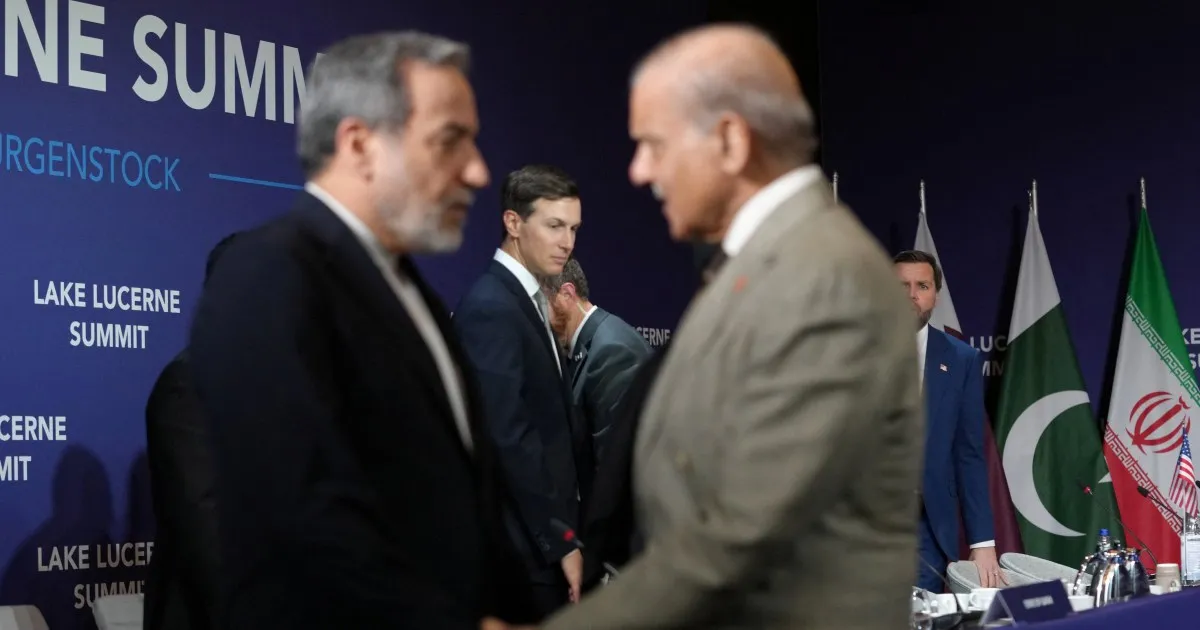
Despite these pronouncements, there appears to be a lack of complete consensus between the two nations regarding the specifics of the agreement. Following initial discussions in Switzerland, Iran's chief negotiator, Mohammed Bagher Ghalibaf, confirmed an agreement to release $12 billion in frozen Iranian funds. However, US Vice President JD Vance articulated that if these assets are indeed unfrozen, they would be used by Iran to acquire American agricultural commodities, stating, “They’re going to go to make American farmers richer and feed the Iranian people.” President Trump echoed this sentiment, emphasizing that American farmers would benefit from Iran purchasing corn, soybeans, and other necessary goods. He further elaborated on Truth Social that the funds would be held in escrow, controlled by the US, and exclusively used for purchasing food and medical supplies from the United States, citing a humanitarian need.
Conversely, Iran has not confirmed its agreement to these specific terms. Esmaeil Baghaei, spokesperson for the Iranian Foreign Ministry, asserted that the released assets would be used with “absolute liberty by Iran in order to purchase whatever goods or commodities needed by the nation.” He clarified that any agricultural purchases would be based on “prices and quality,” not conditions dictated by Washington, and criticized the notion that the conflict's goal had shifted from undermining Iran to enriching American farmers. Ali Bahreini, Iran’s ambassador in Geneva, further underscored this point, stating that “Iran is the only country that decides what to do with those assets.”
Challenges and Motivations for Conditional Trade
Experts suggest that imposing conditions on the expenditure of unfrozen Iranian assets is likely to lead to protracted negotiations. Gary Hufbauer, a senior fellow at the Peterson Institute for International Economics, noted that significant opposition exists in the US Congress to any deal with Iran, and multinational corporations would remain cautious due to potential political instability and credit risks associated with doing business in Iran. Mohammad Reza Farzanegan, an economist at Philipps-Universitat Marburg, proposed that the US president's motivation to compel Iran to buy US goods stems from a desire to gain political leverage and improve his public image amidst the ongoing conflict. He highlighted that American farmers, particularly soybean exporters, have been negatively impacted by trade disputes, and redirecting Iranian assets for agricultural purchases could frame sanctions relief as humanitarian aid, while simultaneously bolstering the president's support base within the US.
Cullen Hendrix, also a senior fellow at the Peterson Institute, suggested that the US proposal could be a strategy to avoid a direct transfer of funds to Iran, which might be perceived as a concession by the US.
Current and Future Trade Prospects
Despite decades of strained relations and sanctions, a modest trade relationship persists between the US and Iran, with the balance heavily favoring the US. Direct trade remains limited due to broad US sanctions, primarily concentrating on humanitarian and sanction-exempt sectors such as medicine, medical equipment, and agricultural products. In 2024, total US-Iran goods and services trade reached $838 million, a 3% increase from 2023. The vast majority of this, $742 million, was in services, with nearly $600 million flowing from the US to Iran. Almost all goods traded were American exports to Iran.
Analysts believe that re-establishing a comprehensive trading relationship would be challenging, as neither Washington nor Tehran appears ready to advocate for such an arrangement domestically. However, certain areas offer potential for cooperation. Hendrix indicated that if Tehran were to undertake significant agricultural purchases, they would likely focus on corn and soy, but not in a manner that would create lasting dependence on US exports. Given the ongoing tensions and the possibility of renewed conflict, even US allies are hesitant to rely solely on the US, making the logic of minimizing dependence on an adversary even more compelling for Iran. Hendrix concluded that Iran would likely engage in “superficial, tactical compliance” rather than integrating US exports as a core component of its food security.
Farzanegan outlined realistic trading options, including food, agricultural commodities, medicine, medical devices, and related chemical or health-sector products. He noted that agricultural trade could encompass wheat, corn, soybeans, rice, and animal feed, especially considering Iran’s projected need to import approximately 22 million tonnes of cereals this year, which would constitute a multi-billion dollar expenditure. Hufbauer also suggested that Tehran might potentially export crude and refined petroleum products to the US at competitive prices.
Source: Original Article
Related Articles
 economy
Global Oil Prices Revert to Pre-Conflict Levels Amidst Easing Middle East Supply Concerns
 economy
Coca-Cola Faces $20 Billion Tax Battle with IRS Over International Profits
 economy
China Implements Export Controls on US Firms Amid Escalating Trade Tensions
 economy