
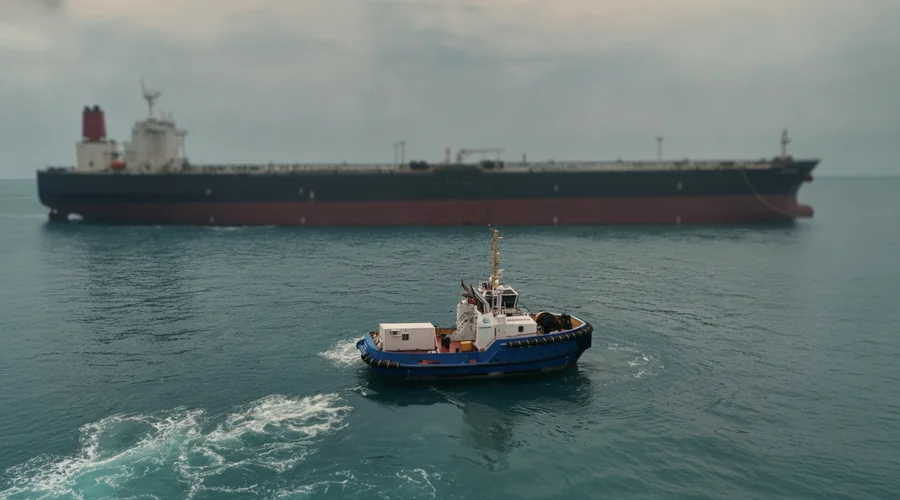
Oil Markets React to Shifting Geopolitical Landscape
The global oil market has experienced a notable shift, with prices for key crude benchmarks falling to levels last observed prior to the recent conflict involving Iran. This downturn is primarily attributed to growing expectations of increased oil supply originating from the Middle East, which has effectively counteracted earlier concerns regarding demand. This development marks a significant moment for the energy sector, as it suggests a potential stabilization after a period of heightened volatility.
On a recent trading day, prompt-month Brent crude futures, designated for August delivery, saw a reduction of $1.06, translating to a 1.44 percent decrease, settling at $72.68 per barrel by 06:39 GMT. Concurrently, US West Texas Intermediate (WTI) futures experienced a loss of 76 cents, or 1.08 percent, bringing its price to $69.58 per barrel. Both of these prominent contracts touched their lowest points since February 27, a date preceding the commencement of the conflict. The August Brent contract was observed trading at a lower price than its September counterpart, which was valued at $73.59. This market dynamic often signals an abundance of short-term supply, indicating that immediate demand is being met comfortably.
Supply Expectations Drive Price Declines
The preceding Wednesday had already seen Brent prices fall by over $3, as anxieties surrounding supply began to dissipate. Similarly, WTI concluded the day down by nearly $3. These movements underscore the market's sensitivity to supply-side developments, particularly those emanating from the Middle East, a region critical to global oil production.
Further reinforcing this trend, US Energy Secretary Chris Wright communicated at a recent forum that the flow of oil through the Strait of Hormuz was approaching pre-conflict volumes. He reported that within a 24-hour period, at least 20 million barrels of oil had transited the strait. While acknowledging that a complete return to normal operations would necessitate a few weeks, primarily due to the need for mine clearance within the strait, his remarks provided reassurance to the market. The anticipated increase in Middle Eastern supply, coupled with Iran's preparations to boost its oil sales following a temporary reprieve from US sanctions, has exerted downward pressure on the prices of physical crude oil cargoes across the globe.
Resumption of Traffic and Diplomatic Progress
A pivotal factor contributing to the easing of oil prices is the initial agreement reached last week to conclude the US-Israeli conflict with Iran, which had commenced on February 28. This accord has facilitated the resumption of traffic through the vital Strait of Hormuz. The agreement has also established a 60-day window for negotiations aimed at addressing more complex issues, including Iran's nuclear program. Secretary Wright expressed confidence that oil flows through the strait would persist even if the broader deal were to falter, asserting that Iran would be unable to re-close the waterway.
Despite these developments, points of contention remain. Tehran has articulated its intention to levy what it describes as maritime service fees, distinguishing them from traditional tolls. In contrast, the United States maintains that the Strait of Hormuz is an international waterway and, as such, should not be subject to such charges. These differing perspectives highlight ongoing complexities in regional maritime governance.
New Routes and Security Warnings
In an effort to alleviate potential bottlenecks, Oman initiated temporary routes on Wednesday to facilitate tanker departures from the strait. The International Maritime Organization and Omani authorities are reportedly coordinating these movements to ensure smooth operations. However, this initiative has been met with a stern warning from Iran's Revolutionary Guards. On Thursday, they cautioned against any unauthorized crossings of the Strait of Hormuz, stating that vessels not complying with their directives 'will be dealt with.' The Revolutionary Guards also explicitly condemned the establishment of the new routes, underscoring the delicate security situation in the region despite diplomatic progress.
These combined factors—increased supply expectations, diplomatic breakthroughs, and the operational adjustments in maritime routes—have collectively contributed to the current trajectory of oil prices, bringing them back to levels seen before the recent period of geopolitical tension.
Source: Oil prices back to pre-war levels on rising Middle East supply
Related Articles
 economy
Potential for US-Iran Trade Revival Amidst Diplomatic Efforts
 economy
Coca-Cola Faces $20 Billion Tax Battle with IRS Over International Profits
 economy
China Implements Export Controls on US Firms Amid Escalating Trade Tensions
 economy