
Tunisia's Energy Landscape and the Push for Renewables
Tunisia, like many nations heavily reliant on energy imports, finds itself at a critical juncture regarding its energy future. The nation's energy deficit has steadily climbed since 2000, reaching approximately $3.8 billion, which accounts for a substantial portion of its overall trade deficit. This growing imbalance is attributed to rising domestic energy consumption and a persistent failure to establish robust energy independence. Recent global events, such as the Russia-Ukraine conflict and geopolitical tensions in the Middle East, have underscored the vulnerabilities inherent in energy systems built on external dependencies and volatile markets.
In response to these challenges, the Tunisian government has committed to increasing the share of renewables in its energy mix to 35 percent by 2030 and reducing its reliance on Algerian natural gas, which currently supplies about 60 percent of its needs. However, the specific strategies adopted to achieve these goals, particularly the privatization of the energy sector and the granting of concessions to foreign multinational corporations, have met with considerable domestic resistance and skepticism.
Controversial Concessions and Public Backlash
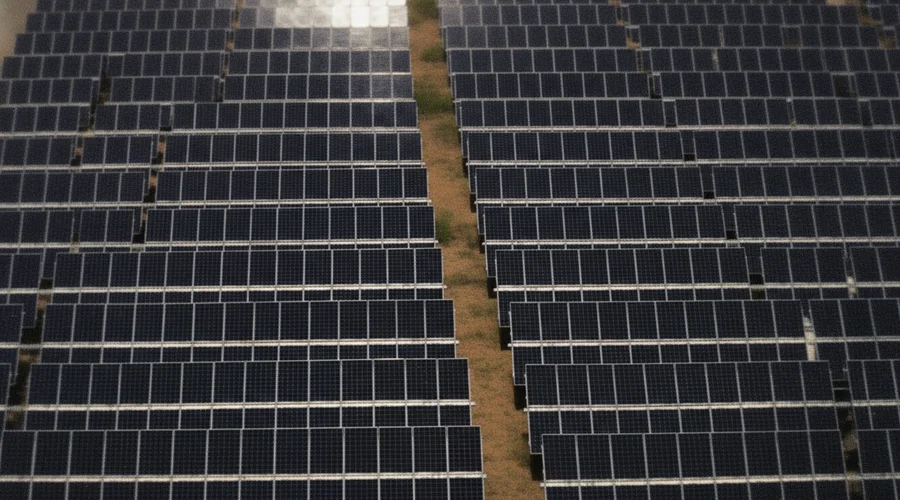
Earlier this year, the Tunisian parliament approved five concession contracts for solar power plants. These projects, located in Khobna and Mezzouna (Sidi Bouzid), El Ksour and Sagdoud (Gafsa), and Menzel Habib (Gabes), are projected to have a combined capacity of approximately 598 megawatts with an estimated total investment of $560 million. The controversy stems from the fact that these concessions were awarded to foreign multinational companies.
The Electricity and Gas Federation, a prominent trade union organization, vocally opposed these concessions, holding a press conference in April to detail their concerns. The federation argued that the agreements would effectively reduce STEG, Tunisia's national public utility, to a mere grid operator, while the lucrative role of electricity production would be transferred to foreign entities. Critics highlighted that the burden of infrastructure costs would fall on Tunisian taxpayers, while profits generated would largely flow out of the country. This model, they contend, mirrors the structural adjustment policies of the 1990s, rebranded under the guise of 'green transition.'
Further scrutiny from the Tunisian Economic Observatory revealed additional problematic clauses within these contracts. The concessions reportedly include extensive tax exemptions and stabilization clauses that could potentially undermine Tunisia’s fiscal autonomy. Concerns were also raised regarding the limited prospects for technology transfer, weak local integration, and minimal employment opportunities, casting doubt on the developmental value of these projects for the Tunisian economy.
A significant point of contention revolves around carbon credits. Under these contracts, carbon credits generated from emissions reductions on Tunisian soil could be transferred to the multinational corporations rather than remaining a national asset. This practice had already sparked opposition, with the Electricity and Gas Federation organizing a strike last year to protest such transfers to private developers. Despite public outcry and protests outside parliament, the five concessions were approved. The public anger led to the dismissal of the energy minister and a senior Ministry of Industry official, actions seen by some as an attempt to placate the public and distance the ruling elite from the controversial decisions.
Beyond Concessions: A Broader Perspective on Tunisia's Energy Deficit
While the government justified the concessions as necessary to reduce the energy deficit and meet renewable targets, critics argue that this approach addresses only a superficial aspect of the problem. A substantial portion, approximately 73 percent, of Tunisia's energy consumption comes from petroleum products, primarily gasoline and diesel, overwhelmingly used by a transport sector heavily reliant on private vehicles. Addressing this fundamental issue, according to opponents of the concessions, requires a different set of policy choices.
These alternative solutions include significant investment in public transportation, implementing restrictions on car imports, and introducing progressive taxation on high-consumption vehicles. Furthermore, there's a call for strengthening domestic refining capacity, specifically by investing in and upgrading the Tunisian Company of Petroleum Industries (STIR). This would necessitate revisiting regional cooperation initiatives, such as the proposed joint refinery project with Libya in 2012. That $2 billion project, intended to advance energy sovereignty for both nations, was ultimately abandoned due to regional instability and, arguably, because such sovereign cooperation threatened the interests of European powers profiting from exporting refined petroleum products to the region.
“The energy minister and a senior Ministry of Industry official were dismissed to placate public anger and distance the ruling elite from the controversial projects.”
Critics argue that countries subordinated to foreign powers are often hindered from industrializing, moving up the value chain, or building the productive sovereignty necessary to reduce dependence on external markets. The abandoned refinery project serves as an illustration of this dynamic, where alternatives are structurally foreclosed. The current solar concessions, they contend, represent another manifestation of this same logic, failing to address the structural issues of Tunisia's energy deficit, build domestic industrial capacity, or facilitate genuine technology transfer. Instead, they are viewed as opening new avenues for international capital accumulation, framed within the discourse of 'transition' and 'sustainability.'
Charting a Path Towards Genuine Energy Sovereignty
The urgency of transitioning to renewable energy is widely accepted. However, the central debate in Tunisia revolves around the 'how,' 'by whom,' and 'in whose interest' this transition should occur. Opponents of the current strategy argue that the solution to Tunisia's energy crisis does not lie in further privatizing public resources under foreign management or through neocolonial frameworks.
Instead, they advocate for a fundamentally different approach: establishing public control over energy production and distribution, ensuring genuine technology transfer, investing in domestic industrial capacity, shifting consumption patterns through energy efficiency and robust public transport systems, and fostering regional cooperation that genuinely builds sovereignty rather than deepening dependency. The limitations of the neoliberal, corporate-led model have been exposed repeatedly through financial crises, pandemics, and geopolitical shocks. Critics emphasize that these crises should serve as catalysts for re-evaluating failing strategies, not as pretexts for perpetuating them. The call is for a transition on Tunisia's own terms, characterized by public control, democratic oversight, and inclusive development that prioritizes the needs of the many over the profit margins of a few.
Source: Why Tunisia’s renewable energy strategy is facing resistance
Related Articles
 economy
Global Oil Prices Fluctuate Amid Middle East Tensions and Strait of Hormuz Concerns
 economy
Global Markets React Positively to US-Iran Peace Framework, Oil Prices Decline
 economy
Global Economic Order Undergoing Transformation: G7 and BRICS Vie for Influence
 economy