
Pyongyang Commissions New Destroyer, Emphasizes Nuclear Naval Ambitions
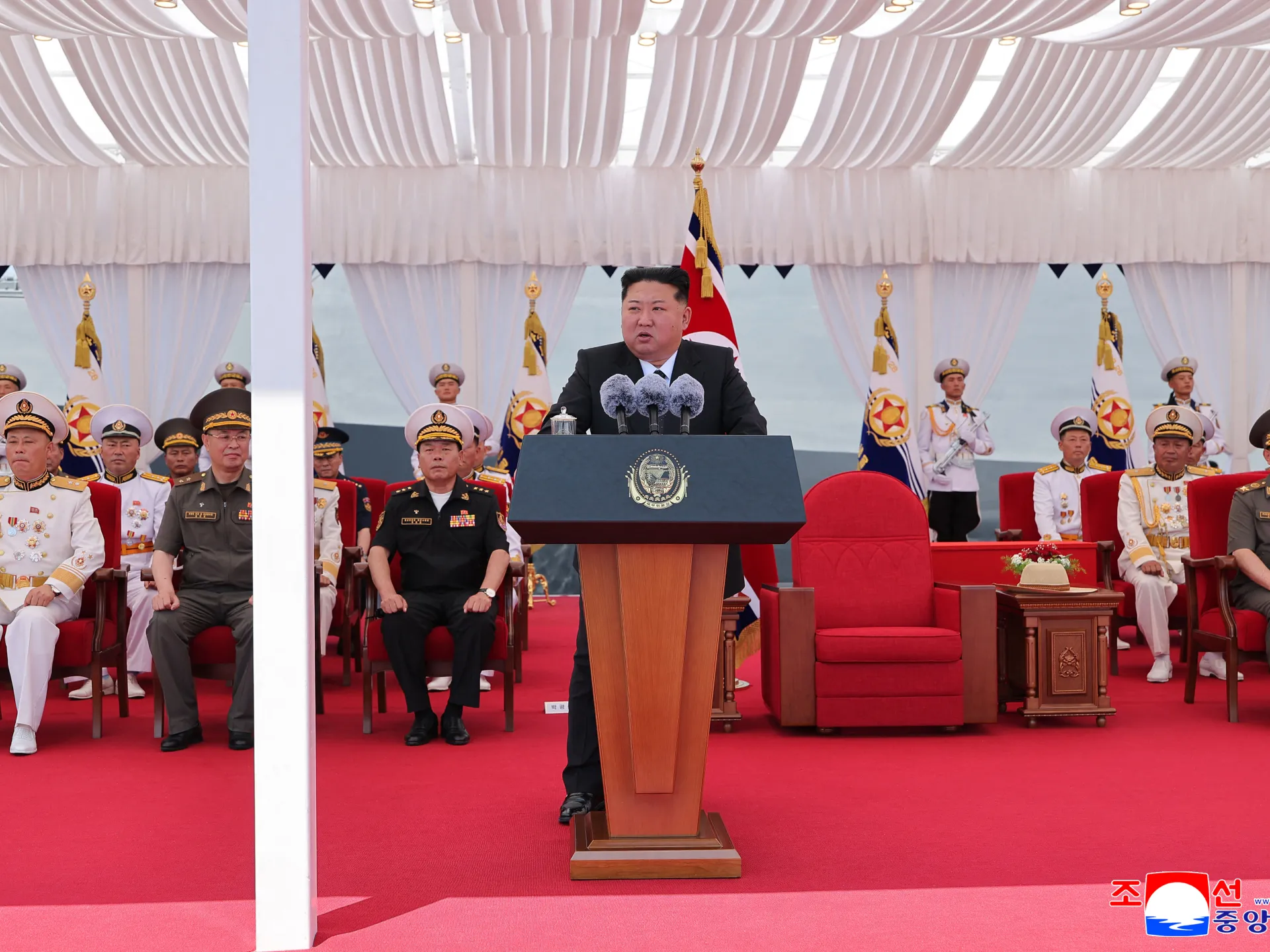
North Korea has recently introduced a new 5,000-tonne multi-mission destroyer, named Choe Hyon, into its naval fleet. The commissioning ceremony, held at the western port city of Nampho, was attended by leader Kim Jong Un, who used the occasion to outline an ambitious strategy for the country's naval development. Kim Jong Un articulated a clear intention to arm North Korea's navy with nuclear weapons and to embark on the construction of more substantial warships, signaling a significant strategic shift in the nation's military posture.
This announcement, widely reported by state media, underscores Pyongyang's persistent efforts to bolster its military capabilities, even in the face of stringent international sanctions. Kim described the nuclear armament of the naval fleet as a "strategic course" vital for ensuring the country's forces maintain readiness for "multifaceted and efficient operation." The Choe Hyon is purportedly outfitted with some of North Korea's "most powerful weapons," and its capabilities have already been demonstrated through a cruise missile test overseen by Kim Jong Un himself from the vessel.
Expansion of Naval Power and Strategic Objectives
Beyond the Choe Hyon, Kim Jong Un also pledged the imminent commissioning of another large destroyer, the Kang Kon. Furthermore, he announced plans to initiate the construction and launch of "strategic warships" in the 10,000-tonne class. This proposed increase in vessel size would symbolically narrow the technological and operational gap with South Korea's navy and bring North Korea closer to the blue-water capabilities typically associated with the United States and South Korea.
North Korea, which self-identifies as an "irreversible" nuclear state, consistently frames its military build-up as a necessary deterrent against perceived threats from Washington and Seoul. The Korean Peninsula technically remains in a state of war, and Kim Jong Un has frequently accused the allied nations of escalating tensions in the region "to the brink of a nuclear war." The newly commissioned Choe Hyon is specifically highlighted by Pyongyang as carrying some of the nation's "most powerful weapons," including ship-launched cruise missiles that could potentially be equipped with tactical nuclear warheads.
Progress and Future Aspirations for a Nuclear Navy
According to state media reports, Kim Jong Un conveyed during the commissioning ceremony in Nampho that warships like the Choe Hyon serve as evidence that the nuclear armament of North Korea's navy is progressing according to its established plans. He attended the ceremony for the Choe Hyon, which is the country's first 5,000-tonne destroyer, and is reportedly assigned the critical task of defending North Korea's western coastline.
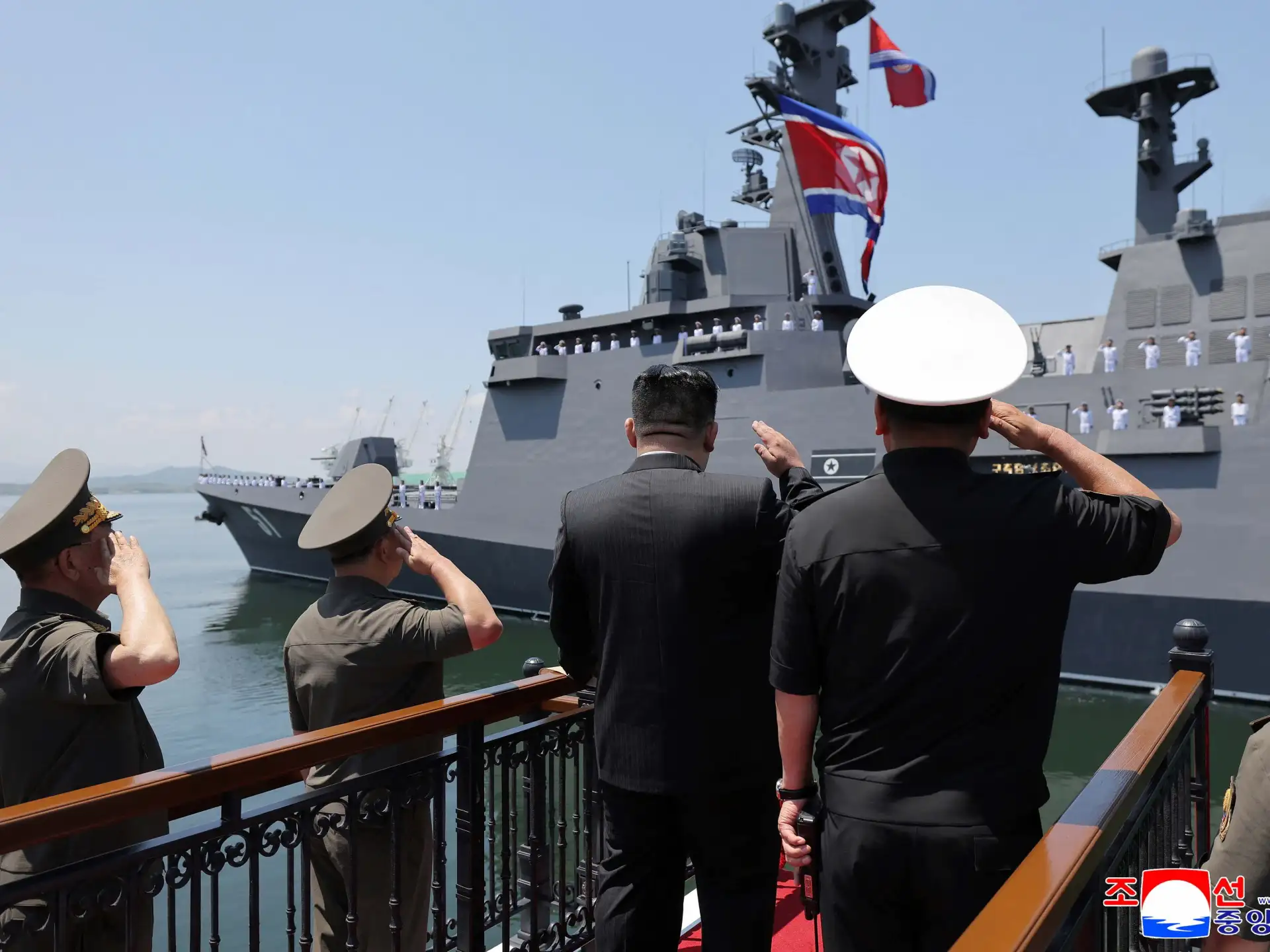
During the event, Kim Jong Un was seen saluting the destroyer, which he has characterized as a pivotal step towards extending North Korea's operational reach and enhancing its pre-emptive strike capabilities. Official reports indicate that the warship is armed with a range of weapons, including anti-aircraft and anti-ship systems, as well as ballistic and cruise missiles that are capable of carrying nuclear warheads. South Korean officials and various experts have suggested that the construction of this warship may have benefited from Russian assistance, given the deepening military ties between the two nations. However, some analysts have raised questions regarding the vessel's readiness for active service.
North Korea has subjected the Choe Hyon to a series of recent tests, which have included launches of what it describes as nuclear-capable cruise missiles from the destroyer. Kim Jong Un has articulated that North Korea's navy is undergoing a transformation from primarily a coastal defense force into a comprehensive service equipped with strategic nuclear capabilities, asserting that its nuclear armament program is advancing as scheduled.
Shift in Military Focus and Long-Term Goals
This development signifies a notable shift in Kim Jong Un's strategic focus, moving beyond ballistic missiles to place greater emphasis on naval power. This includes actively pursuing the construction of a nuclear-powered submarine and establishing five-year objectives that encompass intercontinental ballistic missiles capable of underwater launch.
Following a missile test conducted from the Choe Hyon in March, Kim Jong Un stated that equipping his navy with nuclear weapons would "constitute a radical change in defending our maritime sovereignty, something that we have not achieved for half a century." While state media did not elaborate on these remarks, some analysts interpret them as an indication that North Korea might be preparing to declare a new maritime boundary, which could potentially encroach upon waters currently controlled by South Korea.
Source: North Korea commissions warship as Kim eyes nuclear navy
Related Articles
 world
world
North Korea Unveils New 5,000-Ton Destroyer, Enhancing Naval Capabilities
 world
world
Ukrainian Strikes Disrupt Power in Russian-Controlled Sevastopol Amid Escalating Conflict
 world
world
Japan Considers Naval Deployment to Strait of Hormuz Amid Constitutional Debate
 world
world