
Widespread Power Disruptions in Sevastopol
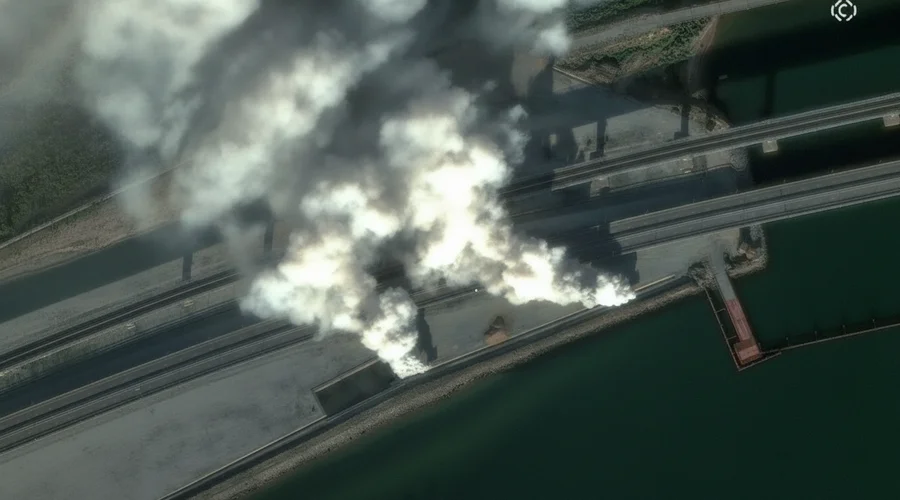
Ukrainian military actions targeting Russian-occupied Crimea have resulted in power interruptions across Sevastopol, the most populous city on the peninsula. Both Ukrainian and Russian authorities have acknowledged the strikes, which highlight an escalation in Kyiv's campaign against the territory annexed by Moscow in 2014. The attacks appear to be part of a broader strategy to disrupt Russian logistical capabilities in the region, following a series of strikes on oil refineries and depots in southern Russia that supply the area.
Mikhail Razvozhayev, the Moscow-appointed governor of Sevastopol, reported the power cuts after energy facilities in the city were hit. On Wednesday, he urged residents to assist vulnerable individuals, conserve phone battery life for emergencies, and avoid placing undue strain on the power grid. "The enemy is once again striking treacherously, attempting to deprive us of normal living conditions and sow panic," Razvozhayev stated. He indicated that some parts of the city, where temperatures were nearing 30 degrees Celsius (86 degrees Fahrenheit), would likely remain without electricity until at least Wednesday evening. Consequently, trolleybus services in Sevastopol were suspended for the day, and parents were advised to keep children at home.
Impact Beyond Sevastopol and Broader Context of Attacks
The power disruptions were not limited to Sevastopol. Vladimir Saldo, the Moscow-installed governor of Russian-held parts of Ukraine's Kherson region, separately confirmed that these areas were also experiencing partial or complete power outages, though he did not provide further specifics.
Beyond Crimea, separate Ukrainian drone attacks reportedly claimed two lives in Russia's Nizhny Novgorod region, situated hundreds of kilometers from the front lines. Another fatality occurred in the border region of Belgorod, according to local governors. Conversely, Russian drone attacks are said to have killed a 56-year-old woman in Ukraine's Kharkiv border region, as reported by Ukrainian authorities.
The intensity of strikes has notably increased in recent weeks. Russia's Ministry of Defense claimed its forces had intercepted over 300 Ukrainian drones overnight. Meanwhile, Kyiv's air force reported that Russian forces launched 101 drones at Ukraine during the same period, with 95 of them being successfully destroyed.
Earlier in the week, specifically on Tuesday, Ukrainian forces asserted that they had targeted a railway bridge, a power plant, and other crucial infrastructure sites within Crimea. These actions align with statements made by Ukrainian Defence Minister Mykhailo Fedorov last week, who indicated that Ukrainian forces are "isolating Crimea with drones." Fedorov suggested that this strategy could soon transform Crimea into an "island," potentially leading to "very unexpected consequences for Russians."
Stalled Peace Efforts and Shifting International Focus
The ongoing conflict in Ukraine, widely recognized as Europe's deadliest since World War II, has seen peace negotiations led by the United States remain largely frozen. This diplomatic stagnation has been exacerbated by a shift in Washington's attention towards the Middle East, particularly following its strikes on Iran in late February. The diversion of focus underscores the complex geopolitical landscape surrounding the conflict and the challenges in achieving a resolution.
The current situation in Crimea and surrounding regions illustrates a continued pattern of reciprocal attacks, with both sides employing drones and other means to target strategic infrastructure. The impact on civilian life, including power outages and disruptions to essential services, highlights the humanitarian consequences of the prolonged hostilities. As the conflict evolves, the targeting of logistical and energy infrastructure remains a key component of the military strategies employed by both Ukraine and Russia, with significant implications for the populations residing in the affected areas.
Source: Original Article
Related Articles
 world
world
North Korea Unveils New 5,000-Ton Destroyer, Enhancing Naval Capabilities
 world
world
North Korea Unveils New Warship, Signals Intent for Nuclear-Capable Navy
 world
world
Japan Considers Naval Deployment to Strait of Hormuz Amid Constitutional Debate
 world
world