
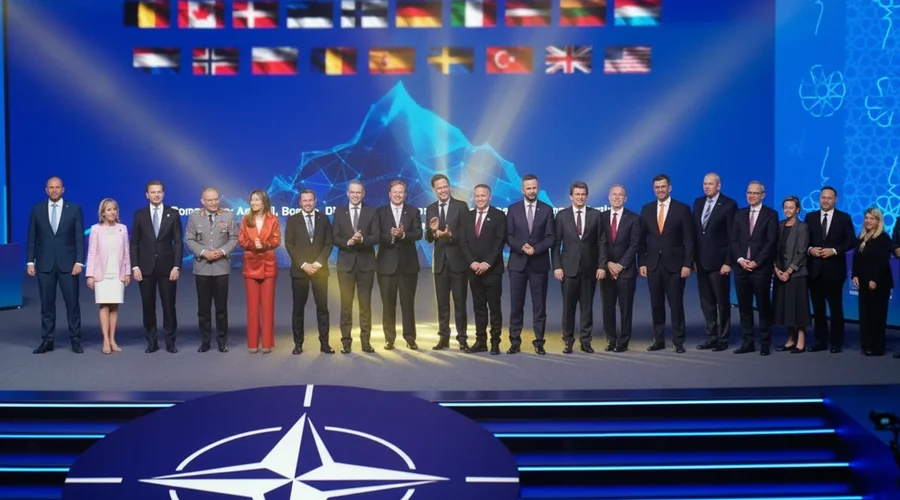
Introduction to the NATO Summit in Ankara
The capital city of Turkiye, Ankara, is set to host a significant gathering of leaders representing the North Atlantic Treaty Organization (NATO). This summit arrives at a pivotal moment for the alliance, as discussions are anticipated to focus on key strategic areas that will shape the future trajectory of collective defense and international security. Central to these deliberations will be the persistent issue of defense spending among member states and the continuous provision of military support to Ukraine, a nation currently engaged in a protracted conflict. The presence of prominent figures, including former United States President Donald Trump, underscores the high-stakes nature of these discussions and their potential implications for global geopolitical dynamics.
Defense Spending: A Recurring Theme
For many years, the allocation of resources towards defense has been a cornerstone of NATO's operational effectiveness and its commitment to collective security. The principle of burden-sharing, which dictates that member states should contribute equitably to the alliance's defense capabilities, has frequently been a point of contention and discussion. The upcoming Ankara summit is expected to revisit these financial commitments, particularly the long-standing target for members to dedicate at least two percent of their Gross Domestic Product (GDP) to defense. Adherence to this target varies significantly across member nations, leading to ongoing debates about fairness and the overall readiness of the alliance. Discussions will likely explore strategies to ensure that all members are contributing adequately to maintain a robust and credible deterrent posture against potential threats.
Support for Ukraine: A Critical Imperative
The conflict in Ukraine has dramatically reshaped the security landscape in Europe and has galvanized NATO members to provide substantial assistance to the besieged nation. The Ankara summit will undoubtedly dedicate considerable attention to the ongoing military needs of Ukraine. Leaders are expected to deliberate on the most effective and sustainable ways to continue supplying military aid, including advanced weaponry, ammunition, and training. The discussions will likely encompass both immediate requirements and long-term strategies to bolster Ukraine's defense capabilities and its resilience against external aggression. The alliance's unified stance on supporting Ukraine is viewed as crucial, not only for the country's sovereignty but also for upholding international law and deterring further acts of aggression in the region.
The Influence of Former President Donald Trump
The attendance and potential influence of former U.S. President Donald Trump at the NATO summit introduce an additional layer of complexity to the proceedings. Throughout his previous term, Trump frequently expressed skepticism regarding the alliance's structure and the financial contributions of its European members. His past rhetoric has often challenged the foundational principles of NATO, leading to concerns about transatlantic unity and the future of collective defense. His presence in Ankara suggests that these long-standing debates may resurface, potentially impacting the tone and outcomes of the summit. Alliance leaders will likely navigate these discussions carefully, aiming to maintain cohesion and a united front while addressing the diverse perspectives on NATO's role and responsibilities.
Transatlantic Relations in Flux
The Ankara summit occurs at a time when transatlantic relations are undergoing a significant re-evaluation. The traditional bonds between North America and Europe, forged over decades of shared values and strategic interests, are facing new pressures. Factors such as evolving global power dynamics, regional conflicts, and internal political shifts within member states are contributing to a dynamic and sometimes unpredictable international environment. The summit provides a crucial platform for leaders to reaffirm their commitment to the alliance, address areas of divergence, and collectively chart a course for NATO that ensures its continued relevance and effectiveness in a rapidly changing world. The ability of member states to demonstrate unity and a shared vision will be paramount in reinforcing the strength and credibility of the transatlantic partnership.
Anticipated Outcomes and Future Directions
While specific outcomes remain to be seen, the Ankara summit is expected to yield important declarations regarding increased defense spending commitments and concrete plans for sustained military assistance to Ukraine. Beyond these immediate concerns, the discussions are likely to touch upon broader strategic questions concerning NATO's adaptation to new threats, including cyber warfare, hybrid tactics, and the rise of new geopolitical challengers. The alliance's capacity to evolve and respond effectively to a diverse range of security challenges will be a key determinant of its long-term success. The summit represents a critical opportunity for NATO leaders to demonstrate their collective resolve and to articulate a clear vision for the alliance's role in maintaining peace and security on a global scale.
Source: Original Article
Related Articles
 world
world
Mali Receives Russian Military Aid Amidst Northern Insurgency
 world
world
Cuba Experiences Widespread Power Outage Amid Deepening Energy Crisis
 world
world
Tanker Ablaze in Strait of Hormuz Following Projectile Strike
 world
world