
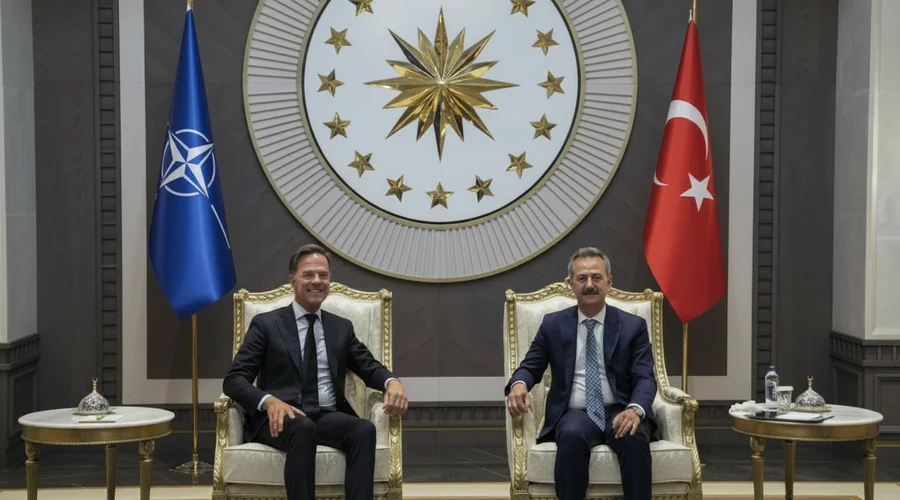
Introduction to the Ankara NATO Summit
The North Atlantic Treaty Organization (NATO) is holding its latest summit in Ankara, Turkey, bringing together leaders from its 32 member nations. The two-day event, commencing on Tuesday, July 7, 2026, is set against a backdrop of renewed pressure from the United States regarding defense expenditures and ongoing global security challenges. Discussions are anticipated to focus heavily on the implementation of previously agreed-upon defense spending targets and the enhancement of military capabilities across the alliance.
US President Donald Trump has consistently advocated for member states to increase their financial contributions to collective defense, a stance that has shaped much of the pre-summit discourse. European nations, in response, are expected to announce substantial new military contracts, signaling a commitment to bolstering their defense industries and capacities. Last year's NATO summit established an ambitious target for members to allocate 5 percent of their Gross Domestic Product (GDP) to defense by 2035, with 3.5 percent earmarked for direct military spending and 1.5 percent for security-related needs.
Participants and Key Agenda Items
Beyond the heads of state from the 32 NATO member countries, the summit is also hosting several non-alliance leaders and representatives. Ukrainian President Volodymyr Zelenskyy and South Korean President Lee Jae-myung are present, underscoring the broader international implications of NATO's agenda. Additionally, Australia, Japan, and New Zealand have sent their defense or foreign ministers, reflecting a wider engagement with Indo-Pacific security. Gulf nations, including Bahrain, Kuwait, Qatar, and the United Arab Emirates, affected by the US-Israel conflict with Iran, are also represented by their respective defense or foreign ministers.
Notably absent from the main summit proceedings is Syrian President Ahmed al-Sharaa, who is, however, scheduled for a bilateral meeting with President Trump in Ankara. This diverse attendance highlights the interconnectedness of global security concerns and the strategic importance of NATO's discussions.
President Trump's Expectations and NATO's Response
President Trump's long-standing critique of NATO has centered on the perceived disproportionate financial burden carried by the United States. His initial presidential campaign saw him questioning the alliance's fundamental value, noting that at the time, only a handful of member states met the agreed-upon 2 percent GDP defense spending target. This persistent advocacy for shared responsibility has prompted a significant shift within the alliance, with numerous member states committing to increased defense budgets in recent years.
Ozgur Unluhisarcikli, the German Marshall Fund's regional director for Turkey, believes this year's summit will pivot from mere pledges to concrete implementation. "NATO allies just decided to increase their defence spending to five percent last year at The Hague and European allies took action to upgrade their defence industries," he stated. "This year in Ankara the discussion will be on how to translate spending to capabilities. It is therefore stronger than it was last year." However, Paolo von Schirach, president of the Global Policy Institute, cautioned that translating increased spending into tangible military capabilities is a long-term process. He noted that while more orders for military hardware are positive, their full impact on capabilities will take time to materialize, suggesting that significant expenditure does not always equate to immediate, substantial gains.
Ukraine's Urgent Needs
Ukrainian President Volodymyr Zelenskyy's presence at the summit is particularly significant, as he is scheduled for a bilateral meeting with President Trump. Ukraine, a non-NATO member, is seeking further military assistance, particularly additional Patriot air defense systems, to counter escalating Russian attacks on its cities. Recent drone assaults, including a deadly strike on Kyiv, underscore the urgent need for enhanced defensive capabilities.
Jack Watling, a senior research fellow at the Royal United Services Institute, emphasized that Ukraine is seeking sustained political and military-technical support from alliance members. This sustained support aims to convey a clear message to Russia: that there will be no reduction in Ukraine's defensive capacity in the foreseeable future. Watling highlighted the direct correlation between the provision of interceptors and Ukraine's ability to mitigate damage from Russian ballistic missiles, underscoring the critical nature of these requests.
European Strategies and Alliance Cohesion
The substantial military contracts expected from European nations at the summit are viewed by some analysts as an attempt to placate the Trump administration. The context for this includes President Trump's past remarks questioning European loyalty, particularly following their non-participation in the war on Iran, and his assertion that he might not have attended the summit if not for Turkish President Recep Tayyip Erdogan's hosting.
Turkey, itself, has not only increased its defense spending but has also emerged as a major military exporter within NATO. Despite these efforts, the rhetoric surrounding defense spending remains sharp. On the eve of the summit, President Trump publicly criticized Germany's defense budget, to which Chancellor Friedrich Merz responded by defending his country's efforts as the "greatest effort we have ever made to strengthen our defence capabilities."
Adding another layer of complexity, the US has initiated a phased withdrawal of certain military assets, including warplanes, destroyers, and submarines, from NATO countries. While Watling suggested that a reduction in US infantry or armor might have a greater messaging impact than practical one, he noted that the withdrawal of US air power could have more tangible consequences. Analysts concur that a central question for the summit is whether the alliance can project unity amid these disagreements and withdrawals. Von Schirach concluded that the primary value of the Ankara summit is political, serving as a platform for allies to maintain dialogue and project a unified front, even as underlying differences persist. He suggested that "Ankara is more about reassurance and signalling than about concrete, immediate changes on the ground."
Source: NATO summit begins in Turkiye’s Ankara: Who is attending, what is at stake?
Related Articles
 world
world
Mali Receives Russian Military Aid Amidst Northern Insurgency
 world
world
Cuba Experiences Widespread Power Outage Amid Deepening Energy Crisis
 world
world
Tanker Ablaze in Strait of Hormuz Following Projectile Strike
 world
world