
Overview of the Gen Z Movement in Kenya
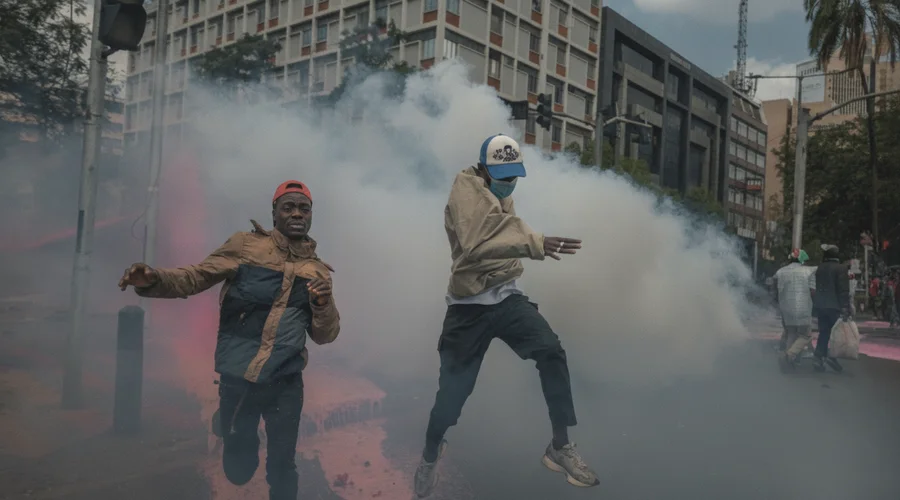
Kenya is bracing for potential widespread demonstrations as it approaches the second anniversary of the Gen Z-led protest movement. These upcoming events are expected to commemorate the more than 120 individuals who lost their lives during the initial protests two years ago, a movement that significantly mobilized young Kenyans. What began in 2024 as opposition to a comprehensive tax bill quickly evolved into a broader protest against the rising cost of living, high unemployment rates, and perceived government corruption, with a stated aim to pressure President William Ruto from office.
Although the initial protests did not result in President Ruto's removal, the government was compelled to retract the controversial tax bill. However, underlying issues such as economic inequality, which fueled the initial discontent among young people, largely remain unaddressed, according to various experts. A commemoration held last year to mark the first anniversary turned violent, as government forces intervened, resulting in the deaths of over 60 people. In anticipation of this year's planned demonstrations, scheduled to begin on Thursday, President Ruto's administration has issued stern warnings against protests and has once again ordered a substantial police deployment. Similar to last year, Gen Z demonstrations are anticipated in major cities across the country, including the capital, Nairobi.
The Origins and Nature of Kenya's Gen Z Protests
The Gen Z protests in Kenya are characteristic of a new era of civil resistance, largely driven by individuals born between the late 1990s and early 2010s. These movements are often distinguished by their decentralized organization, frequently coordinated through social media platforms rather than traditional activist groups or political parties. While the specific demands vary based on a country's socioeconomic context, they commonly revolve around issues of inequality and concerns over what many young people perceive as a decline in democratic principles by their governments. These movements are notable for their lack of centralized leadership.
Initially, the 'Gen Z' label was primarily associated with global climate activism led by teenagers. However, this wave of youth-led movements has since influenced political change, contributing to the unseating of incumbent governments in countries such as Nepal in 2025, Bangladesh in 2024, and Sri Lanka in 2022. Similar protests also emerged in Indonesia and the Philippines last year. Kenya's Gen Z mobilization since 2024 stands out as one of the most impactful and widely resonant protest movements of this type.
How the Protests Began in Kenya
The protests in Kenya commenced in 2024 in opposition to a finance bill designed to generate an additional $2.7 billion in tax revenue. At their peak, demonstrators stormed and partially burned parliament after lawmakers approved the contentious bill on June 25, 2024. President Ruto eventually yielded to public pressure, sending the bill back to parliament for revisions, though this occurred after the protests had been largely suppressed through state intervention.
President Ruto had ascended to power in 2022 on a populist platform, appealing to marginalized youth groups. His campaign emphasized a 'bottom-up approach' aimed at prioritizing the millions struggling to make ends meet, particularly targeting working-class Kenyans. However, his tenure has been marked by increased taxation, contributing to inflation. The protests re-emerged the following year, in June 2025, when thousands marched to commemorate those killed in the previous year's crackdown. The movement gained renewed momentum after the death of blogger Albert Ojwang in police custody, which reignited public anger over police brutality and the lack of government accountability. Rights groups and media reports indicated that the crackdown in 2025 resulted in over 60 deaths and more than 500 injuries.
Current Tensions and Government Response
On June 21, victims of past crackdowns, including families of those killed by police, convened at the Nairobi Baptist Church. They appealed to the government to heed the concerns of its citizens. Chris Kinyanjui, general secretary of the National Council of Churches of Kenya, stated after the memorial service, "We stand with every Kenyan who continues to carry the pain and memories of that dark season in our nation." Jackie Makena, a theologian from the Methodist Church in Kenya, emphasized the gravity of the situation, stating, "The blood of young people cries out from the ground. The voices of those lost in the Gen Z protests of 2024 and 2025 echo in our streets."
Tensions have been palpable in Nairobi. The Ruto administration has introduced the new Finance Act, 2026, which it frames as a pro-growth, investment-friendly law intended to expand the economy. President Ruto has asserted that this legislation marks a shift from aggressive revenue collection towards supporting enterprise and stimulating private-sector investment, dismissing opposition to the bill as mere 'propaganda'. Speaking at a state event on June 19, the president urged Kenyans not to demonstrate on Thursday, advocating for continued daily activities focused on productivity and economic growth. He reiterated, "The one thing that is not going to happen is that people will be mobilised to destroy property or to cause chaos or mayhem. That will not happen." He added, "Children will go to school because it's their right to go to school. Workers will go to work because that's how we raise the productivity of our nation."
In contrast, Siaya County Governor James Orengo, a prominent opposition figure, has called on Kenyans to participate in remembrance services, including a march to government buildings in Nairobi and vigils nationwide. He posted on X, "To those who cannot join the march, stand in solid solidarity by staying at home … let the silence of our empty streets be a roaring testament against tyranny. We will not forget, and we will not back down. See you on June 25th!"
Justice for Victims of Protest Crackdowns
Last week, President Ruto announced a fund of nearly $15 million to compensate 1,100 individuals identified by human rights groups as having been affected by violent protests between 2017 and 2025. He characterized these payments as an "acknowledgement that harm occurred" but stopped short of issuing an apology. Gillian Munyao, whose son, Rex Masai, 29, was among the first fatalities in the June 2024 protests, expressed dissatisfaction. "He’s covering up the wrongs that he did. He just wants us to shut up because of the cash that he’s giving us – the peanuts," she told AFP at a Nairobi court, where a legal case regarding the killings is ongoing. "I’m not seeing justice anywhere … why pay us without giving the culprit?"
Only three cases stemming from the 2024 protest deaths and one from 2025 have reached court, with no police officers yet convicted. International human rights organizations, including Amnesty International and Human Rights Watch, have documented dozens of abductions of government critics in 2024 and 2025, many of whom remain missing. In May 2025, President Ruto stated that an "accountability mechanism" was in place to bring those responsible to justice. However, many, including his own former attorney general, have alleged his direct involvement in the kidnappings, and there has been no visible sign of any investigation.
Source: Kenya braces for return of Gen Z protests – how did they begin?
Related Articles
 news
news
US and Iran Disagree on Nuclear Inspections as Senate Moves to Limit Presidential War Powers
 news
news
Ukraine's Recovery Conference in Poland Amidst Diplomatic Tensions
 news
news
Ukrainian Forces Target Key Railway Bridge in Northern Crimea Amid Supply Route Campaign
 news
news