
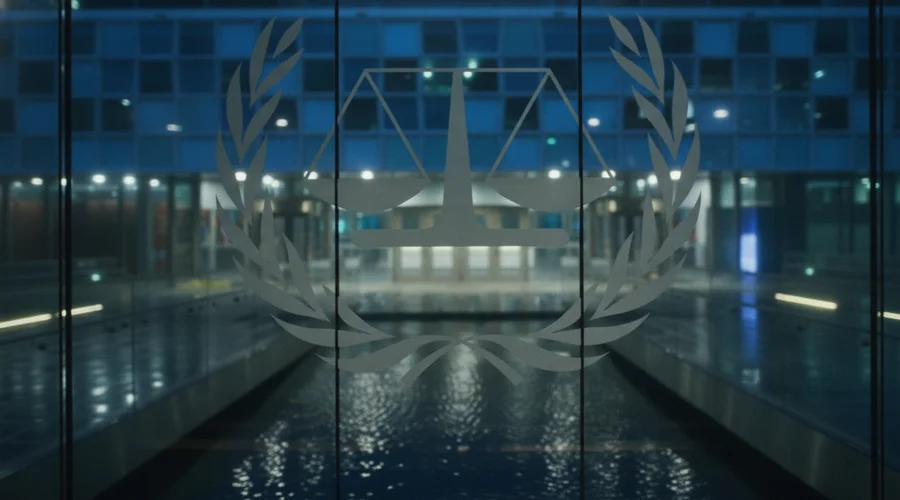
International Criminal Court Judges Sue Trump Administration Over Sanctions
Three judges from the International Criminal Court (ICC) have launched a lawsuit against former United States President Donald Trump and his administration, arguing that sanctions levied against them last year were unlawful. The judges assert that these measures were specifically intended to punish and coerce their judicial decisions concerning alleged war crimes involving US and Israeli personnel.
Background to the Sanctions
The Trump administration imposed sanctions on several ICC judges in what was described as an unprecedented act of retaliation. This action followed the tribunal's issuance of an arrest warrant for Israeli Prime Minister Benjamin Netanyahu and an earlier decision to investigate alleged war crimes committed by US troops in Afghanistan. The sanctions resulted in the blocking of US-based property and assets belonging to the affected judges. Furthermore, US-based entities were prohibited from conducting any transactions with them, including the provision of funds, goods, or services.
The ICC, established in 2002, holds international jurisdiction to prosecute genocide, crimes against humanity, and war crimes within its member states or when a situation is referred by the UN Security Council. While the court has jurisdiction over these grave crimes in its 125 member countries, some nations, notably the US, China, Russia, and Israel, do not recognize its authority. During his initial term, Trump's administration had previously imposed sanctions on the ICC's chief prosecutor, Fatou Bensouda, and one of her aides, in response to the court's work related to Afghanistan.
Details of the Lawsuit
The lawsuit, filed in a federal court in Manhattan, names Canadian judge Kimberly Prost, Ugandan judge Solomy Balungi Bossa, and Beninese judge Reine Adelaide Sophie Alapini-Gansou as the plaintiffs. They contend that the sanctions regime was established to exert extrajudicial pressure, with the explicit goal of punishing them for past judicial decisions and coercing them into prioritizing personal interests over impartial legal judgment.
The legal challenge posits that the sanctions were unlawful because they exceeded the scope of the International Emergency Economic Powers Act (IEEPA) and were not predicated on a genuine national emergency or an extraordinary threat. The judges' filing states, “The Sanctions Regime … is designed to exert extra-judicial pressure on these judges and their colleagues on the ICC bench by targeting their financial and other personal interests, with the objective of punishing them for prior judicial decisions and coercing them into prioritizing their private interests over deciding cases on the basis of the law and facts.”
Impact on the Judges
The lawsuit details the severe personal and professional repercussions experienced by the judges due to the sanctions. They describe the imposition of IEEPA sanctions as akin to a “financial death penalty.” As a direct consequence, Judges Prost, Bossa, and Alapini-Gansou have reportedly lost the ability to use credit cards, access essential banking services, utilize common online platforms such as Amazon and Google, book travel, and, in some instances, obtain health insurance. These restrictions have significantly hampered their daily lives and professional functions.
Moreover, the judges assert that the sanctions create an impediment to the submission of evidence and arguments in any current or future proceedings before them. This effectively undermines their capacity to fulfill their judicial duties impartially and effectively, as the measures are perceived to be an attempt to influence the outcome of cases by targeting the judges directly.
The legal action seeks to overturn the sanctions, arguing that they represent an unlawful attempt to interfere with the independent functioning of an international judicial body and to punish judges for carrying out their mandated duties in accordance with international law.
Source: ICC judges sue Trump over sanctions, call measures unlawful
Related Articles
 world
world
Regional Tensions Escalate: Iran Rejects New Hormuz Route, US Secretary of State Engages GCC Leaders Amidst Broader Conflicts
 world
world
Dual Earthquakes Trigger Widespread Alarm in Venezuela
 world
world
Iran Issues Warning on Unauthorized Strait of Hormuz Transit
 world
world