Overview of the Gaza Situation
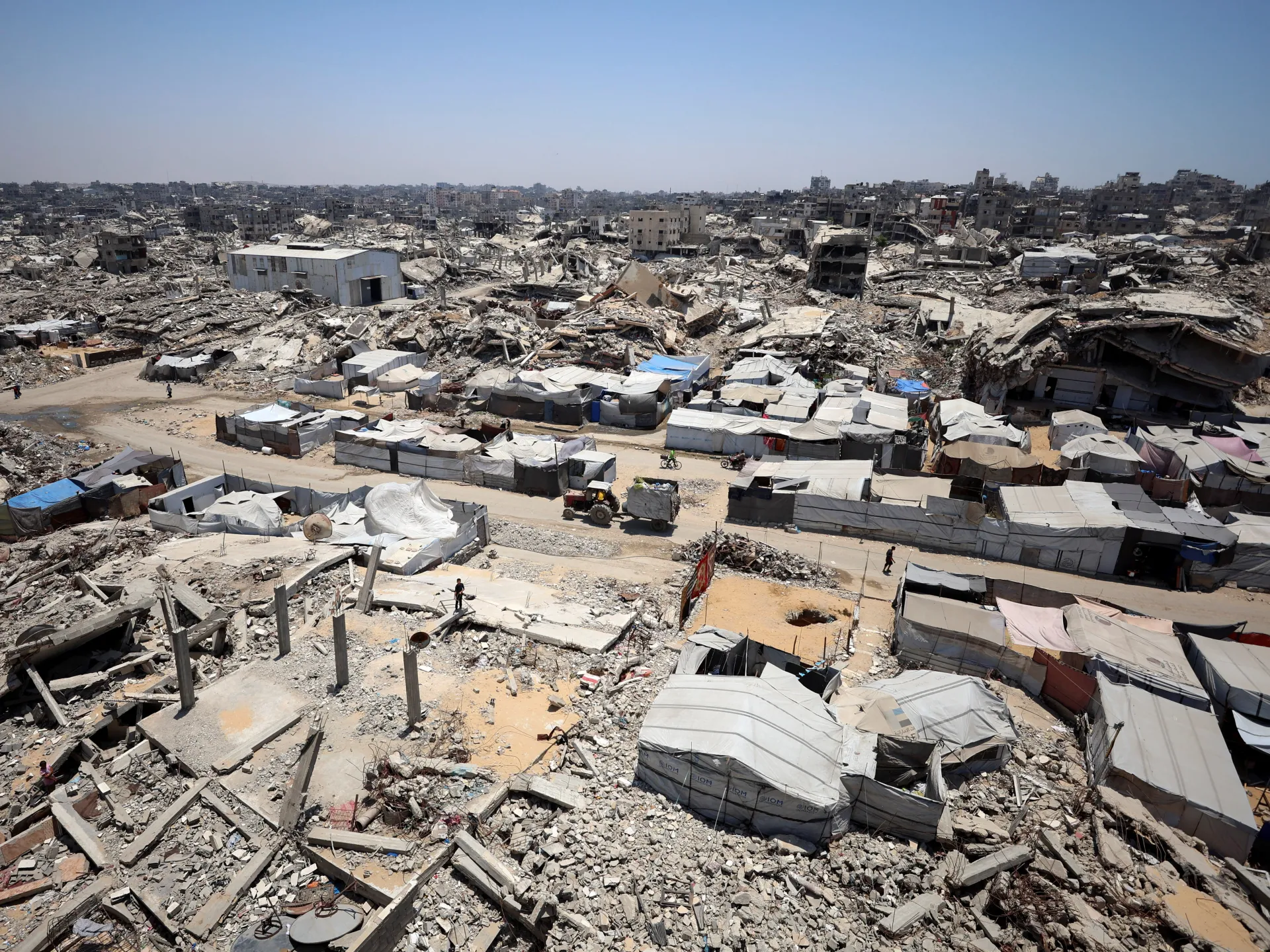
The Gaza Strip has recently marked 1,000 days since the commencement of the ongoing conflict. This period has been characterized by extensive destruction, with the Government Media Office in Gaza reporting that over 90 percent of the area has been destroyed. The Ministry of Health in Gaza has stated that the cumulative death toll since October 2023 has reached 73,098, with 1,072 fatalities recorded since an October "ceasefire" was declared.
Amidst these developments, daily incidents of violence continue. Reports from the week include a drone strike near al-Hilu station on July 1, resulting in the deaths of at least three Palestinians. Over the subsequent 48 hours, at least seven additional fatalities were recorded, including a child killed by a quadcopter-dropped bomb at the Shujayea junction and 10-year-old Tareq Sabah near Khan Younis. Furthermore, designated humanitarian zones, such as al-Mawasi, have reportedly experienced recurring strikes on tents housing displaced individuals.
Humanitarian Concerns and Medical Access
The humanitarian situation in Gaza remains critical, particularly concerning medical supplies and access to care. Protests have been held outside al-Shifa Hospital in Gaza City by sick and wounded individuals, demanding the removal of travel restrictions for medical evacuations. Health authorities in Gaza estimate that more than 20,000 people are awaiting exit through the Rafah crossing, which has limited operational capacity.
In a separate development, Elyas Abu Safiya, the son of Dr. Hussam Abu Safiya, director of Kamal Adwan Hospital, reported a significant decline in his father's health after more than 555 days in Israeli custody. Elyas Abu Safiya described his father's condition as deteriorating, with difficulties in breathing and speaking, and visible signs of injury. The UN Working Group on Arbitrary Detention has called for Dr. Abu Safiya's immediate release, citing violations of international human rights conventions.
Political Transitions and Reconstruction Efforts
Gaza is also witnessing signals of a potential transfer of administrative authority. Representatives from the US-led Board of Peace, including former British Prime Minister Tony Blair, convened in Ayia Napa, Cyprus, to discuss the "temporary reconstruction" of areas in Gaza designated free from Hamas control. On Monday, the Hamas-led government in Gaza announced its resignation and the intention to transfer authority to a technocratic committee appointed by the Board of Peace, aligning with a plan put forth by US President Donald Trump for post-conflict reconstruction.
Ali Shath, head of the technocratic National Committee for the Administration of Gaza, expressed the committee's readiness to assume responsibilities once necessary resources and enablers are in place. A key prerequisite mentioned was the establishment of a single governing authority under a unified legal framework and security force, implicitly addressing the unresolved issue of Hamas's disarmament. Concurrently, the Board of Peace has indicated that the UN agency for Palestinian refugees, UNRWA, would not have a role in the future of Gaza, a stance rejected by Palestinian leadership as undermining the refugee issue.
Settlement Expansion and Infrastructure Development
In other developments, Israeli Prime Minister Benjamin Netanyahu laid the cornerstone for a new Israeli "heritage centre" at the former Qalandia Airport site, north of occupied East Jerusalem. This initiative is part of the broader Atarot settlement project. Additionally, Israel's Security Cabinet approved the establishment of 13 new settlements within the Binyamin bloc of the central occupied West Bank, extending towards the Jordan Valley. The Jerusalem Governorate has suggested that this plan aims to isolate East Jerusalem from its Palestinian surroundings and disrupt territorial contiguity.
Data from the Palestinian Forum for Israeli Studies indicates a notable increase in outpost construction, with new outposts rising from an annual average of eight between 2012 and 2022 to 32 in 2023, 62 in 2024, and 86 in 2025. Recent reports include the establishment of new outposts near Kafr Ra’i and the al-Ma’azi Bedouin community. The Israeli government has also approved a 27-million-shekel ($9m) plan to expand its hotel industry in the occupied West Bank. Furthermore, in Hebron, Israeli authorities are reportedly moving to transfer control of 142 archaeological sites from military to civilian administration, linking these sites, including recent renovations at the Ibrahimi Mosque, to the settlement project.
Impact of Restrictions and Violence on Civilians
The system of gates and checkpoints continues to impact Palestinian communities. A four-month-old infant, Ahmad Marouf Zeid, reportedly died of cardiac arrest after his family was prevented from reaching an ambulance by Israeli soldiers at a military gate near the Deir Ammar refugee camp. Laila Ghannam, the governor of Ramallah and el-Bireh, condemned the incident, highlighting the critical delay in medical transfer.
Settler violence has also been reported, often occurring under the protection of armed Israeli forces. Incidents include masked settlers storming Jalud, south of Nablus, and occupying homes, as well as the theft of four sheep in Umm Safa, northwest of Ramallah, followed by injuries to residents from rubber-coated bullets. In Masafer Yatta, the al-Masry family was reportedly assaulted, and six individuals were injured at Umm al-Khair. Near Nablus, a restaurant was broken into, robbed, and set ablaze, resulting in an estimated $330,000 in losses.
Demolitions of Palestinian structures have also continued, including a 60-year-old sports field near Bethlehem, an inhabited home in Tuqu, and an agricultural structure in Duma. The UN Office for the Coordination of Humanitarian Affairs (OCHA) reports that over 2,300 Palestinians, including more than 1,000 children, have been displaced in the West Bank in 2026 alone. Since 2023, 121 communities have experienced full or partial displacement.
Source: Original Article