
Renewed Hostilities and Their Impact on Diplomatic Efforts
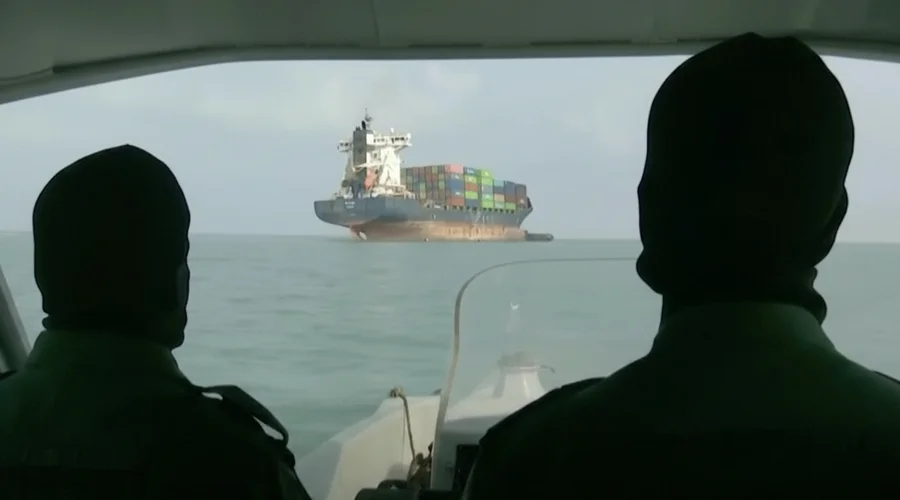
In a significant development, the United States initiated multiple strikes against targets within Iran early on Wednesday. These actions, according to Washington, were a direct retaliation for alleged Iranian assaults on commercial vessels navigating the strategically vital Strait of Hormuz. This resurgence of military activity has ignited fears of a full-scale conflict in the Middle East, particularly as it occurred amidst a period of delicate peace negotiations between the two nations.
Following the US offensive, President Donald Trump, speaking from a NATO summit in Ankara, Turkiye, indicated that the memorandum of understanding (MoU) with Iran, which had been the basis for recent de-escalation, was likely "over." While he suggested that peace discussions might continue, he expressed personal skepticism, labeling them a "waste of time." These remarks and the military actions themselves triggered immediate reactions in global markets; Brent crude oil prices saw a 6 percent increase, reaching $78 per barrel, while European stock markets experienced a 1.6 percent decline. The dollar gained strength, and government bond yields rose, reflecting investor apprehension regarding renewed inflationary pressures.
The timing of these strikes is particularly notable, coinciding with the ongoing funeral observances for Iran's Supreme Leader Ayatollah Ali Khamenei, who reportedly died in February during the initial phase of the US-Israel conflict with Iran. This latest round of attacks represents the most substantial military engagement since April, when both sides had initially agreed to a ceasefire and commenced negotiations. Iran's Islamic Revolutionary Guard Corps (IRGC) subsequently reported launching retaliatory strikes against US assets located in neighboring countries, with sirens reportedly sounding in Bahrain and Kuwait. The IRGC also confirmed the death of one of its members, attributing it to "enemy drones."
Both the US and Iran have accused each other of violating the terms of the MoU, which was signed three weeks prior and was intended to facilitate a 60-day period of peace negotiations. This marks the third instance of major US attacks on Iran while talks were in progress, a pattern that Tehran asserts has severely eroded trust.
Details of the Recent Confrontation
The US military's Central Command (CENTCOM) announced that it had conducted strikes on "over 80 targets" in Iran, responding to earlier attacks on commercial vessels in the Strait of Hormuz. President Trump reiterated the US position, stating, "We attacked very powerfully last night, the very dangerous people from Iran." He further described Iran's actions as indicative of a fundamental problem within the nation.
CENTCOM identified three vessels reportedly targeted by Iran: the Marshall Islands-flagged M/T Al Rekayyat, the Saudi Arabia-flagged M/T Wedyan, and the Liberian-flagged M/T Cyprus Prosperity. These ships were believed to be sailing near the coast of Oman. Iran, for its part, has been directing all shipping traffic to adhere to a specific "safe route" through the strait, which brings vessels closer to its own coastline and designates a section of Omani waters as a "restricted zone." Iranian state media reported that the targeted ships had disregarded warnings from Iranian forces to alter their course.
In response to the alleged attacks on tankers, CENTCOM stated that US forces targeted "Iranian air defense systems, command and control networks, coastal radar sites, anti-ship missile capabilities, and more than 60 Islamic Revolutionary Guard Corps small boats in and near the strait." The objective was to "degrade Iran’s ability to continue attacking international commerce flowing through the international trade corridor." Additionally, the US reinstated a sanctions waiver on Iran following these incidents and issued a warning of further strikes if Iran continued to act "outside of agreements." The MoU had stipulated that Iran would ensure free passage through the strait for a minimum of 60 days during the peace talks.
Hossein Royvaran, a Tehran-based analyst, offered an alternative perspective, suggesting that the tankers might have been targeted because they entered an area where Iranian teams were conducting mine-clearing operations. He posited that the area near Oman could be heavily mined, and the ships' movements might have posed a threat to these operations.
Locations Targeted and Iranian Response
Iranian media reported multiple explosions in the southern port city of Sirik, with projectiles reportedly striking commercial and fishing piers, resulting in several injuries from shrapnel. Strikes were also reported on Qeshm Island, strategically located in the Strait of Hormuz, and near the port city of Bandar Abbas, a key port that had been subject to a US Navy blockade prior to the MoU. Furthermore, Iran's semi-official Fars news agency indicated that two military bases in the southern Bushehr province were hit by projectiles, one in Dashti county and another near Chogadak, though no fatalities or serious injuries were reported.
In response to the US actions, the US Treasury Department announced the reimposition of sanctions on Iranian oil. While a temporary waiver had been in place to ease energy market disruptions stemming from the Strait of Hormuz closure, this waiver, which allowed Iran to sell crude oil during peace talks, was revoked for new sales starting July 7. A grace period was granted for pre-existing, shipped sales, with proceeds to be held in a "blocked, interest-bearing account." Al Jazeera's Resul Serdar Atas, reporting from Tehran, emphasized the significant economic impact of these sanctions on Iran, noting that oil and petrochemical exports are crucial to the Iranian economy, and the MoU had aimed to incentivize the reopening of the Strait of Hormuz in exchange for sanctions relief.
On Wednesday, the IRGC claimed to have launched retaliatory strikes on 85 US military targets in Bahrain and Kuwait, including the US Fifth Naval Base in Bahrain and Kuwait’s Ali Salem Airbase, and reported downing an MQ9 drone. Iran’s Ministry of Foreign Affairs vehemently condemned the US actions as "aggressive attacks and gross violation" of the MoU, asserting that they constituted a "flagrant violation of Paragraph 1 of the Memorandum of Understanding on the Termination of War." The ministry also stressed the obligation of neighboring countries to prevent their territories from being used for aggressive acts against Iran, affirming Iran's right to defend its territorial integrity.
Iranian Parliament Speaker Mohammad Ghalibaf, in a post on X, described the US strikes, renewed sanctions, and ongoing Israeli attacks in Lebanon as "major MOU violations by the US," declaring that "The era of bullying and extortion is over." Foreign Minister Abbas Araghchi, via Telegram, stated that the US strikes had rendered key elements of the peace agreement ineffective, holding the US responsible for the escalating consequences.
Uncertainty Surrounding Peace Talks and International Reactions
The future of the peace talks now appears highly uncertain. President Trump's statements at the NATO summit suggested the MoU was "over," though he hinted at allowing negotiators to continue, albeit with personal reservations about their efficacy. Al Jazeera's defense editor, James Bays, highlighted the ambiguity of Trump's remarks, questioning whether they were merely strong rhetoric or a definitive repudiation of the agreement.
The 60-day MoU had aimed to halt all hostilities, including those in Lebanon, as both sides worked on details concerning Iran's nuclear program. Under the agreement, Iran was to restore commercial vessel passage in the Strait of Hormuz to pre-war levels, while the US would waive oil export sanctions and unfreeze Iranian assets.
International reactions varied. NATO Secretary-General Mark Rutte voiced strong support for the US actions, deeming them a justified response to Iran's attacks on commercial shipping and accusing Iran of violating the ceasefire. Jassem Mohamed Albudaiwi, Secretary-General of the Gulf Cooperation Council (GCC), condemned the alleged Iranian attacks on Bahrain and Kuwait, characterizing them as a blatant violation of sovereignty and a continuation of efforts to undermine regional peace. Kuwait's Foreign Ministry similarly condemned the strikes on US military assets on its soil as a "flagrant violation of its sovereignty" and a direct threat to its security.
Source: Original Article
Related Articles
 world
world
Spectator Displays Israeli Flag During Argentina-Egypt World Cup Match
 world
world
Gaza's Children Face a Summer Devoid of Play Amidst Ongoing Conflict
 world
world
International Debate Intensifies Over US Embargo on Cuba at United Nations
 world
world