
Renewed Hostilities Threaten Regional Stability
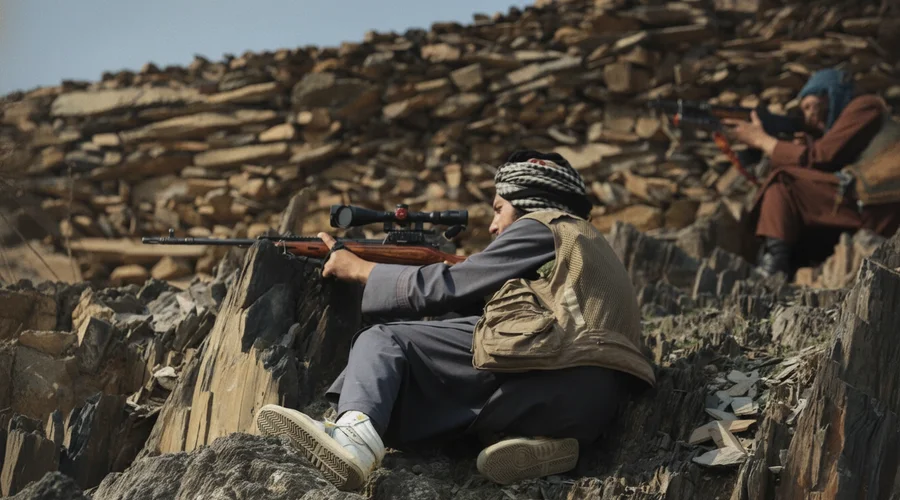
Recent reports indicate that Afghanistan has conducted air strikes within Pakistani territory, targeting what it describes as havens for armed groups and 'hostile intelligence circles.' This development, announced by Kabul's defense ministry, represents a notable increase in military action and casts a shadow over the precarious ceasefire that has been in place between the two neighboring countries.
The strikes, which reportedly occurred on Thursday, June 18, 2026, were detailed in a statement issued by Afghanistan's defense ministry on Friday. This incident is the latest in a series of cross-border confrontations that have intermittently erupted over recent months, resulting in numerous casualties. Despite mediation efforts, notably by China, a lasting peace agreement has yet to be achieved, leaving the region in a state of heightened alert.
Targeted Operations and Allegations
According to the Afghan defense ministry, the air force targeted hideouts situated in Pakistan's Balochistan and Khyber Pakhtunkhwa provinces. Both regions share extensive borders with Afghanistan. The ministry's statement, disseminated via social media, asserted that these 'bases' were allegedly utilized in collaboration with 'certain hostile intelligence circles' to plan and execute attacks against Afghanistan. This phrasing is widely interpreted as an implicit reference to Pakistan's intelligence agencies, further underscoring the deep mistrust between the two governments.
Since the Taliban's resurgence to power in Afghanistan in 2021, Pakistan has consistently accused Kabul of sheltering armed groups responsible for launching cross-border assaults. In response to these allegations, Pakistan has frequently conducted its own air strikes, claiming to target these militant forces. Afghanistan, however, has consistently denied all such accusations, maintaining that Pakistan's security challenges are internal matters.
Details regarding the specifics of Afghanistan's recent offensive, particularly the methods employed, remain largely undisclosed by Kabul. While Afghanistan is not known to possess fighter jets, data from the London-based International Institute for Strategic Studies indicates that the country does have a limited air fleet, including at least six fixed-wing aircraft and 23 helicopters. Furthermore, Taliban forces are known to utilize drones, which have reportedly been deployed in previous skirmishes with Pakistan.
A History of Fractured Relations
The relationship between Pakistan and Afghanistan has been characterized by significant strain since the Taliban's return to governance. Tensions escalated sharply in late February 2026, following a cross-border attack by Afghanistan, which Kabul stated was a retaliatory measure for earlier Pakistani air raids. Islamabad continues to harbor the belief that Kabul provides sanctuary to militants, particularly those affiliated with the Tehrik-i-Taliban Pakistan (TTP), who are responsible for deadly attacks within Pakistan.
A fragile ceasefire agreement brokered in March eventually collapsed, with both sides attributing its failure to violations by the other. Subsequent diplomatic initiatives aimed at de-escalating the situation, facilitated by China, have so far failed to yield any tangible breakthroughs, leaving the prospect of lasting peace uncertain.
The human cost of these ongoing hostilities is significant. A United Nations report in May highlighted that cross-border fighting resulted in the deaths of at least 372 Afghan civilians and injuries to 397 others in the first three months of 2026 alone. Just last week, Pakistan conducted air strikes on Afghan provinces, which the Afghan Taliban reported claimed the lives of at least 13 people, including 11 children, and injured 14. Islamabad, in turn, described these as 'calibrated strikes' that eliminated 26 fighters, asserting they were a direct response to a recent surge of attacks in Pakistan's northwest region.
In a resolute statement on Friday, the Afghan defense ministry declared, “Afghanistan will no longer tolerate any threat to its security and stability. It will use all available means and capabilities to neutralize and eliminate any threat at its source.” This assertion underscores Kabul's firm stance and suggests a potential for further military action if perceived threats persist, indicating a challenging path ahead for regional stability.
Source: Afghanistan strikes targets in Pakistan, raising cross-border tension
Related Articles
 world
world
US-Iran Ceasefire Talks Postponed Amidst Escalating Israeli-Lebanese Tensions
 world
world
World Cup: A Yemeni Fan's Enduring Passion Amidst Decades of Conflict
 world
world
Escalating Tensions: Israeli Strikes Persist in Southern Lebanon Amid Diplomatic Efforts
 world
world