
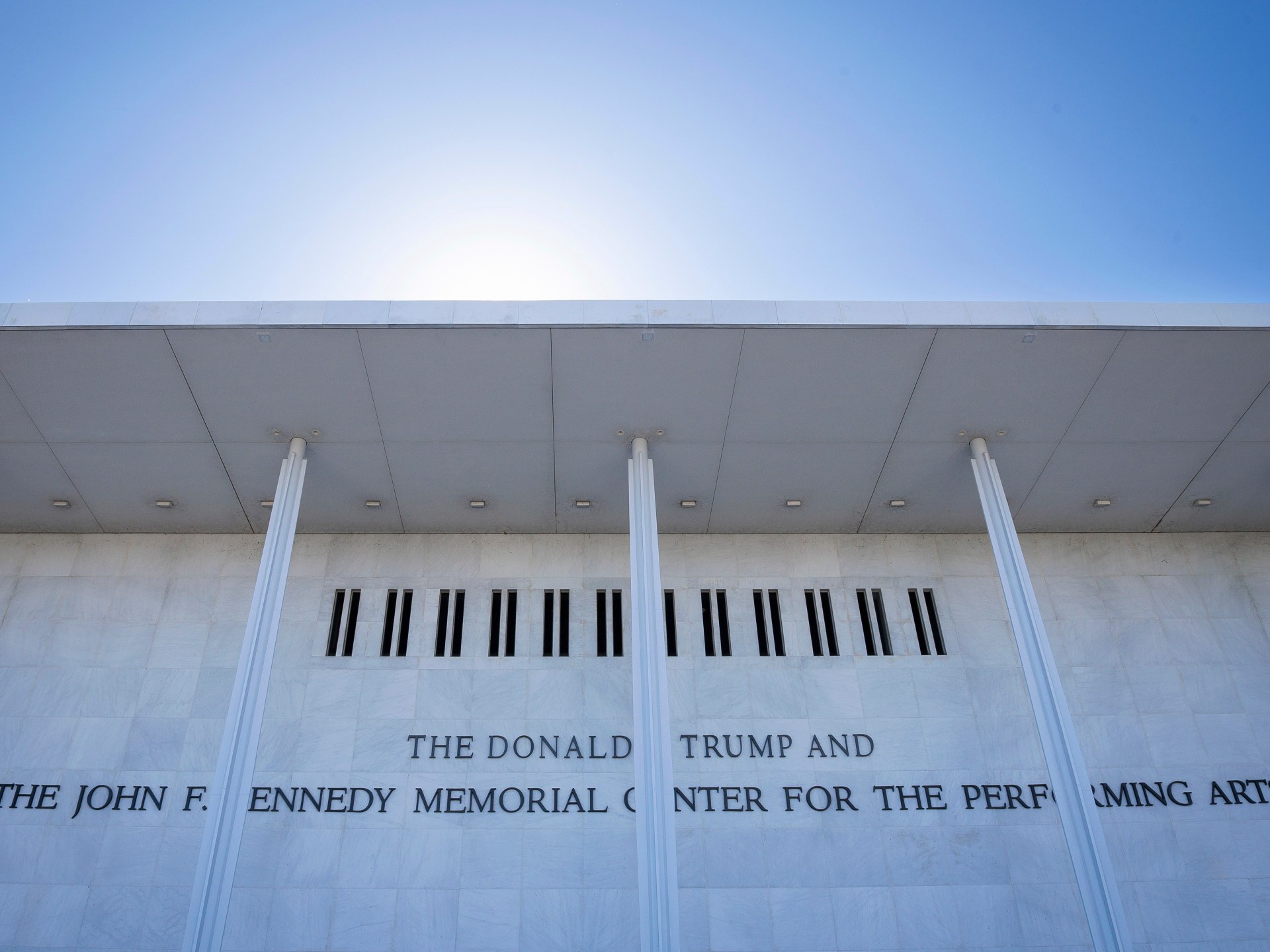
Judicial Decision Halts Renaming Efforts at Kennedy Center
A recent legal ruling has put an end to former President Donald Trump's aspirations to have a theater within the John F. Kennedy Center for the Performing Arts bear his name. The decision, handed down by Judge Christopher Cooper, also rejected a proposal to close the designated theater for a two-year period, which would have been necessary for the planned renovations and renaming process.
The Proposal and Its Rejection
The former president had sought to implement a significant change to the iconic cultural institution by affixing his name to one of its performance venues. This move was part of a broader plan that included a temporary cessation of operations for the theater in question, spanning two years, to facilitate the rebranding and associated construction work. However, Judge Cooper's ruling effectively blocked these intentions, citing reasons that were not explicitly detailed in initial reports but centered on the legality and appropriateness of the proposed changes.
The Kennedy Center, a living memorial to President John F. Kennedy, is a prominent hub for the performing arts in the United States. Its venues regularly host a wide array of artistic performances, from orchestral concerts and ballets to theatrical productions and jazz performances. Any significant alteration to its structure or naming conventions typically draws considerable public and institutional scrutiny, given its national importance and historical significance.
Trump's Response and Future Involvement
Following the unfavorable court decision, Donald Trump has reportedly stated his intention to withdraw his involvement from the Kennedy Center. While the precise nature of his current or planned involvement prior to this ruling was not extensively detailed, this declaration suggests a complete disengagement from any future initiatives or affiliations with the institution. This withdrawal marks a significant turn in the saga surrounding the proposed renaming, indicating that the former president will not pursue alternative avenues for his name to be associated with the center.
The implications of this withdrawal could be varied. For the Kennedy Center, it means that the contentious issue of renaming a theater is likely resolved, at least in the immediate future, allowing the institution to continue its operations without this particular point of contention. For the former president, it signifies the closure of an attempt to leave a lasting mark on a federal cultural landmark through a naming convention.
Broader Context of Naming Rights and Public Institutions
The debate over naming rights, particularly for public institutions and national landmarks, often sparks considerable discussion regarding legacy, historical preservation, and the appropriateness of such honors. While private donations frequently lead to naming opportunities in many sectors, the process for federal institutions like the Kennedy Center is often more complex, involving legislative, judicial, and public oversight. This case highlights the challenges and legal hurdles that can arise when attempting to alter the established identity of a significant national cultural asset.
The Kennedy Center's mission is to present and produce a wide range of performing arts, foster arts education, and serve as a national cultural resource. Decisions regarding its facilities and naming are therefore subject to careful consideration to ensure alignment with its foundational purpose and public trust. Judge Cooper's ruling reinforces the legal framework governing such changes, underscoring the importance of adhering to established protocols and legal precedents.
Source: Original Article
Related Articles
 news
news
Curfew Imposed in New Jersey Following Escalation of Immigration-Related Demonstrations
 news
news
Ultra-Orthodox Protesters Clash with Israeli Police in Jerusalem
 news
news
Euphrates River Flooding Prompts Rescue Operations in Eastern Syria
 news
news