
Film on Punjab Insurgency Faces Ban in India
The Indian government is currently scrutinizing a film titled 'Satluj', which delves into the separatist insurgency in Punjab during the 1980s and early 1990s. The movie, centered on the life of human rights activist Jaswant Singh Khalra, highlights his efforts to uncover thousands of disappearances and extrajudicial killings carried out during a severe government crackdown on the movement.
Initially titled 'Punjab 95', the film faced delays due to India's censor board, which requested nearly 130 cuts before permitting a theatrical release. Filmmakers rejected these edits and instead released it on the ZEE5 streaming platform. However, it was removed within two days citing security concerns.
The Story of 'Satluj'
Directed by Honey Trehan, 'Satluj' is a 163-minute biopic that recounts Khalra's investigation into the mysterious disappearances of individuals during the insurgency. Khalra, a bank employee from Amritsar, became involved after probing the disappearance of a friend and his mother, leading to the discovery of thousands of similar cases. He alleged that the police had secretly cremated nearly 25,000 individuals without notifying their families or maintaining records.
Despite threats, Khalra persisted with his research until he was abducted on September 6, 1995, and presumed murdered, though his body was never recovered. His wife, Paramjit, continued to fight for justice, prompting an investigation by the Central Bureau of Investigation (CBI) that resulted in life sentences for five police officials involved in his killing.
Background of the Punjab Insurgency
The Khalistan movement, seeking an independent Sikh state, was one of India's most violent internal conflicts. The movement was fuelled by political and religious grievances, including demands for greater autonomy and disputes over resource sharing. It led to widespread violence, including bombings and targeted assassinations by Sikh militants, with a harsh response from Indian security forces.
In 1984, the Indian army's Operation Blue Star targeted the Golden Temple in Amritsar, a key site occupied by separatists, resulting in significant casualties. Later that year, Prime Minister Indira Gandhi was assassinated by her Sikh bodyguards, leading to anti-Sikh riots and further violence.
Government's Stance on 'Satluj'
Despite the suppression of the rebellion, India remains cautious of separatist sentiments. While the government has not publicly explained the film's removal, reports suggest it was banned due to concerns over national security and sovereignty. A government committee upheld the ban, deeming the film contrary to India's interests.
ZEE5 stated that the film would remain unavailable in India pending further developments, while actor Diljit Dosanjh, who stars as Khalra, expressed his disillusionment over the challenges faced by the film.
Public Reaction to the Ban
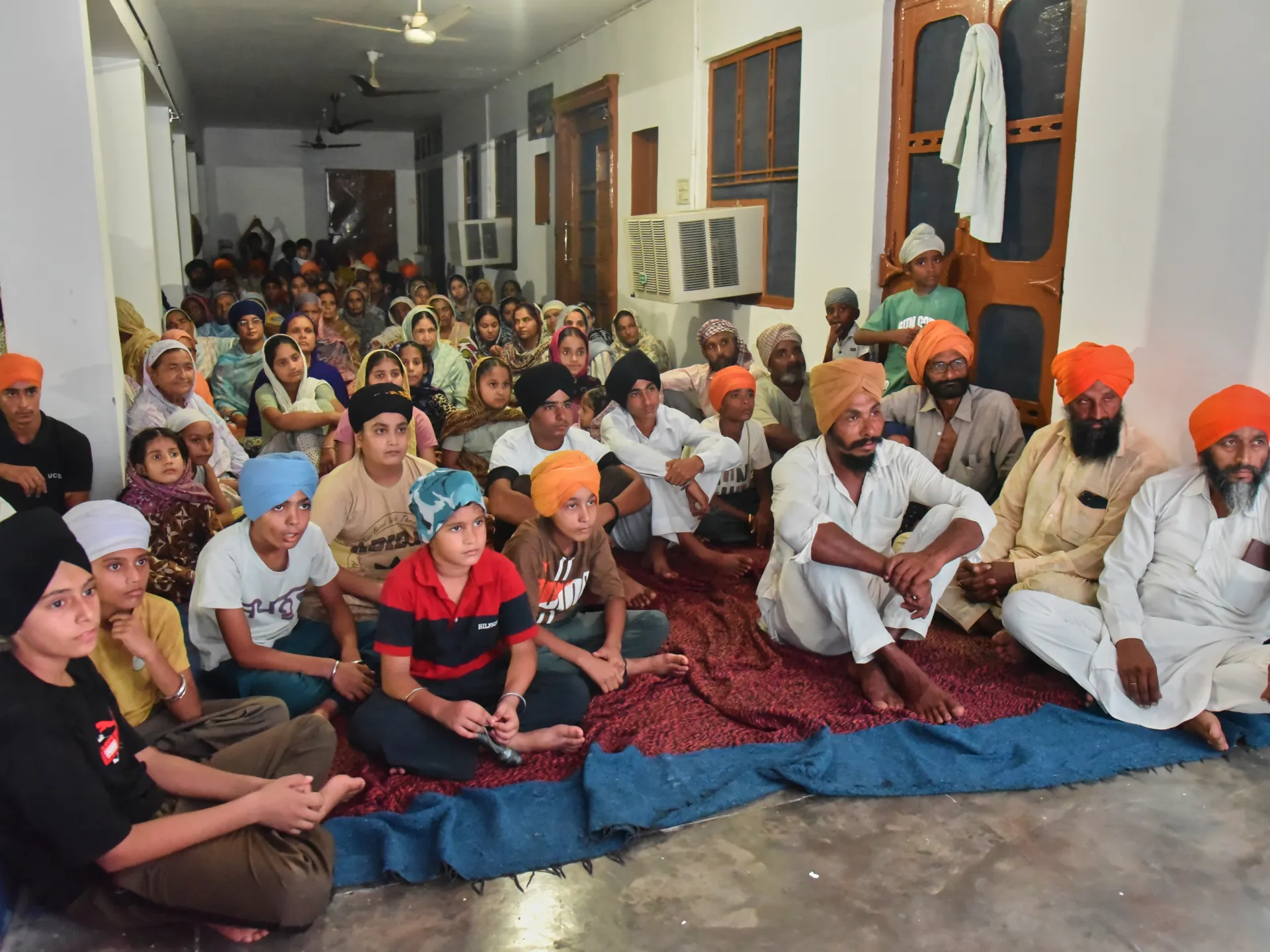
In defiance of the ban, 'Satluj' has found audiences through community screenings in Sikh temples and village halls across Punjab and beyond. Social media platforms also play a role in distributing the film, with users uploading it to sites like YouTube. These community events have become a way for people to connect with their past and share their collective history.
Inderpal Bains, who attended a screening in Gurdaspur, described the film as a poignant reminder of the struggles faced by previous generations. He emphasized the importance of remembering history, despite the pain it may cause.
Similar screenings have been organized by the Sikh diaspora in cities such as London, New York, and Toronto, highlighting the film's resonance with audiences worldwide.
Source: Original Article
Related Articles
 arts-and-culture
Welsh Artist Memorializes Infant Victims of Gaza Conflict Through Embroidered Gown
 arts-and-culture
Bayeux Tapestry Makes Historic Journey to Britain After Almost a Millennium
 arts-and-culture
Bollywood Film 'Chauhaan' Sparks Outrage Among Kashmir Pellet Gun Victims
 arts-and-culture