
The Foundations of American Governance
The United States was established on a fundamental premise: that governmental structures are instituted primarily to safeguard the inherent and inalienable rights of its citizenry. This core tenet, deeply embedded in the nation's founding documents and philosophical underpinnings, posits that the legitimacy of government derives from its capacity to protect individual liberties rather than to infringe upon them. This perspective is not merely historical but remains a crucial lens through which contemporary governance is often evaluated, particularly concerning the balance of power among governmental branches.
Early American political thought, heavily influenced by Enlightenment philosophers such as John Locke and Montesquieu, emphasized the necessity of limiting governmental power. The framers of the U.S. Constitution, acutely aware of the dangers of concentrated authority, meticulously crafted a system of checks and balances. This intricate design was intended to prevent any single branch—executive, legislative, or judicial—from becoming overly dominant, thereby preserving the republic's democratic character and protecting citizens from potential tyranny. The separation of powers, alongside federalism, was envisioned as a robust bulwark against the erosion of individual freedoms and the centralization of unchecked authority.
The concept of inalienable rights, as articulated in the Declaration of Independence, serves as the moral and legal bedrock for this governmental structure. These rights are considered inherent to human beings, not granted by the state, and thus cannot be legitimately abrogated by governmental action. A government that fails to uphold or actively undermines these rights is, by definition, seen as deviating from its foundational purpose. This philosophical framework provides a critical standard against which the actions and scope of presidential power are often measured, especially when concerns arise about potential overreach.
Contemporary Debates on Executive Power
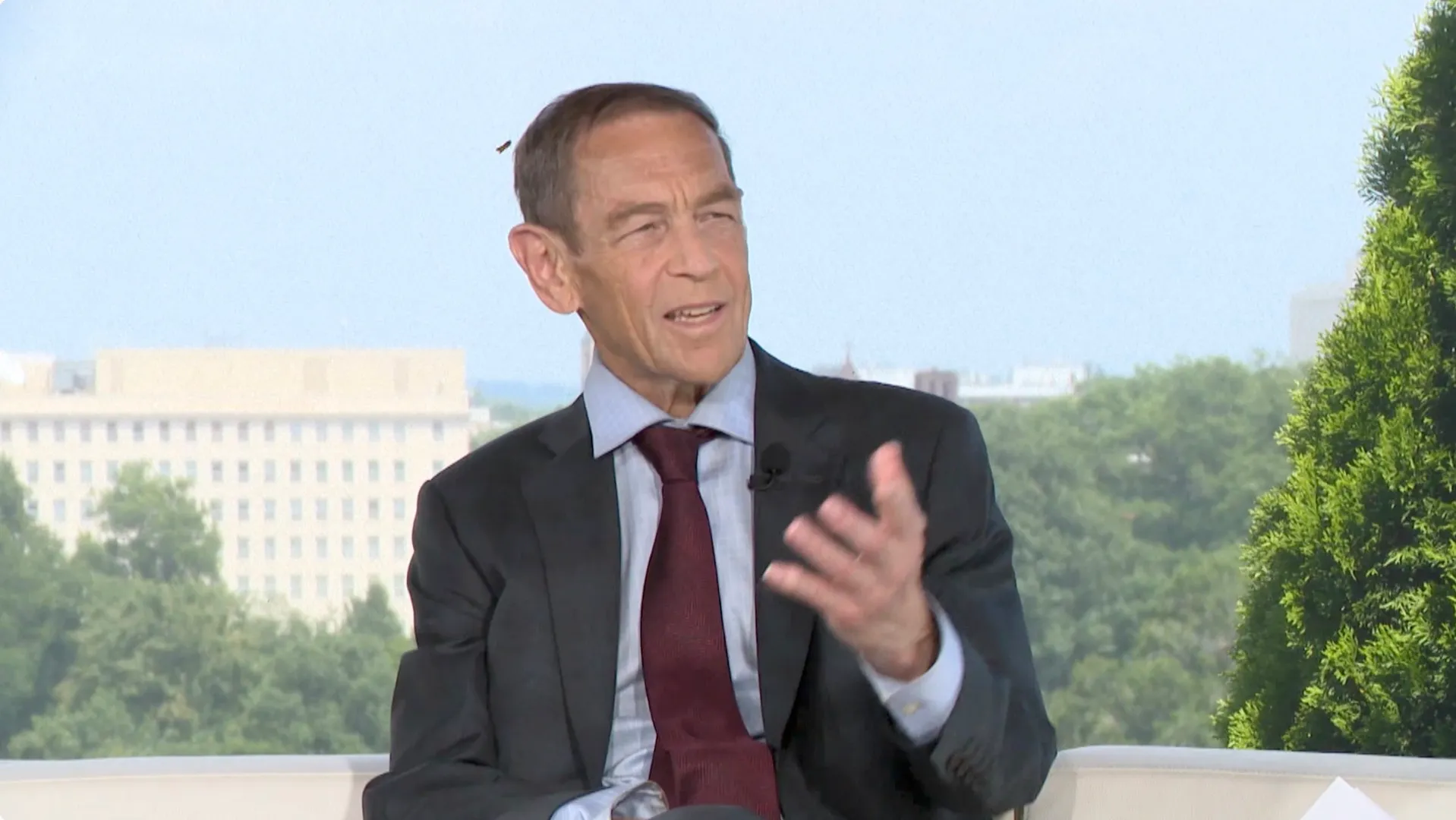
In recent political discourse, significant attention has been directed toward the evolving scope of presidential power. Constitutional lawyer Bruce Fein has been particularly vocal on this issue, asserting that an expansion of executive authority, especially when unchecked, represents a concerning deviation from the foundational principles of American democracy. Fein's analysis suggests that such an expansion risks undermining the very system designed to protect citizens' rights and maintain a balanced government.
The debate surrounding presidential power is not new; it has been a recurring theme throughout American history, resurfacing during periods of national crisis or significant policy shifts. However, current discussions often center on the cumulative effect of various executive actions, interpretations of constitutional prerogatives, and the perceived willingness of other branches to challenge or constrain presidential initiatives. Fein's argument highlights a critical tension: the need for an effective executive capable of leading the nation, versus the imperative to prevent that power from becoming so expansive as to threaten democratic norms and individual liberties.
Critics of expanded presidential power often point to specific historical instances and legal precedents where executive actions have been challenged on constitutional grounds. They argue that a gradual accretion of power, even if individually justifiable in certain contexts, can collectively lead to a significant imbalance. This concern is rooted in the belief that the erosion of checks and balances, even if incremental, can ultimately weaken the democratic fabric of the nation. The principle of limited government, they contend, requires constant vigilance and a robust defense against any tendency towards unchecked authority.
Implications for Democratic Governance
The implications of unchecked presidential power for American democracy are profound and far-reaching. When the executive branch operates with minimal oversight or constraint, there is a heightened risk of decisions being made unilaterally, potentially bypassing legislative debate or judicial review. This can lead to a concentration of decision-making in a single office, which runs contrary to the pluralistic and deliberative ideals of a democratic republic.
Furthermore, an imbalance of power can diminish the role and effectiveness of the legislative branch. If Congress is perceived as unable or unwilling to assert its constitutional prerogatives, such as its power to declare war, appropriate funds, or oversee executive actions, its function as a co-equal branch of government is compromised. This can lead to a less representative government, as the will of the people, as expressed through their elected representatives, may be overshadowed by executive directives.
The judiciary also plays a crucial role in maintaining the balance of power by interpreting laws and the Constitution. However, if executive actions are designed to circumvent judicial review or if judicial appointments become overly politicized, the ability of the courts to act as an independent check on presidential power can be undermined. The health of a democracy relies on the integrity and independence of all three branches, each fulfilling its constitutional role.
Ultimately, the discussion initiated by figures like Bruce Fein serves as a critical reminder of the ongoing need to scrutinize governmental power, particularly that of the presidency. It underscores the importance of a vigilant citizenry, an active legislature, and an independent judiciary in upholding the constitutional framework and safeguarding the democratic principles upon which the United States was founded. The delicate balance between effective governance and the protection of inalienable rights remains a central challenge for any democratic society.
Source: Original Article
Related Articles
 politics
Former President Trump Addresses Hormuz Shipping and Global Threats at Library Dedication
 politics
Birthright Citizenship Debate Reignited by Supreme Court's Fractured Decision
 politics
Supreme Court Upholds Birthright Citizenship, Drawing Varied Reactions
 politics