

Understanding Birthright Citizenship in the United States
Birthright citizenship, a cornerstone of American law, dictates that any individual born within the territorial limits of the United States is automatically granted U.S. citizenship, irrespective of their parents' immigration status. This principle is primarily enshrined in the first sentence of the 14th Amendment to the U.S. Constitution, which states: 'All persons born or naturalized in the United States, and subject to the jurisdiction thereof, are citizens of the United States and of the State wherein they reside.'
The historical context of the 14th Amendment is crucial for understanding its intent. Ratified in 1868 in the aftermath of the Civil War, its primary purpose was to guarantee citizenship to formerly enslaved people. However, its broad language has since been interpreted by the Supreme Court to extend to nearly all individuals born on U.S. soil, regardless of their parents' background or legal standing. This interpretation has been a subject of ongoing debate, particularly in contemporary political discourse surrounding immigration.
Recent Supreme Court Decision
In a recent development, the U.S. Supreme Court delivered a ruling that reinforced the existing understanding of birthright citizenship. The Court's decision effectively dismissed attempts to alter this long-standing legal precedent, specifically rejecting arguments that sought to limit citizenship for children born in the U.S. to certain immigrant parents. The specifics of the case involved challenges that aimed to narrow the scope of the 14th Amendment's application, particularly concerning individuals whose parents might not be lawful permanent residents or citizens.
The Court's affirmation of the current interpretation means that the legal framework governing birthright citizenship remains unchanged. This ruling underscores the judiciary's role in upholding constitutional principles, even amidst significant public and political pressure. The decision did not introduce new law but rather upheld the established legal interpretation that has guided U.S. citizenship policy for over a century.
Reactions Across the Political Landscape
The Supreme Court's decision has generated a spectrum of reactions, particularly among different political factions. Those advocating for stricter immigration policies and a reinterpretation of the 14th Amendment have expressed considerable disappointment. For many within these movements, the concept of birthright citizenship for children of undocumented immigrants is viewed as a loophole that incentivizes illegal immigration and undermines national sovereignty. They often argue that the original intent of the 14th Amendment did not foresee or intend to cover such circumstances.
"The Court's decision, while reaffirming existing law, highlights the persistent tension between constitutional interpretation and evolving societal views on immigration. It solidifies a legal precedent that has been foundational to the American identity for generations."
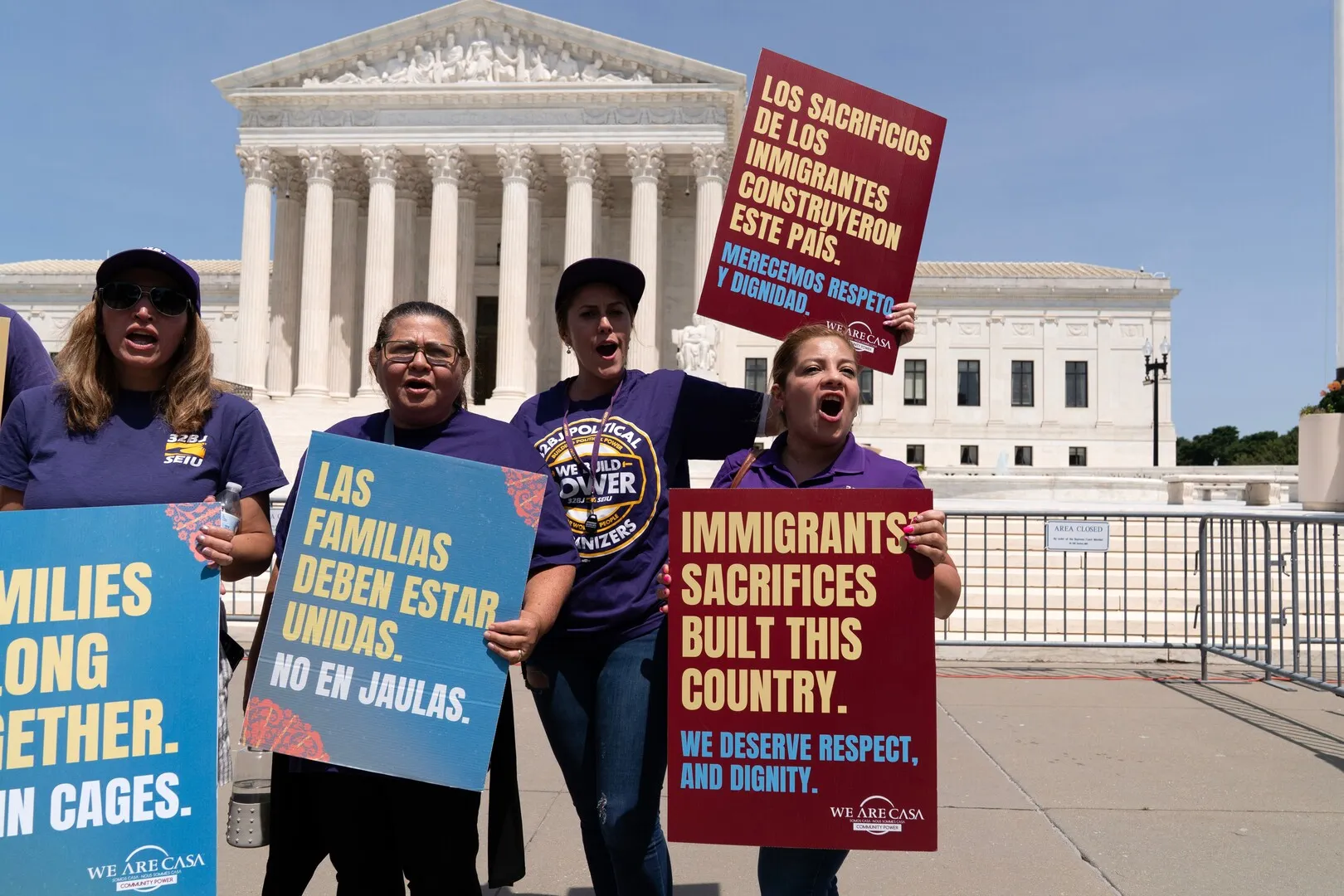
Conversely, proponents of comprehensive immigration reform and civil liberties organizations have largely welcomed the ruling. They view birthright citizenship as a fundamental human right and a core tenet of American democracy, reflecting the nation's historical identity as a land of immigrants. For these groups, the 14th Amendment's broad language is seen as intentionally inclusive, designed to prevent the creation of a permanent underclass within the country. They argue that altering birthright citizenship would create immense administrative challenges and potentially disenfranchise millions of individuals who have known no other home than the United States.
Implications for Immigration Policy and Future Debates
The Supreme Court's upholding of birthright citizenship has significant implications for future immigration policy debates. While the judiciary has affirmed the current legal interpretation, the political debate surrounding birthright citizenship is likely to continue. For administrations seeking to implement more restrictive immigration measures, this ruling presents a clear legal barrier to one of their proposed policy changes. It means that any future attempts to modify birthright citizenship would likely require a constitutional amendment, a process that is exceptionally difficult and rare in American politics.
The decision also highlights the ongoing tension between the legislative, executive, and judicial branches concerning immigration matters. While the executive branch can implement policies regarding border enforcement and visa issuance, fundamental aspects of citizenship remain under the purview of constitutional law, as interpreted by the Supreme Court. This dynamic ensures that while policy can shift, core constitutional principles provide a significant anchor.
Moreover, the ruling reinforces the status of millions of individuals born in the U.S. to non-citizen parents, providing them with legal certainty regarding their citizenship status. This certainty has far-reaching effects on their access to education, healthcare, employment, and political participation, thereby integrating them fully into American society. The debate, however, is not just about legal technicalities but also about the philosophical understanding of national identity, belonging, and the future demographic landscape of the United States.
The Supreme Court's decision, therefore, serves as a reaffirmation of a long-established legal principle, yet it simultaneously underscores the deep and often contentious divisions that characterize contemporary discussions about immigration and national identity in the United States.
Source: Al Jazeera
Related Articles
 politics
Birthright Citizenship Debate Reignited by Supreme Court's Fractured Decision
 politics
Progressive Challenger Melat Kiros Unseats Long-Serving Incumbent in Colorado Democratic Primary
 politics