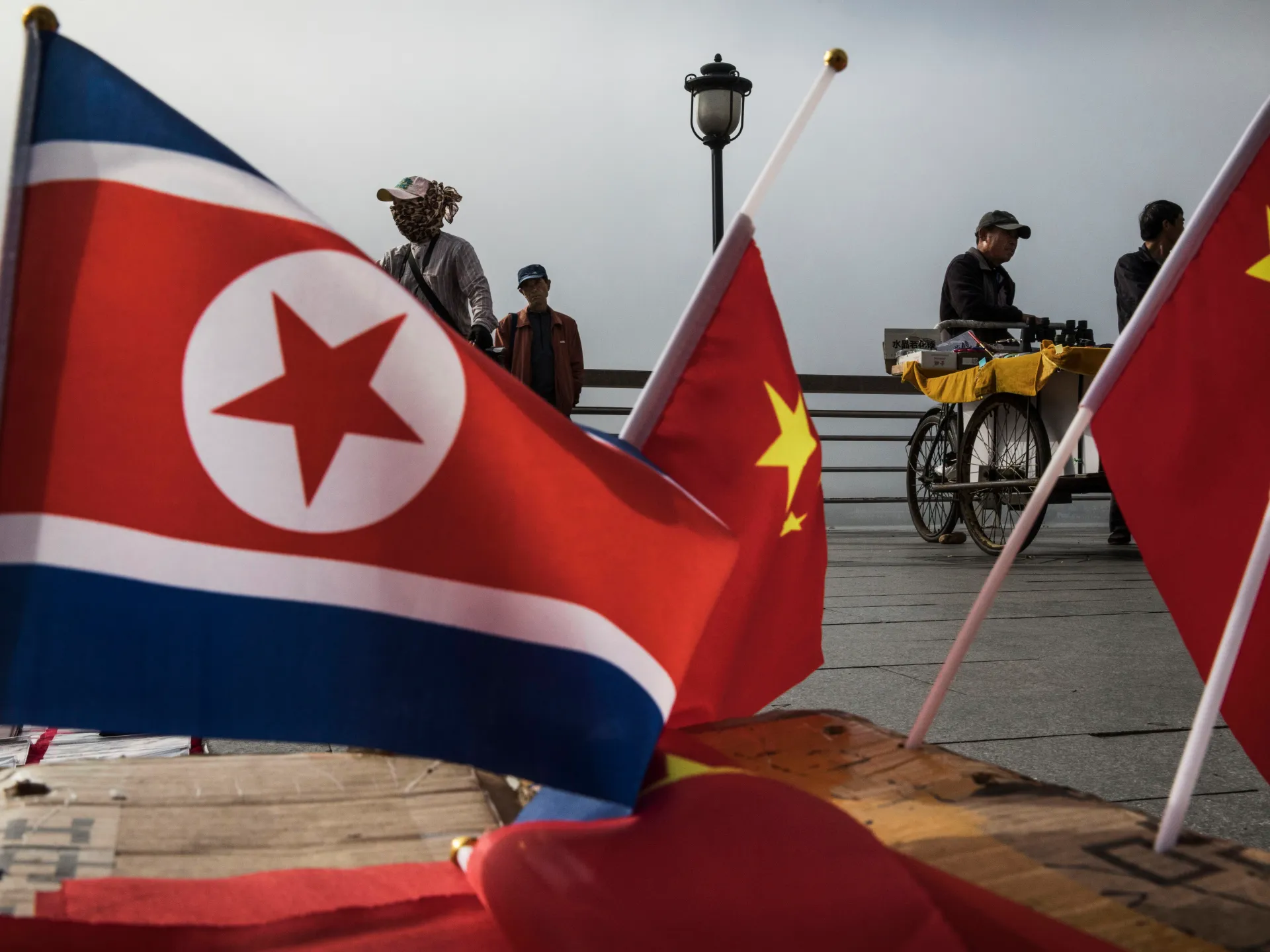
A Long-Standing Alliance Under Scrutiny
For decades, the bond between China and North Korea has been a subject of international analysis, frequently described by Chinese leaders with the adage, “as close as lips and teeth.” This metaphor underscores a relationship rooted in strategic imperatives rather than mere sentiment. The Treaty of Friendship, Cooperation, and Mutual Assistance, signed on July 11, 1961, by then-Chinese Premier Zhou Enlai and North Korean leader Kim Il Sung, continues to be a cornerstone of their bilateral ties. This treaty, notably China’s sole formal military alliance, includes a mutual defense clause, obligating either nation to come to the aid of the other if attacked.
The enduring nature of this pact was recently highlighted by a three-day visit by North Korean Premier Pak Thae Song to Beijing, commemorating the 65th anniversary. However, much has changed since 1961. China has transformed into the world's second-largest economy, while North Korea remains largely isolated and subject to extensive international sanctions. Despite these divergences, their alliance has weathered numerous geopolitical shifts, including the Cold War, China's economic liberalization, the dissolution of the Soviet Union, and ongoing tensions surrounding Pyongyang's nuclear weapons program.
The Strategic Underpinnings of the Alliance
The origins of the China-North Korea relationship are deeply intertwined with the Korean War. In 1950, as US-led forces advanced toward China's border, Beijing deployed hundreds of thousands of troops, officially termed “volunteers,” into North Korea. This shared historical experience of conflict against a common adversary forms a crucial part of their official narrative, with leaders from both countries frequently referring to their friendship as “sealed in blood.”
Ideologically, both nations share a socialist, one-party state structure and a deep distrust of Western influence. They commonly criticize the presence of American troops on the Korean Peninsula and accuse Washington of using alliances, sanctions, and military pressure to exert control over countries that challenge its authority. However, ideological alignment has its limits. China has embraced foreign investment, private enterprise, and global trade, positioning itself as a reliable international partner and a leader in the Global South. In contrast, North Korea has largely maintained its isolation from the global economy.
Beijing's primary interest in North Korea is stability, not necessarily strength. China seeks to prevent the collapse of the North Korean government, which could lead to a massive influx of refugees across their 1,400km (870-mile) border and potentially result in a unified Korean Peninsula aligned with the United States. Therefore, North Korea serves as a crucial strategic buffer against a direct US military presence on China's doorstep. Furthermore, China aims to avoid a war on the Korean Peninsula, which would disrupt regional trade and pose a nuclear crisis in its immediate vicinity. This explains Beijing's sometimes contradictory stance: it has supported UN sanctions against North Korea's nuclear and ballistic missile programs while simultaneously opposing measures that could destabilize the regime. China also remains Pyongyang's largest trading partner, providing a vital economic lifeline, aiming to keep the North Korean regime contained and viable, rather than cornered and desperate.
North Korea's Balancing Act and Evolving Dynamics
While China has historically been North Korea's principal diplomatic partner and protector, Pyongyang has actively sought to diversify its international relationships to avoid over-reliance on Beijing. The deepening ties between North Korea and Russia, particularly since the 2024 signing of a comprehensive strategic partnership treaty that includes a mutual defense provision, exemplify this strategy. This relationship offers North Korean leader Kim Jong Un increased diplomatic maneuverability and potential access to military technology, energy resources, and hard currency.
For China, this development presents both opportunities and challenges. A stronger Russia-North Korea axis could alleviate some of the economic burden on China in supporting Pyongyang and reinforce a broader front against US influence. However, closer military collaboration between Moscow and Pyongyang could also embolden Kim's nuclear ambitions, potentially leading to greater instability in Northeast Asia, a region China considers its vital backyard. Crucially, Beijing aims to maintain its influence over the North Korean government and avoid ceding it to Russia.
The evolving regional security landscape further compels Beijing and Pyongyang to reinforce their alliance. The United States has strengthened military cooperation with South Korea and Japan, conducting regular joint exercises and intelligence sharing. Japan's increased defense spending, driven by traditional concerns about an expansionist China, and the continued presence of tens of thousands of American troops in South Korea, are viewed by China as part of a US-led containment strategy. North Korea interprets these developments as preparations for war. While their threat perceptions are not entirely identical, they significantly overlap, leading Beijing to emphasize a unified front with Pyongyang, even as it expands its diplomatic reach elsewhere.
Future Trajectories and Strategic Balancing
The dynamics of the China-North Korea alliance are unlikely to remain static over the next 65 years. North Korea appears to be gaining confidence through its strengthened relationship with Moscow, adopting a less conciliatory approach toward South Korea and the United States. China, with its growing global power, also has more to lose from instability on the Korean Peninsula. This shifting balance has become increasingly apparent.
In the past, Beijing openly expressed frustration over North Korea's nuclear and missile tests, urging a return to dialogue. More recently, however, China's criticisms have become more subdued. Notably, during his recent visit to Pyongyang, Xi Jinping did not publicly mention nuclear weapons. Beijing seems increasingly reluctant to push Kim further into Russia's sphere of influence by criticizing his weapons program.
As China continues to build its diplomatic influence and seeks to reshape the global order to be less dominated by the US and its allies, it must navigate a delicate balance. It aims to stand alongside North Korea in opposing what it perceives as Western hegemony while simultaneously distancing itself from the behaviors that make Pyongyang a pariah state. This strategic imperative underscores the complex and evolving nature of their enduring alliance.
Source: Original Article