
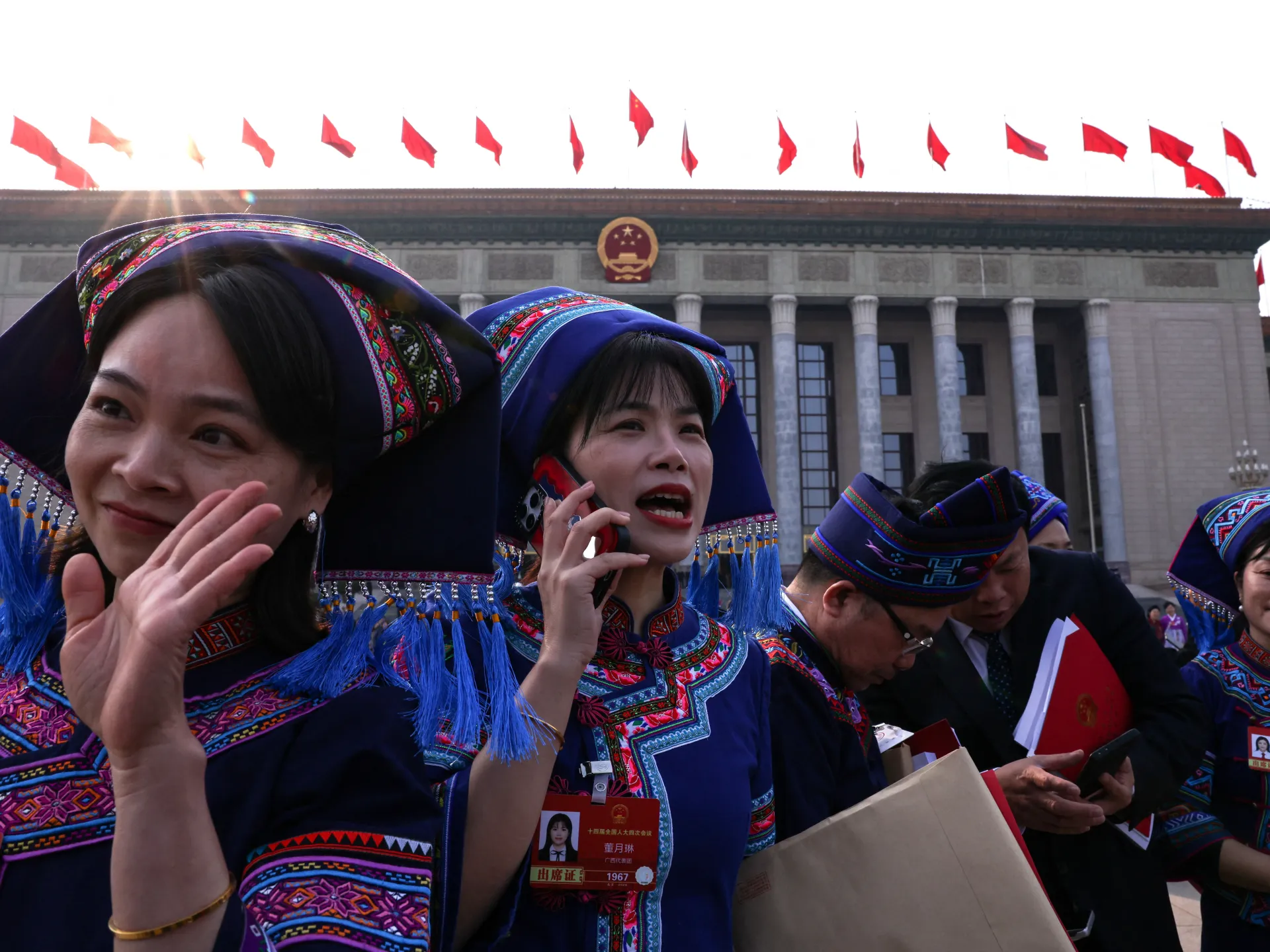
China Enacts New Ethnic Unity Legislation with Global Implications
China has officially implemented a new law, the 'Law on the Promotion of Ethnic Unity and Progress,' which grants Beijing the authority to pursue legal action against individuals and organizations operating outside mainland China if their actions are perceived to undermine the country's ethnic unity. This legislation, passed by the National People's Congress in March, came into effect recently and has drawn considerable international attention due to its extraterritorial scope.
The law's introduction has sparked debate among international observers and human rights advocates. While the Chinese government asserts its right to legislate on matters it deems vital to national cohesion, critics argue that the law could be utilized to suppress legitimate advocacy and dissent, particularly concerning ethnic minority rights.
International Scrutiny Over Article 63
A specific provision, Article 63, has become a focal point of international concern. This article stipulates that 'organisations and individuals outside of mainland China who commit crimes aimed at [China] that undermine ethnic unity and progress or create ethnic division are to be pursued for legal responsibility in accordance with law.' This wording has led to questions regarding the potential for China to extend its legal jurisdiction globally.
Organizations such as Amnesty International have voiced strong reservations, suggesting that Article 63 might be employed to justify transnational repression. Sarah Brooks, Amnesty's Deputy Regional Director, highlighted that 'peaceful advocacy for minority rights in China by anyone, anywhere could be characterised as undermining 'ethnic unity'.' She further clarified that the term 'unity' within this context appears to imply conformity with Beijing's political directives rather than fostering genuine harmony among diverse communities.
The United Nations Special Rapporteurs on Minority Rights and Cultural Rights have also previously criticized the legislation, contending that similar frameworks have been instrumental in justifying policies of forced assimilation in regions such as Tibet and Xinjiang, rather than genuinely promoting ethnic harmony.
Beijing's Defense of the Law
In response to international criticism, Zhou Jianshe, the deputy director-general and spokesperson for the State Council Information Office Press Bureau, defended Article 63. He characterized it as a 'legitimate, lawful, necessary, and workable legal provision,' and accused Western media of attempting to misrepresent and discredit the law as an example of 'long-arm jurisdiction.'
The Chinese government maintains that the law is an internal matter designed to safeguard national stability and prevent actions that could lead to ethnic discord. They emphasize that the legislation is within their sovereign rights and is aimed at protecting the integrity of the nation.
Concerns in Taiwan
Beyond human rights groups, the new law has also prompted apprehension in Taiwan. There is concern that the legislation could become a tool to prosecute or harass Taiwanese citizens residing or traveling abroad. Taiwanese President William Lai Ching-te, in a recent address, advised citizens to exercise caution when visiting or living in China following the law's implementation. He also stated that Taipei would continue to monitor the situation and provide guidance to its officials stationed overseas.
Taiwan, a self-governing democracy, is viewed by Beijing as a breakaway province. Despite deep cultural and historical connections, there has been a notable rise in Taiwanese nationalism over the past two decades. Beijing officially severed contact with Taipei in 2016 after the election of President Tsai Ing-wen, whom they consider a 'separatist.'
The current concerns in Taiwan are not without precedent. In 2024, Taipei escalated its travel warnings after China introduced measures allowing for the in-absentia trial of 'die-hard' Taiwanese independence activists, with potential penalties, including the death penalty, for those found guilty of promoting secession.
The broader implications of China's 'Law on the Promotion of Ethnic Unity and Progress' are likely to continue being a subject of international discussion, particularly concerning the balance between national sovereignty and universal human rights, and the expanding reach of national laws in an interconnected world.
Source: China’s new ethnic unity law extends its legal reach overseas
Related Articles
 world
world
US Designates Ecuador's Chone Killers as Terrorist Organization Amid Broader Anti-Crime Efforts
 world
world
Venezuelan Earthquake Survivors Await Crucial International Assistance Amidst Devastation
 world
world
Venezuelan Earthquake Aftermath: A Struggle for Survival Amidst Rising Casualties and Aid Efforts
 world
world