
Understanding Central America's Earthquake Predisposition
Central America is a region inherently susceptible to significant seismic events, a reality underscored by recent powerful earthquakes that struck Venezuela. This geographical vulnerability is primarily attributed to its location at the convergence of several major tectonic plates, creating a highly active geological environment. While nations like Japan also experience frequent strong tremors, the impact on Central American countries, including Venezuela, is often exacerbated by weaker building standards and infrastructure, leading to higher casualty rates and extensive damage.
Recent Seismic Activity in Venezuela
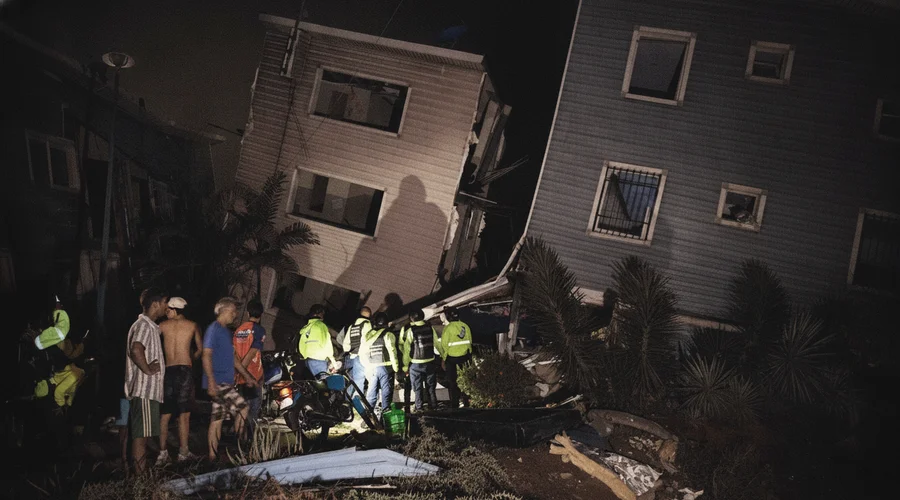
Venezuela recently endured a devastating series of earthquakes, which tragically resulted in at least 164 fatalities and 971 injuries, with numerous buildings collapsing into rubble. On a Wednesday evening, approximately 160km (100 miles) west of Caracas, a magnitude 7.2 earthquake struck, followed almost immediately by a magnitude 7.5 quake. The United States Geological Survey (USGS) reported these events and issued warnings that the death toll could potentially escalate significantly, possibly reaching into the thousands, with a substantial probability of exceeding 10,000 casualties based on predictive modeling. The Venezuelan government responded by declaring a state of emergency.
Reports from Bogota, Colombia, indicated that the most severe damage was concentrated in Caracas, particularly within the Altamira district. Emergency teams were observed diligently working to rescue survivors from the debris of a collapsed 22-story building, while distraught relatives desperately searched for missing family members. Officials continue to assess the full scope of the destruction, and the USGS has cautioned residents to prepare for strong aftershocks in the days following the initial tremors.
Venezuela's Seismic History and Geological Context
Venezuela's long history of destructive earthquakes is directly linked to its geographical position along the boundary where the Caribbean and South American tectonic plates interact. This active plate boundary is a constant source of seismic energy release.
Historical records illustrate the profound impact of past earthquakes: in 1812, a powerful earthquake devastated the cities of Merida and Caracas, claiming an estimated 30,000 lives. More recently, in 1967, another significant earthquake struck Caracas, causing several high-rise buildings to collapse and resulting in 240 deaths.
The recent larger earthquake was identified by the USGS as a shallow strike-slip faulting event occurring near the Caribbean and South American plate boundaries. A strike-slip fault is characterized by two blocks of rock sliding horizontally past each other. This movement generates seismic waves that travel through the ground, causing the shaking experienced during an earthquake. Shallow earthquakes are particularly dangerous because the seismic energy has less distance to dissipate before reaching the surface, thus delivering a more intense and destructive impact on structures and populations.
Why Central America is an Earthquake Hotspot
The Central American region, home to approximately 50 million people, is a nexus of multiple tectonic plates, making it exceptionally prone to earthquakes. A key geological feature contributing to this vulnerability is the subduction zone where the Cocos Plate is actively diving beneath the Caribbean Plate. A subduction zone represents a boundary where one tectonic plate is forced down into the Earth's mantle beneath another plate, a process that generates immense geological stress and frequent seismic activity.
Beyond its complex geology, the region's susceptibility to high casualties from earthquakes is compounded by socioeconomic factors. A significant portion of Central America's population resides in informal settlements or older, poorly constructed buildings that lack the necessary structural integrity to withstand powerful seismic shaking. This widespread use of non-seismically resistant construction significantly elevates the risk to human life and property during a major earthquake.
A Chronicle of Central American Earthquakes
Central America has a documented history of severe earthquakes, with numerous significant events occurring in recent decades:
- February 2010: A magnitude 8.7 earthquake struck Chile's Maule region, generating tsunami waves, killing over 500 people, and causing billions in damages.
- September 2012: A magnitude 7.6 earthquake occurred near Costa Rica's Pacific coast.
- November 2012: Guatemala experienced its largest earthquake in over three decades, a magnitude 7.4 tremor that killed at least 52 people.
- June 2017: A magnitude 6.9 earthquake near Guatemala's border with Mexico resulted in at least five fatalities.
- January 2018: A magnitude 7.6 earthquake off the coast of Honduras caused widespread tremors across northern Central America and prompted tsunami warnings for Puerto Rico and other Caribbean islands.
- April 2022: A magnitude 6.7 earthquake struck off Nicaragua's western coast.
- Last year: An earthquake caused extensive damage in Guatemala.
Global Seismic Activity and Mitigation Strategies
The most seismically active region globally is the Pacific Ring of Fire, which accounts for approximately 90 percent of the world's earthquakes. This extensive belt stretches from South America across to the Russian Far East, encompassing countries such as Japan, the Philippines, Indonesia, and the western Americas.
For instance, on June 8, a magnitude 7.8 earthquake hit the southern Philippines off Mindanao island, triggering tsunami warnings and reportedly killing at least 15 people. Similarly, a magnitude 7.2 earthquake (measured as 6.9 by the USGS) struck off northern Japan recently.
Japan, despite being one of the world's most earthquake-prone nations, demonstrates how rigorous building codes and advanced engineering can mitigate disaster. Its strict construction standards ensure that many structures can withstand severe shaking, a stark contrast to the vulnerability of poorly built homes in regions like Indonesia or Central America. Significant public investment in seismic research and the adoption of advanced engineering technologies, such as base isolation systems that incorporate massive steel or rubber shock absorbers beneath building foundations, play a crucial role in Japan's resilience. In most inland earthquakes, the majority of fatalities and injuries are not caused by the shaking itself, but by the collapse of inadequately constructed buildings.
Source: Original Article
Related Articles
 world
world
ICC Judges Challenge Trump Sanctions, Citing Unlawful Coercion
 world
world
Regional Tensions Escalate: Iran Rejects New Hormuz Route, US Secretary of State Engages GCC Leaders Amidst Broader Conflicts
 world
world
Dual Earthquakes Trigger Widespread Alarm in Venezuela
 world
world