
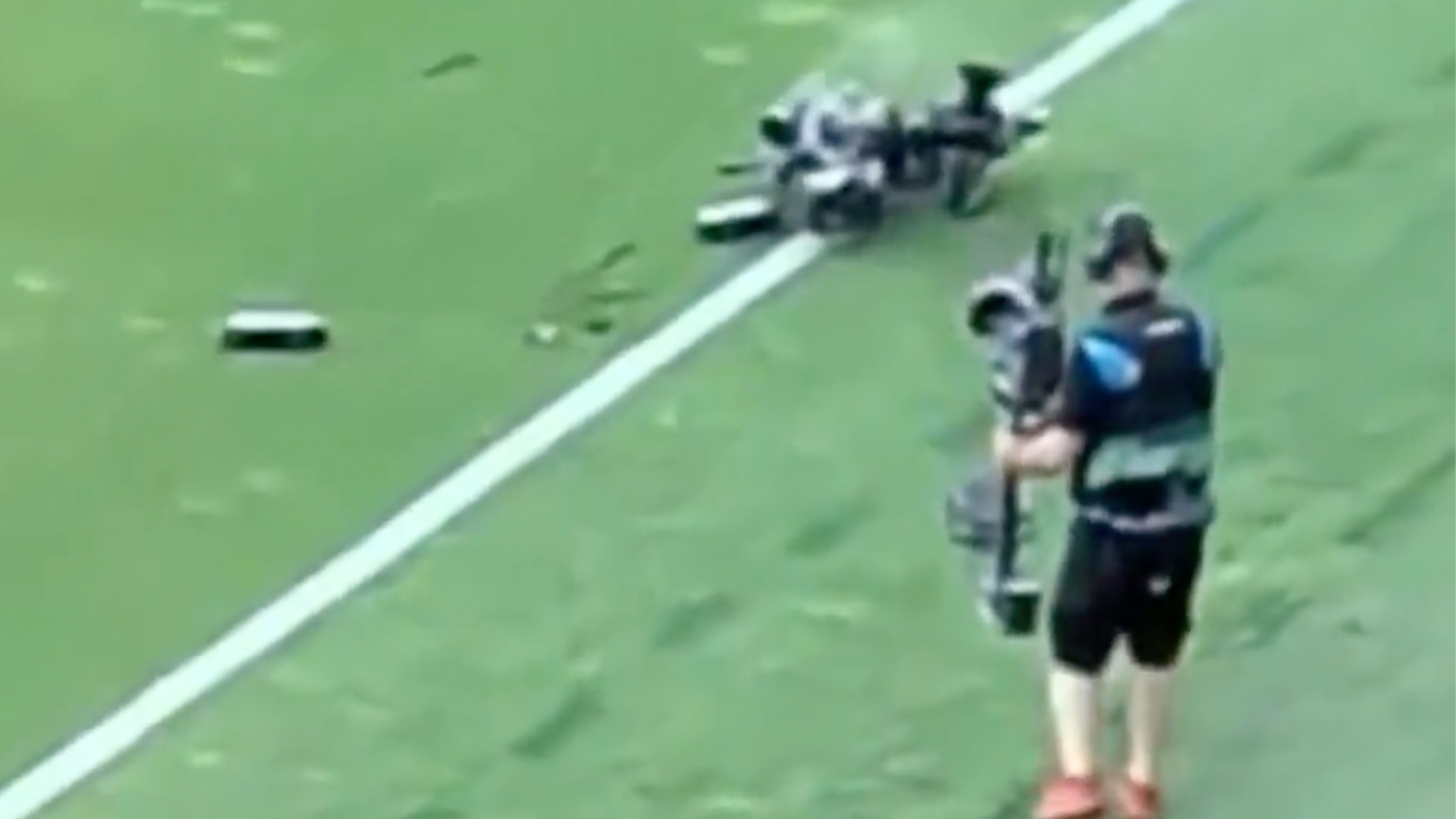
Unexpected Interruption at Nagyerdei Stadium
A friendly international football match between Hungary and Kazakhstan experienced an unforeseen interruption when a specialized camera system, commonly known as a 'spidercam,' descended onto the playing field. The incident occurred near the touchline at Hungary’s Nagyerdei Stadium, prompting a temporary halt in play as officials addressed the situation and cleared the debris.
Details of the Incident
The event unfolded during a highly anticipated friendly fixture, designed to provide both national teams with valuable preparation and competitive experience. Spectators and players alike were taken by surprise when the camera system, typically suspended above the pitch on a network of cables, lost stability and fell. Initial reports indicate that the camera landed in close proximity to a television camera operator, though fortunately, no injuries were sustained.
The quick response of stadium personnel and match officials was crucial in managing the situation. Play was immediately paused to ensure the safety of everyone on the field and to allow for the prompt removal of the camera and any associated wreckage. This swift action prevented any prolonged disruption to the game, demonstrating effective crisis management during an unexpected technical malfunction.
The Role of Spidercams in Modern Sports Broadcasting
Spidercams, or cable-suspended camera systems, have become an integral part of modern sports broadcasting. These sophisticated setups offer dynamic aerial perspectives that significantly enhance the viewing experience for audiences worldwide. By traversing above the field of play, they provide unique angles and sweeping shots that ground-level cameras cannot capture, bringing viewers closer to the action and offering a comprehensive overview of tactical movements and individual performances.
The technology behind these systems involves a complex interplay of winches, cables, and computer-controlled motors. Four primary cables, anchored at different points around the stadium, allow the camera rig to move in three dimensions – up, down, and across the field. This intricate engineering enables fluid motion and precise positioning, essential for capturing high-quality live footage.
"The deployment of advanced camera systems like the spidercam has revolutionized sports broadcasting, offering viewers an unparalleled visual experience. While incidents are rare, they underscore the complexities of integrating such technology into live events."
Operators, often located in a control booth, use specialized joysticks and software to direct the camera's movements, adjusting its height, speed, and angle in real-time. This allows broadcasters to follow the flow of play, highlight key moments, and provide replays from perspectives that were once unimaginable. The smooth, sweeping shots produced by spidercams are particularly valuable in sports with large playing areas, such as football, rugby, and American football, where they can track the entire field of action.
Safety Protocols and Technological Reliability
Given the nature of their operation, safety protocols for spidercam systems are extremely stringent. Regular maintenance checks, pre-match inspections, and redundant safety mechanisms are standard procedures to prevent malfunctions. The cables are typically made from high-strength materials, designed to withstand significant stress, and the winches are equipped with fail-safes to prevent uncontrolled descent.
Despite these rigorous measures, technical equipment is not entirely immune to unforeseen issues. The incident at Nagyerdei Stadium serves as a reminder that even advanced technology can occasionally encounter problems. Such occurrences, while rare, prompt reviews of existing safety protocols and operational procedures to further enhance reliability and minimize risks in future events.
Impact on the Match and Future Considerations
The brief halt in play allowed ground staff to quickly remove the camera and any remnants from the pitch, ensuring that the integrity of the playing surface was maintained. Once the area was cleared and deemed safe, the match resumed, with both teams continuing their preparations without further incident. The primary concern during such events is always the safety of players, officials, and spectators, and the rapid response ensured that this priority was met.
Moving forward, incidents like this often lead to internal investigations by the broadcasting companies and stadium management to understand the root cause of the malfunction. These investigations aim to identify any specific component failure, operational error, or environmental factor that may have contributed to the event. The findings are then used to implement corrective actions and improve the overall safety and reliability of similar camera systems used in sports venues worldwide.
The incident at the Hungary-Kazakhstan friendly, while unusual, ultimately concluded without serious consequences, highlighting the importance of preparedness and quick thinking in managing unexpected technical challenges during live sporting events.
Source: Original Article
Related Articles
 news
news
Escalation in Middle East as Iran Retaliates Against US Strikes, Closes Vital Strait
 news
news
Thai Court Imposes Death Penalty on Two for 2015 Bangkok Shrine Bombing
 news
news
Belfast Experiences Second Night of Anti-Immigration Unrest Amidst Stabbing Charges
 news
news